The best bathroom design software helps you finish a bathroom design faster and keep your schedule on track.
But for contractors, remodelers, and interior designers, the wrong tool turns a simple bathroom into a time sink.
Flat 2D plans also slow everything down because clients can’t picture the finished space, so they second-guess finishes, ask for “one more option,” and push approvals out another week.
Then there’s the learning curve…tools like AutoCAD or Revit can take 40 to 80 hours to reach basic comfort, and desktop-only software keeps you stuck at the office.
This 2026 guide breaks down the best 3D bathroom design software, so you can choose with confidence, present projects in 3D, and close projects faster.
Key Takeaways
- The right bathroom design software helps you move from idea to client-ready 3D visuals without burning a full day on one layout.
- 3D views reduce back-and-forth because clients can actually see the shower, vanity, and clearances before you build.
- Cloud access lets you design on-site during consults, which speeds up approvals and keeps projects moving.
- Cedreo helps housing pros create fast 3D bathroom layouts and presentation-ready visuals, so you can get signed contracts in fewer meetings.
Why trust us? Here at Cedreo, we have more than 20 years of experience working with housing professionals in the home design software space, so we know what it takes to create bathroom designs that help contractors win more clients.
See How You Can Create Complete Projects with Cedreo
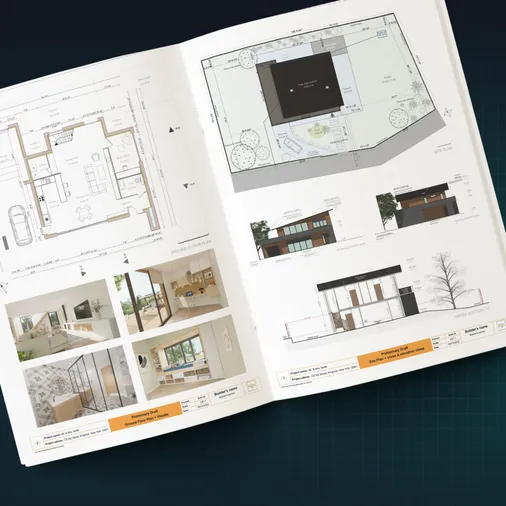
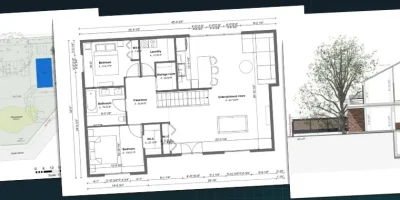
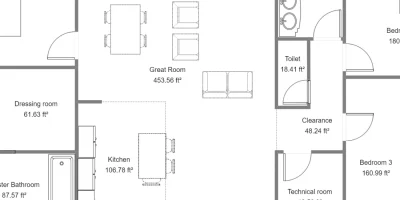
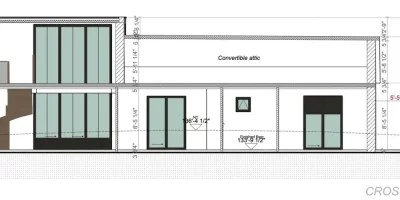
Plans – Get site plans, 2D floor plans, electrical plans, cross sections and elevation views — with all the technical details you need for a comprehensive project overview.
3D Visualizations – Use interior and exterior 3D renderings as well as 3D floor plans to help clients understand the finished project.
Documentation – Manage all your visual documents in one place, so it’s easier to present and sell your projects.
No credit card required, no commitment
Why the Best Software for Bathroom Design Helps Grow Your Business
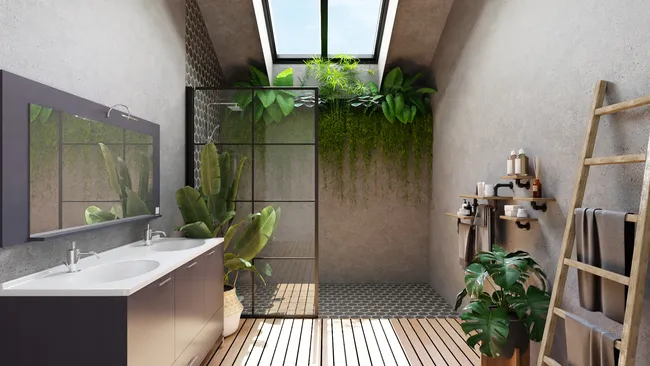
Bathroom design tools are not just for drawings, they help you sell work, avoid rework, and protect your schedule.
- Client visualization: Clear 3D renders and with realistic lighting and textures help clients commit faster because they stop guessing what the finished bathroom will look like.
- Competitive edge: Better visuals and cleaner proposals make you look more professional, which helps you stand out when bids feel similar.
- Time and cost savings: Faster layout changes and reusable templates cut design hours, which lowers overhead and protects your margin.
Next, let’s break down what to look for, so you choose a tool that fits your workflow and your team.
What to Consider When Choosing a Bathroom Design Tool
Choosing bathroom design software is really about picking the tool that helps you work faster, present better, and avoid costly mistakes.
Here are some things to look for.
Feature Set & Capabilities
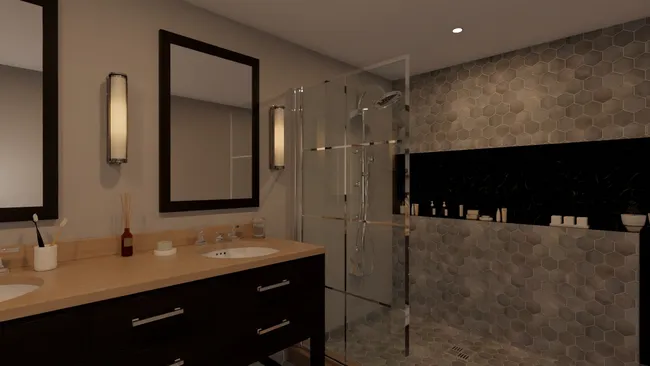
Why important: The right features help you design accurately and show clients what they are buying before you order a single fixture.
When the software is missing key tools, you end up patching gaps with spreadsheets, screenshots, and extra meetings.
What to look for:
- 2D planning with auto calculations: Build tight layouts with accurate dimensions and area totals, so clearances and spacing don’t turn into field fixes.
- Real-time 3D visualization: See 2D plan views and 3D views instantly, so you can confirm proportions, sightlines, and feel while you work.
- Photorealistic rendering: Produce client-ready images that show materials and finishes clearly, which reduces indecision and revision loops.
- Fixture and material libraries: Use a deep catalog of vanities, tubs, toilets, tile, and hardware.g.
- Customization controls: Adjust sizes, materials, and layouts quickly.
- Lighting simulation: Preview realistic lighting and shadows, so clients understand how the space will look at night, task lighting, and with natural lighting.
Ease of Use & Learning Curve
Why important: A tool that takes weeks to learn costs you twice, once in training time and again in missed sales opportunities.
In a small firm, you need a workflow that feels natural so you can produce a usable bathroom concept within about two hours, not after 20+ hours of training.
What to look for:
- Drag-and-drop placement: Drop fixtures into the plan fast, so you can explore options in minutes instead of fighting the interface.
- Automation for repeat tasks: Let the software handle routine steps like snapping, aligning, and duplicating.
- Visual toolbars and icons: Find tools quickly without hunting through endless menus, which helps new users move faster on day one.
- Logical plan-to-render workflow: Start in 2D, confirm in 3D, then export and present.
- Fast first-design success: Instead of spending hours to get your first basic layout nailed down, create a basic bathroom layout in just a few minutes.
- Training resources and onboarding: Use video tutorials, clear documentation, and real support so your team can get productive without guesswork.
With those standards in mind, here are the top options to consider next.
14 Best Bathroom Design Software Platforms in 2024
Not every bathroom design tool solves the same problem, so it helps to group them by how pros actually use them.
Use the first group if you sell and build bathrooms for a living, and use the second group if you mainly need quick visuals on a tight budget.
Professional design & business software
- Cedreo
- Chief Architect
- Cyncly Design Flex
- SketchUp
- Coohom
- Foyr Neo
- Houzz Pro 3D
DIY & home enthusiasts visualizers
- Planner 5D
- Homestyler
- Live Home 3D
- RoomSketcher
- FloorPlanner
- HomeByMe
- SmartDraw
Best Software for Bathroom Design Comparison Table
| Software | Best for | Product library | 3D quality | Ease of use | Price range | Learning curve | Pro presentations |
| Cedreo | Contractors, remodelers, interior designers | ★★★★★ | ★★★★★ | ★★★★★ | $$ | Hours | Yes |
| Chief Architect | Architects and design-build teams needing CAD/BIM docs | ★★★★★ | ★★★★☆ | ★★☆☆☆ | $$$ | Weeks (40–80+ hours) | Yes |
| Cyncly Design Flex | Kitchen & bath pros needing orderable SKUs and quotes | ★★★★★ | ★★★★★ | ★★☆☆☆ | $$$ | Weeks | Yes |
| SketchUp | Pro 3D modelers needing flexible modeling | ★★★★★ (User generated) | ★★★☆☆ | ★★★☆☆ | $$ | Days to weeks | Yes |
| Coohom | Designers and brands who want to feature their own products | ★★★★★ | ★★★★★ | ★★★★☆ | $$ | Days | Yes |
| Foyr Neo | Interior designers | ★★★★★ | ★★★★★ | ★★★★☆ | $$ | Days | Yes |
| Houzz Pro 3D | Contractors wanting sales tools plus simple 3D planning | ★★★☆☆ | ★★★☆☆ | ★★★★☆ | $$$ | Days | Yes |
| Planner 5D | DIYers and pros needing quick AI-based 3D concepts | ★★★★☆ | ★★★★☆ | ★★★★★ | $ | Hours | No |
| Homestyler | Students and freelancers needing low-cost photoreal | ★★★★☆ | ★★★★★ | ★★★★☆ | $ | Hours to days | No |
| Live Home 3D | Mac/iPad users who want AR previews | ★★★☆☆ | ★★★★☆ | ★★★★☆ | $ | Hours | No |
| RoomSketcher | Real estate, decorators, and DIYers needing fast visuals | ★★★★☆ | ★★★★☆ | ★★★★★ | $ | Hours | Yes |
| FloorPlanner | Quick web plans with shareable 3D | ★★★☆☆ | ★★★☆☆ | ★★★★★ | $$ | Hours | Yes |
| HomeByMe | Decor-focused visuals with real brand catalogs | ★★★★☆ | ★★★★☆ | ★★★★☆ | $$ | Days | Yes |
| SmartDraw | 2D bathroom schematics (plumbing/electrical plans) | ★★★★☆ | ☆☆☆☆☆ | ★★★★★ | $ | Hours | No |
Let’s start with our top pick Cedreo, since it is built for fast bathroom layouts and client-ready presentations.
1. Cedreo
Best for: Builders, remodelers, and residential designers who need fast, client-ready bathroom designs.
Why Cedreo is #1 for bathroom design: Cedreo hits the sweet spot for working pros because it is powerful enough for detailed bathroom layouts, simple enough to learn in minutes, and fast enough to deliver photorealistic 3D renderings in less than 5 minutes.
That means you can design and present in a single meeting instead of dragging the process into rounds of revisions.
When to choose Cedreo: Choose Cedreo when you need to speed up the idea to concept proposal phase of project planning by being the first to present high-quality presentations and then make fast edits based on feedback.
Ease of use:
- Intuitive drag-and-drop interface with no steep learning curve.
- Create professional conceptual designs in about 2 hours, even without CAD experience.
- Import existing plans (PNG, JPEG, PDF, DWG, DXF) so you can trace and update a client’s current bathroom layout fast.
3D rendering quality:
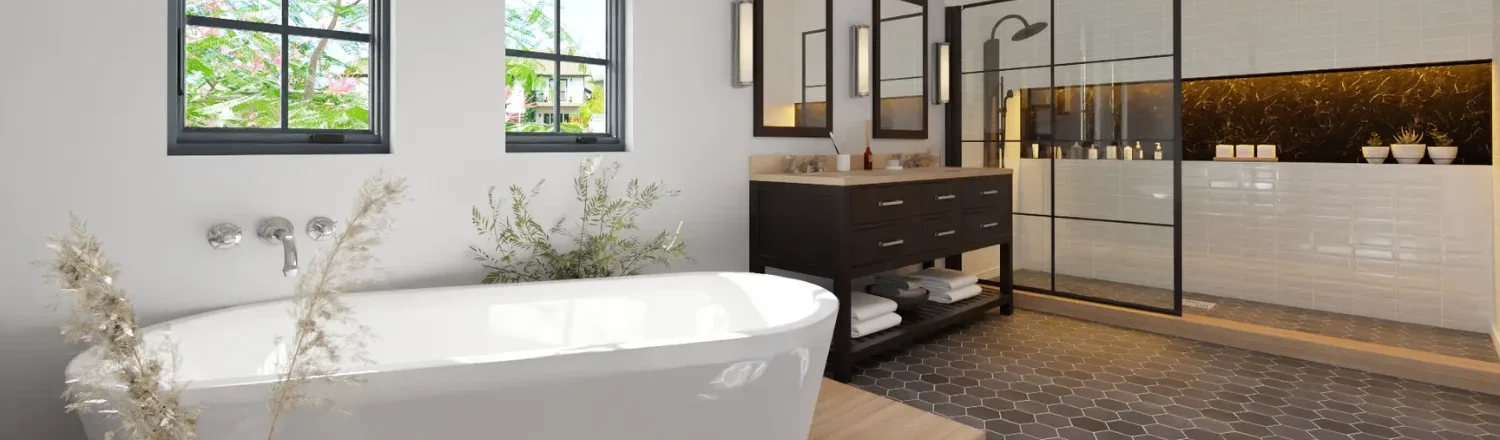
- One-click photorealistic interior renderings in less than 5 minutes.
- Day and night atmospheres, plus lighting controls like sun orientation controls.
- Save viewpoints to compare different layouts, tile selections, and vanity options side by side.
- Cloud rendering handles the heavy lifting, so you don’t need a pricey workstation.
Bathroom Fixtures and Material Library:
- Library of 8,500+ realistic furniture, fixtures, and decor items.
- Thousands of flooring, paint colors, and finishes with realistic textures.
- 3D product packs that help you furnish and stage a bathroom scene faster.
Client Presentations:
- Build branded proposal documents that combine 2D plans, 3D images, and surface area reports.
- Plans inside your presentation document update automatically when you change the design.
Support:
- Dedicated success manager team for personalized guidance and quick answers via phone, email, and chat.
- Get responses from real people in 10 minutes (average time), so your projects stay on track.
- Library of articles and tutorial videos.
Pricing: $$
2. Chief Architect
Best for: Architects and design-build teams that need detailed construction documentation.
Overview: Chief Architect is desktop BIM software built for detailed residential design, drafting, and documentation.
It works well when the bathroom is part of a larger remodel because you can produce plan sets, elevations, and details from one model.
Expect a steeper learning curve than lighter tools, and plan on using a capable computer for smooth performance.
Key features:
- Smart 2D drafting tools that generate accurate dimensions as you build the layout.
- 3D modeling that updates from the plan, so you can check clearances and sightlines fast.
- Construction documentation tools for plans, elevations, and sections.
- Built-in libraries for fixtures, cabinets, materials, and finishes.
- Renderings and camera views for presenting the design to clients.
Pros:
- Strong construction document output for professional remodel sets.
- High control over precision and detailing.
- Solid 3D visualization for client reviews.
- Large user community and training ecosystem.
Cons:
- Steep learning curve for new users.
- Higher cost and heavier hardware requirements than simpler tools.
Pricing: $$$
3. Cyncly Design Flex (formerly 2020 Design)
Best for: Kitchen and bath dealers, design showrooms, and remodeling firms that quote real products and sell by SKU.
Overview: Cyncly Design Flex is a kitchen-and-bath bathroom planner built around manufacturer catalogs, so you design with real, orderable items.
That keeps the design process moving when your bathroom project needs to turn into a priced quote because finishes, sizes, and availability come from the catalogs.
It shines in a showroom sales workflow, but it takes training because catalog rules and settings run deep.
Key features:
- Live manufacturer catalogs with up-to-date SKUs, dimensions, finishes, and pricing.
- Cycles rendering engine tuned for interior lighting, tile, glass, and reflective finishes.
- Cloud configurator that validates options, so you don’t specify an invalid finish or component.
- Quote and order list outputs that connect the design to purchasing and margin protection.
- 360-degree panoramic views shareable by URL, giving clients a better sense of the final result.
Pros:
- Excellent product accuracy for kitchen and bath because designs are built from real catalogs.
- Strong sales workflow since you can produce visuals and a detailed quote from the same model.
- High-end rendering realism that helps clients commit to selections.
- A valuable resource for showrooms managing multiple projects and product options.
Cons:
- High learning curve, and most teams need formal training to get fully productive.
- Less flexible for projects outside kitchen and bath scope.
Pricing: $$$
4. SketchUp
Best for: Professional designers and experienced 3D modelers who want total freedom for custom bathroom concepts.
Overview: SketchUp is a generalist 3D modeling tool, so it gives you a blank canvas and the freedom to build anything you can draw.
That flexibility is great for different layouts, custom vanities, and unusual details, but accuracy depends on how well you model and organize the file.
Most pros pair SketchUp with LayOut to produce 2D and 3D sheets, and they add rendering extensions when they want photorealistic visuals.
Key features:
- Push-pull modeling for space “sculpting” and custom details.
- LayOut for turning 3D scenes into 2D and 3D documentation with dimensions and notes.
- Extension Warehouse for add-ons (usually paid) like rendering, cabinetry tools, and workflow automation.
- 3D Warehouse for downloadable design elements (helpful, but quality varies).
- Broad file import/export options, including DWG and DXF for CAD collaboration.
Pros:
- Creative freedom for custom geometry and different versions of the same concept.
- Core modeling is approachable once you learn the basics.
- Huge community and tutorial ecosystem.
- Strong interoperability with common formats for architectural workflows.
Cons:
- Photorealistic rendering usually requires paid plugins or a higher tier.
- Construction documents can take longer than “smart” CAD tools because organization is on you.
- You can learn the basics relatively quickly but to create complete designs it takes a lot of training and learning.
Pricing: $$
5. Coohom
Best for: Interior designers who want to use their own custom product catalogs.
Overview: Coohom is a cloud-based interior design tool that provides fast, high-quality renderings.
It also includes a dedicated kitchen-and-bath module, which helps when you need more control over vanities, storage, and built-ins than basic drag and drop tools.
If you want construction drawings or deeper CAD exports, Coohom can support that, but those outputs are typically tied to Enterprise tiers.
Key features:
- High-speed cloud rendering that can produce 4K images very quickly.
- Dedicated kitchen-and-bath module for cabinet and vanity configuration.
- Advanced lighting controls, including parametric options (like LED strip effects).
- Large model and material libraries for fixtures, finishes, and decor.
- 720-degree panoramic tours for immersive client presentations from different angles.
Pros:
- Extremely fast rendering for client-facing visuals.
- Strong bathroom storage and cabinetry tools for more detailed layouts.
- Great-looking 3D output for finishes, lighting mood, and material choices.
- Cloud workflow means you do not need a high-end workstation.
Cons:
- CAD-style construction drawings and deeper exports are often Enterprise-only.
- Fully cloud-dependent, so you need a stable internet connection.
- Targeted towards interior design, so if you do full additions/builds, plus exterior plans and site plans, then you may want to look elsewhere.
Pricing: $$
6. Foyr Neo
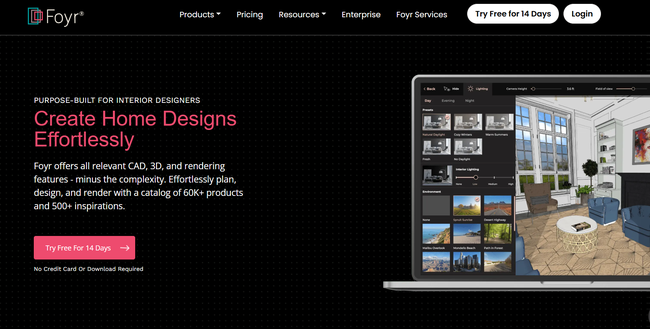
Best for: Interior designers who want fast bathroom concepts and strong visuals.
Overview: Foyr is a browser-based interior design tool that focuses on speed in the design process, from layout to render.
It works well for bathrooms when you need to show realistic finish options (tile, vanity styles, lighting mood) before the next meeting.
It is not built for heavy construction documentation, so use it for selling the design and pair it with another tool if you need detailed plan sets.
Key features:
- AI auto-lighting tools that speed up realistic bathroom scenes.
- 60,000+ drag-and-drop 3D assets in a vast library for fixtures, furniture, and decor.
- Cloud rendering workflow.
- Floor plan upload and tracing to start faster from an existing layout.
- Client presentation outputs, including walkthrough videos and 360-degree tours.
Pros:
- Fast to learn with a user-friendly interface, and fast to produce polished visuals.
- Great for presenting style directions and material choices.
- Cloud-based workflow reduces hardware headaches.
- Strong presentation formats beyond still images.
Cons:
- Construction documentation is limited.
- Just like Coohom, it’s interior design focused, so keeping all your design work in this tool limits the types of projects you can use it for.
Pricing: $$$
7. Houzz Pro 3D Planning Tool
Best for: General contractors and remodelers who want lightweight 3D planning tied to CRM, estimating, and invoicing.
Overview: Houzz Pro is a full business platform first, and its 3D Floor Planner is one module inside that system.
It is built for speed in the sales cycle, so you can start planning on-site and speed up decision making.
If you already run projects in Houzz Pro, the value comes from keeping design, estimates, and client approvals in one place.
Key features:
- LiDAR room scanning in the mobile app (iPhone/iPad) that can create a floor plan from an on-site scan.
- Estimate integration, so items in the plan can connect to your project estimate and takeoffs.
- Client portal for sharing designs, getting approvals, and managing payments in one workflow.
- “Dollhouse” style views that help clients understand layout changes quickly.
- AR-style “life-size” walkthrough on a tablet for on-site reviews.
Pros:
- Strong business integration with leads, estimating, and invoicing.
- Great mobile tools for scanning and on-site selling.
- Fast “good enough” visuals to keep decisions moving.
Cons:
- Limited architectural depth, so it can’t replace a full-featured bathroom design tool for top-nothc rendering and detailed construction drawings.
- Export limits, including no native DWG export of the 3D model.
Pricing: $$$
8. Planner 5D
Best for: DIYers, agents, and small teams that want quick bathroom visuals with AI help.
Overview: Planner 5D focuses on accessibility, and it uses AI to turn a 2D plan image into a 3D model.
It is easy to start, so it works well for early concepts when you are aiming for an ideal bathroom.
For pro work, the value is speed, but you should double-check dimensions for precise planning before construction begins.
Key features:
- AI plan recognition that converts a photo of a floor plan or blueprint into a 3D model.
- Cross-platform access on web, iOS, Android, macOS, and Windows.
- Drag-and-drop room and fixture placement for fast layout changes.
- Pro export to DWG/DXF for basic CAD handoff.
- 3D and VR-style viewing modes for client-friendly walk-throughs.
Pros:
- Extremely easy to learn and start using right away.
- AI tools can speed up the first draft of a bathroom layout.
- Works on almost any device, which helps with quick edits on the go.
Cons:
- Not as dimensionally precise as professional design programs for construction-ready planning.
- Many objects and features sit behind subscriptions or paywalls.
Pricing: $
9. HomeStyler
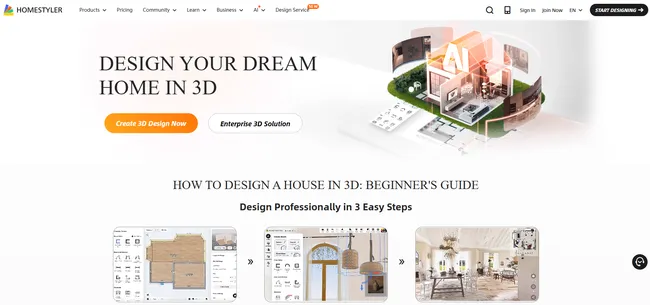
Best for: DIYers, students, and freelancers who want fast bathroom visuals at a low monthly cost.
Overview: Homestyler is a cloud-based bathroom design tool that focuses on quick concepts, strong rendering, and simple customization options.
It follows a simple workflow: draw the 2D layout, drag and drop design elements like fixtures, apply finishes, then render.
It looks great for client-facing images, but it prioritizes aesthetics over construction logic.
Key features:
- 4K and 8K rendering options on higher tiers for sharp, presentation-ready images.
- Video rendering for fly-through style bathroom walkthroughs.
- Custom 3D model upload (OBJ/FBX) when you need a specific fixture or product.
- Material Brush tool to “paint” tile, wall finishes, and surfaces quickly.
- DWG export on higher tiers for limited CAD handoff.
Pros:
- Affordable way to get high-quality renders.
- Fast to learn, so you can build a virtual bathroom without a long ramp-up.
- Good for showcasing finishes, lighting, and style variations.
- Runs in the cloud, so you don’t need a powerful computer.
Cons:
- Built more for visuals than buildability, so you still need to verify dimensions and details.
- Support is limited on lower tiers, and some pro features are tier-gated.
Pricing: $
10. Live Home 3D
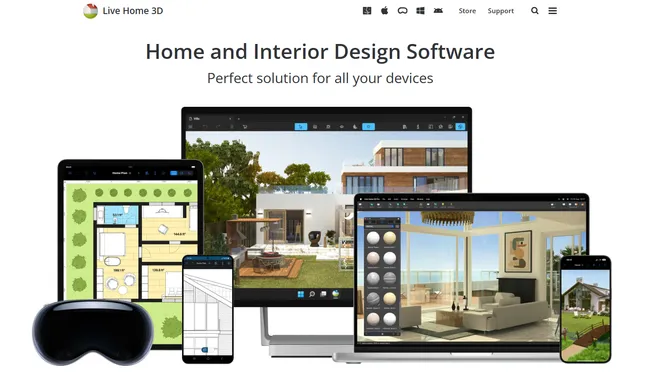
Best for: Mac, iPad, and iPhone users who want a native app for bathroom concepts with AR previews.
Overview: Live Home 3D is a downloadable app with an intuitive interface that runs smoothly on Mac, Windows, and iOS.
It is especially handy in the Apple ecosystem because you can move between iPad and Mac without rebuilding your existing layout.
For bathroom work, it is a solid concept tool with good visuals.
Key features:
- AR viewing on iPad or iPhone, so clients can see the bathroom model in the real space.
- Light editor and material editor (Pro) for better control of finishes, selecting materials, and lighting effects.
- 2D elevation views (Pro) for quick wall planning and visual checks.
- Export to USDZ for AR sharing, plus OBJ/FBX for 3D model export.
- Import a PDF layout to trace, which speeds up starting from an existing bathroom plan.
Pros:
- Smooth native performance compared to many browser-based tools.
- Strong AR workflow for on-site reviews and client buy-in.
- Good rendering quality in the Pro version.
- Affordable entry cost with one-time purchase options.
Cons:
- No native DWG export for floor plans.
- Smaller product library than the big cloud platforms.
Pricing: $
11. RoomSketcher
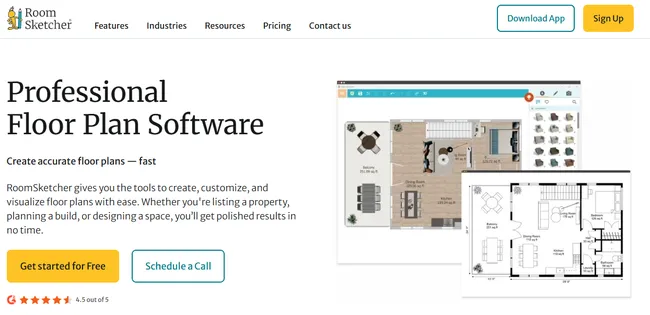
Best for: Real estate agents, property marketers, and decorators who need clean floor plans fast.
Overview: RoomSketcher is a dedicated floor planning tool for creating detailed floor plans that prioritizes clear, readable 2D and 3D plans over complex architectural design.
It works well for bathroom projects when your goal is to communicate layout, flow, and furnishing options without getting buried in technical drafting.
If you are slammed, the Redraw Service can save time because you can upload a sketch or blueprint and get a professionally drafted plan back quickly.
Key features:
- Drag-and-drop functionality that makes it easy to build a bathroom layout and define zones.
- Redraw Service that turns a sketch or blueprint into a drafted digital plan.
- Live 3D camera that creates instant walkthroughs without long rendering waits.
- 360 Views that generate interactive panoramic views for clients.
- Branding tools plus export options, so you can add logos and export plans as PDF, JPG, or PNG.
Pros:
- One of the easiest ways to create accurate floor plans that still look professional.
- Great for marketing deliverables where clear plans matter more than photorealism.
- Redraw Service can offload drafting work for busy teams.
- Fast walkthrough-style views that help clients understand the space.
Cons:
- 3D output is more illustrative than photoreal.
- Limited construction documents, so you’ll have to use another program for more detailed plans.
Pricing: $
12. FloorPlanner
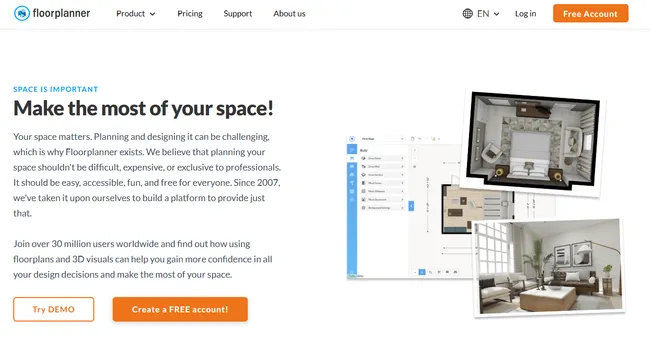
Best for: Designers and homeowners who want a lightweight web tool for shareable bathroom plans.
Overview: FloorPlanner is an online platform for 2D/3D planning built for speed and easy sharing.
It is a good fit when you need “good enough” 3D visuals to support a layout decision without investing in heavy modeling.
If your workflow depends on sending a link so clients can view designs and weigh design options, FloorPlanner keeps that process simple.
Key features:
- Decent 2D planning tools for building a bathroom layout quickly.
- “Good enough” 3D visualization that helps clients understand the space.
- Lightweight, browser-based workflow that is easy to access and share.
- Shareable projects via URL for quick client review.
- Simple 2D drafting so you can iterate without slowing down.
Pros:
- Easy to share a bathroom plan with a client using a link.
- Quick 2D drafting for early concepts and layout exploration.
- Simple workflow that stays approachable for non-technical users.
- Useful for fast approvals when you don’t need deep documentation.
Cons:
- Confusing pricing structure with multiple plans plus credits and prices per extra credits.
- 3D visuals are functional, but not meant to compete with photorealistic render engines.
Pricing: $$
13. HomeByMe
Best for: DIY remodelers and decor-focused designers who want real brand products in a web-based bathroom planner.
Overview: HomeByMe is a browser-based design tool for early bathroom renovation design ideas.
It leans toward style and product selection, so it works well when you want bathroom design ideas that feel “shoppable” and easy to understand.
It is not built for construction documentation, so you still need a separate tool for detailed drawings and permit sets.
Key features:
- Brand catalog with models from real retailers and manufacturers, which helps clients recognize what they are picking.
- Web-based 2D and 3D planning so you can work from almost any computer.
- “Makeovers” style swapping to test different looks fast without rebuilding the whole room.
- Shareable views and renders for quick feedback from clients or family.
- Material and furniture placement tools for fast finish and fixture exploration.
Pros:
- Strong for decor-focused presentations because the catalog includes recognizable brands.
- Clean visuals that help clients approve a direction faster.
- Easy to access since it runs in a browser.
Cons:
- Not a construction documentation tool.
- Less suited for technical coordination with trades.
Pricing: $$
14. SmartDraw
Best for: Contractors and designers who only need quick 2D bathroom schematics for plumbing, electrical, or layout communication.
Overview: SmartDraw is a diagramming platform, not a 3D bathroom design tool, for accurate floor plans and schematics in 2D.
It is best when you only need clear 2D plans, symbols, and technical diagrams that communicate intent to a team.
If you need 3D visuals to sell the remodel, you will want a 3D-focused tool instead.
Key features:
- Intelligent formatting that keeps shapes aligned and spaced automatically.
- Large template library for floor plans, diagrams, and workflows.
- Plumbing and electrical symbol sets for technical bathroom schematics.
- Easy export and sharing for PDFs and common document formats.
- Simple collaboration workflow for teams that need consistent diagrams.
Pros:
- Great for fast 2D plans and technical diagrams.
- Very easy to learn for non-designers.
- Helpful symbol libraries for bathroom trades.
Cons:
- No 3D modeling or rendering.
- Not meant for client-facing visual presentations.
Pricing: $
Start Creating Better Bathroom Designs Today
Bathroom design software only pays off when it helps you get client approval faster and protects your schedule.
Cedreo is built for housing pros who want clean layouts, strong 3D visuals, and presentations that help clients say “yes” with less back-and-forth.
Here’s what you can do with Cedreo:
- Create detailed 2D bathroom plans and view them in 3D in real time.
- Generate photorealistic interior renderings in less than 5 minutes.
- Start faster by importing an existing plan (PNG, JPEG, PDF, DWG, or DXF).
- Use a library of 8,500+ fixtures, furniture, and decor items, plus finish options.
- Deliver branded proposal documents that combine 2D plans, 3D images, annotations, and branding.
Ready to streamline your bathroom design projects?
Best Bathroom Planner Software FAQs
What is the best bathroom design software for professionals?
More professionals are making the switch to using Cedreo as their bathroom design tool.
It’s a home design and bathroom planner with an intuitive, user friendly interface that helps pros accurately create detailed 2D and 3D visuals fast.
Is there bathroom design software for Mac users?
Yes, Cedreo runs in a web browser on Mac, so a professional designer can build a virtual bathroom design without installing desktop software.
For a native Mac app, Live Home 3D is another option, and simple browser tools include Planner 5D and Homestyler.
What software do professional interior designers use for bathrooms?
Many interior designers use Cedreo because it offers a perfect balance of speed, advanced features, and client-ready 3D.
Other software like Coohom or Foyr Neo can work well for fast renders, and SketchUp is popular when you want deeper customization options.
What is the easiest bathroom design software for beginners?
Many users find Cedreo is one of the easiest to learn that still lets them produce pro-level presentations.
Cedreo’s extensive library makes it easy to find bathroom design inspiration and give clients a better sense of the final result in 2D and 3D.
How long does it take to design a bathroom with software?
Traditional CAD tools can take 8 to 12 hours per bathroom once revisions stack up, especially for a new user.
With Cedreo’s streamlined design process, many pros can create a strong 2D/3D concept in 2 hours and then build different versions in minutes.
Is there a way to design a bathroom online?
Yes, Cedreo lets you design a bathroom online in any major browser, so you can create and view designs from the office or during a consult.
Other online tools include Coohom and FloorPlanner, but Cedreo is built for faster approvals and clearer presentations.