Build profitable tiny homes by getting the dimensions right the first time, before the saw ever hits the lumber.
Tiny houses look simple on the outside.
But the dimensional constraints on a tiny home are tighter than any conventional build you’ve ever priced.
There’s no slack for an extra foot here, a wider hallway there.
Get one tiny home dimension wrong on the front end, and the whole footprint collapses.
Counters won’t fit.
The bathroom door swings into the toilet.
The loft drops below code.
In a house that small, every misstep costs you margin.
For contractors and builders bidding tiny home projects, every dimension on the house has to be spec’d correctly from day one, or you’ll burn margin fixing problems on site.
That’s the reality of tiny living: a small house with no margin for sloppy planning, and clients who want every square inch to count.
Tiny living is a niche, but it’s a niche with strong demand and a lot more upside for repeat business than most contractors expect.
This guide walks you through tiny house sizes, by-the-room specs, and how to design a tight, sellable tiny home in Cedreo without leaving anything to chance.
Key Takeaways
- Tiny homes range from 100 to 400 square feet, with most builds landing between 150 and 250 square feet.
- A tiny home on a foundation gives you more design flexibility than a tiny home on wheels does.
- Each room in a tiny house has its own functional minimums you can’t shortcut without killing usability.
- Cedreo lets contractors and builders draw and sell tiny home designs in 3D in just a couple of hours, no CAD background required.
Why trust us? Here at Cedreo, we’ve got 20+ years of experience working with housing pros in the home design space. So we know what it takes for contractors and builders to create tiny house designs that help them land more clients!
See How You Can Create Complete Projects with Cedreo
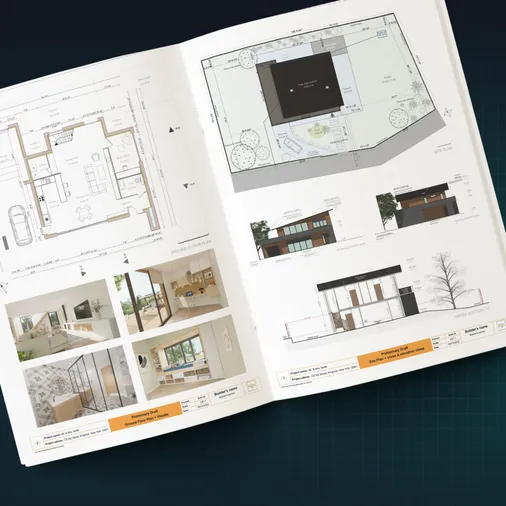
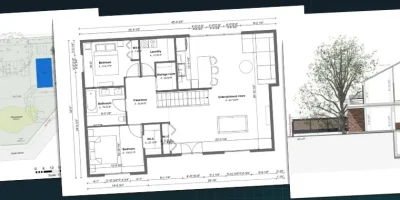
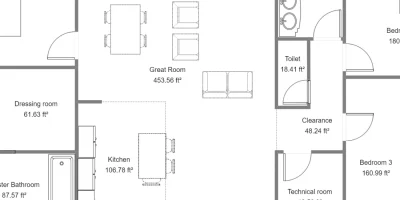
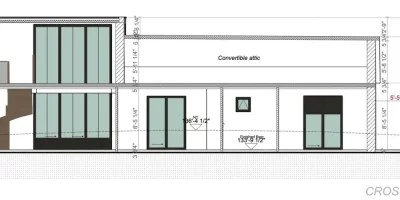
Plans – Get site plans, 2D floor plans, electrical plans, cross sections and elevation views — with all the technical details you need for a comprehensive project overview.
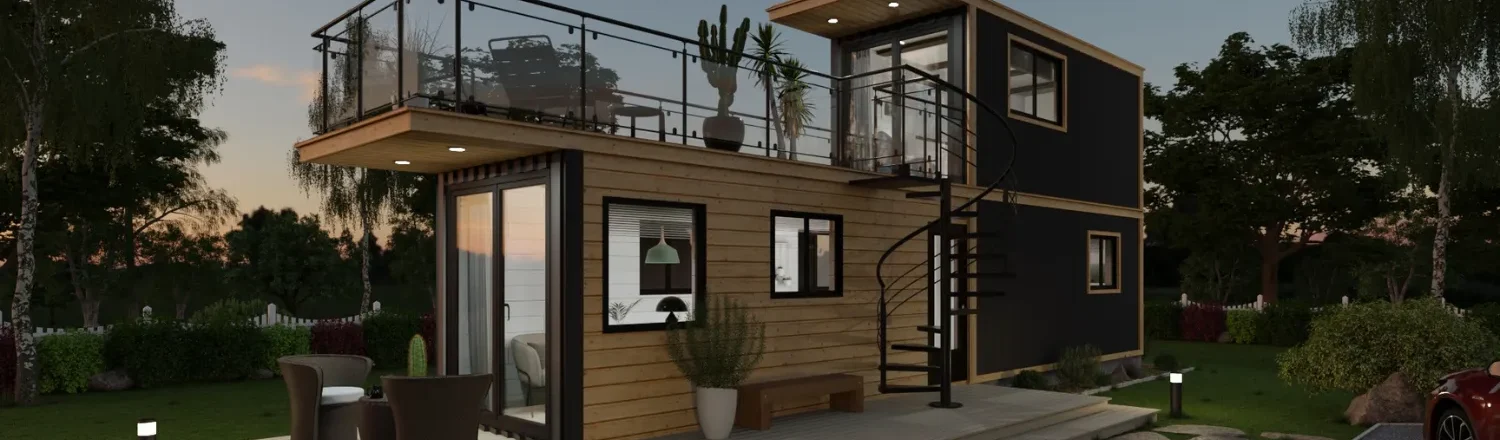
3D Visualizations – Use interior and exterior 3D renderings as well as 3D floor plans to help clients understand the finished project.
Documentation – Manage all your visual documents in one place, so it’s easier to present and sell your projects.
No credit card required, no commitment
What is the Maximum Size of a Tiny Home?
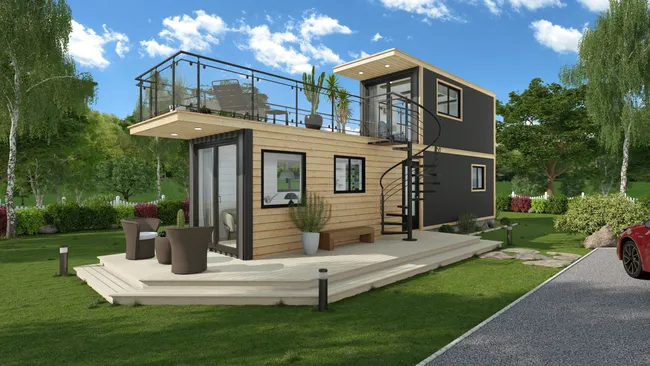
In the United States, the maximum size of a tiny home is 400 square feet of floor area, excluding lofts, per Appendix BB of the 2024 International Residential Code (IRC).
Go above that limit and the project gets reclassified as a small house or standard home, falling under the same building regulations as a traditional house.
That’s the line you can’t cross if you want the tiny home to qualify under tiny house rules instead of full residential code.
But here are a few more things to keep in mind before you sign off on the size of tiny homes you’re quoting:
Foundation vs. wheels: A foundation-built tiny home and a tiny home on wheels (THOW) may follow different compliance paths depending on how they’re classified.
- Foundation builds, also called permanent foundations, typically follow the 2024 IRC Appendix BB.
- THOWs, when classified and used as permanent dwellings, typically also need to follow the IRC tiny home rules as well as the maximum allowable size set by transportation laws.
So can tiny homes legally be considered RVs (recreational vehicles) and bypass the IRC code?
Good question…here’s the answer.
The Recreation Vehicle Industry Association (RVIA) states in their document Important Information Regarding “Tiny Homes” and the RV Industry that “If a manufacturer of tiny homes intends for its units to serve as a permanent residence — and markets its tiny home products to consumers for that purpose — then these units cannot be considered RVs or PMRVs.”
It’s also important to keep in mind that local rules vary.
Building codes, zoning laws, and individual states each set their own rules.
So always verify with the AHJ (Authority Having Jurisdiction) in the project’s location before you commit to a tiny home size.
Average Dimensions of a Tiny House
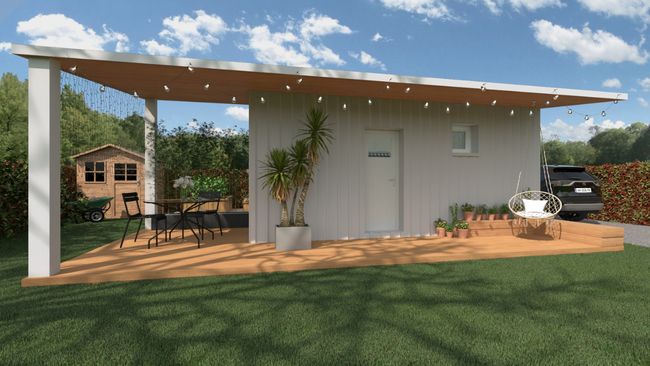
The average size of a tiny home is between 100 and 400 square feet, with most builds landing in the 150 to 250 square foot range.
That’s the sweet spot where you get a livable layout without bumping into code or transport constraints, and it’s the size of tiny homes most US contractors are quoting today.
For a tiny house on wheels, here’s where the dimensions usually shake out and why.
Width:
- 8.5 ft (102 inches). That ceiling is the legal max on US roads without a wide load permit.
- 103-120 inches (10 ft). These are some of the most popular widths for tiny homes on a trailer. You will need a wide load permit for any state you’re travelling through.
- 121-143 inches. In addition to the wide load permit, you will also likely be subject to other restrictions depending on the state you’re traveling through.
- 12ft or wider. You’ll need permits, pilot vehicles…the works.
- Always double check local laws and regulations.
Length:
- 20 to 28 feet for most builds.
- 40 feet is generally the maximum allowable size, but trailers above 28 feet get much harder to tow.
Total height:
- 13.5 feet maximum, including the trailer.
- That number sits just under the standard 14-foot bridge clearance most US states require, which keeps you clear of low bridges.
Inside the shell, ceiling heights matter just as much as the footprint, and well-designed loft spaces are what make a small footprint feel livable:
- Main-level clearance: 6.8 to 7 feet. That’s the practical interior space range once you account for the trailer deck, slab, and roof framing.
- Loft clearance: 3.5 to 4 feet. Just enough to sit up in bed. Anything less and the loft becomes unusable as a sleeping space.
- Lofts: typically 35 to 80 sq ft. A loft pushes the sleeping area off the main level and frees up living space below.
These numbers shift if you’re building on a foundation, where you have more room on height and width because road law doesn’t apply.
For any tiny home on wheels, the dimensions above are your hard ceiling, and most builders find that 200 to 300 square feet hits the sweet spot for a livable tiny home.
Tiny House Dimensions by Room
Contractors quoting or designing tiny home projects need room-level minimums to build accurate plans.
Here’s what each zone needs to actually function as a livable area.
Bedroom Square Footage in a Tiny House
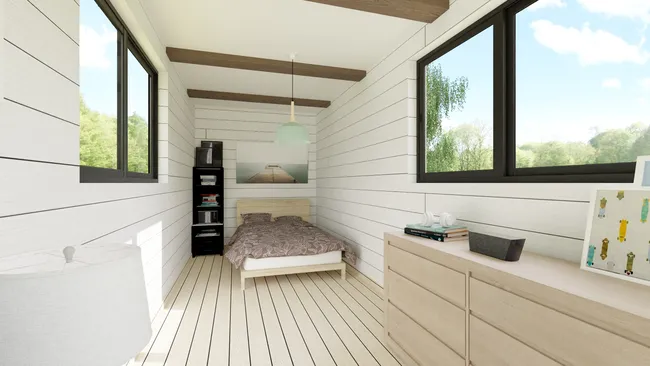
A minimum functional bedroom in a tiny house is around 50 square feet for a bedroom with a double bed with a bit of walking clearance on either side.
That’s smaller than the average home sleeping room (around 130 sq ft) but workable in such a small space if you plan it right.
Three layouts cover almost every tiny home build:
- Sleeping loft: 35 to 50 sq ft of sleeping area. 3.5 to 4 feet of headroom, just enough to sit up. Common in THOWs because it doesn’t eat main-level square footage.
- Ground-floor sleeping space: 60 to 80 sq ft. Enough for a bed, a small dresser, and a path to the door. Better for tiny homeowners with mobility concerns.
- Loft as flex space. Some tiny house owners turn the sleeping area into a reading nook, kid’s room, or daytime home office.
Kitchen Dimensions in a Tiny House
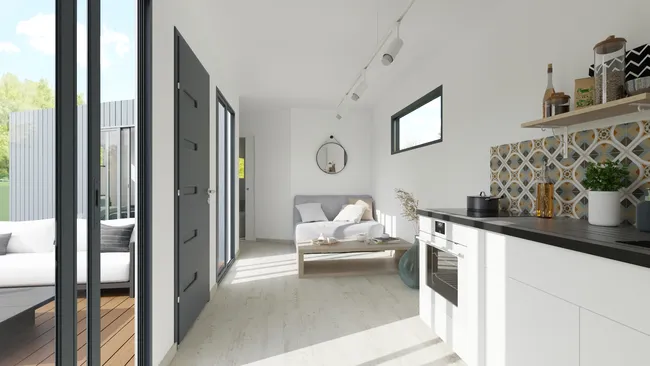
A minimum functional galley kitchen in a tiny house is about 40 square feet, with a 24-inch deep counter on one side and a 36-inch aisle in front.
The typical range runs 40 to 70 sq ft of functional space, depending on whether you fit a full kitchen with a stove, full-sized fridge, and dishwasher, or you go scaled-down with a two-burner cooktop and a mini fridge.
A few constraints worth flagging:
- Counter depth. Standard depth is 24 inches. Drop to 18 inches in a pinch, but you’ll lose room for most full-size appliances.
- Appliance sizing. Apartment-size and RV-size appliances exist for a reason. Plan early so the cabinetry boxes match.
- Aisle width. 36 inches is the practical minimum. Anything tighter and two people can’t pass.
Tiny House Bathroom Dimensions
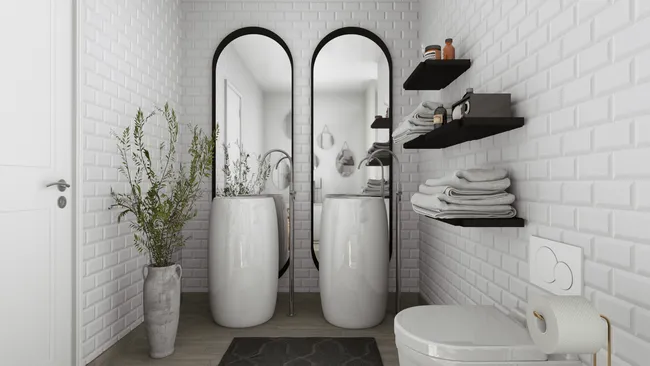
The minimum code-compliant tiny house bathroom is between 15 and 25 square feet, depending on the layout and the AHJ.
- For toilet clearance, you need a minimum of 15 inches from the centerline of the toilet to any sidewall, and 21 inches of clear floor space in front.
- A standard shower stall minimum is 30 by 30 inches, though 32 by 32 or 36 by 36 is more comfortable and what most tiny homeowners actually want.
If you want to maximize space savings, consider a wet bath.
The shower head serves the entire bathroom, with the toilet and sink built to handle the splash.
Combo tub/showers are also popular.
A scaled-down 54 or 60-inch tub doubles as the shower.
Costs more sq ft but feels closer to a full bath and the tub provides some extra utility for bathing kids or pets.
Living Area Dimensions in a Tiny House
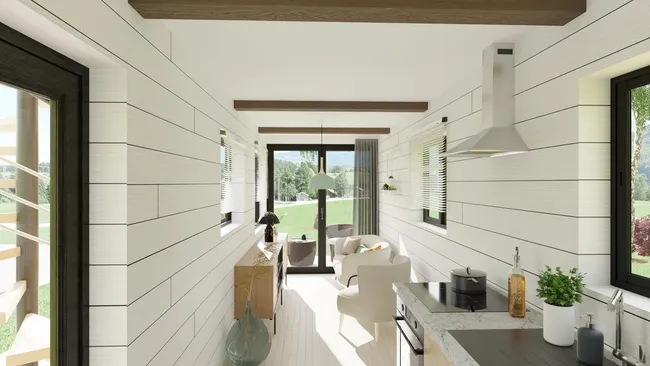
A minimum functional living area in a tiny house is around 60 to 80 square feet, just enough for a loveseat, a small coffee table, and a path through.
Compared to traditional homes that average 300 sq ft of living space, tiny homes have to do more with much less space.
A few benchmarks worth keeping handy:
- Minimum functional: 60 to 80 sq ft. Loveseat, side table, walking path. That’s it.
- Typical range: 70 to 120 sq ft. The upper end gets you a small couch, an accent chair, and a TV wall, with more room for a second seat.
Most tiny homes do an open plan to combine the living space with the dining or kitchen, which makes such a small space feel bigger than the math says.
A few design notes for living areas:
- Multifunctional furniture is king. A console table that doubles as a desk, a coffee table with built-in storage, and similar pieces help you make the most of the space.
- Treat the living area as a multi-use room. Living by day, dining at meals, even a workspace for tiny homeowners who run a business from home.
- The question isn’t how much space your client thinks they need. It’s how much they actually use day to day, and how to design the rest as flex zones.
Size of Tiny Homes on Wheels vs. Foundations: How It Affects Dimensions
The single biggest factor that drives a tiny home’s dimensions is whether it sits on wheels or on a permanent foundation.
A tiny house on wheels is bound by road law: 8.5 ft of width, 13.5 ft of height including the trailer, and 40 ft of length.
Cross any of those and you’re into special permit territory and pilot vehicles and extra expense.
A tiny home on a permanent foundation has no such limits beyond local zoning (remember to always check!) and the IRC’s 400 square feet ceiling, which means more freedom in width, height, and layout.
A few design and dimension points that matter on the bid:
- Deck type changes interior height. Deck-over trailers sit flat above the wheel wells, which gives you a uniform base but cuts your overall ceiling height. Deck-between (drop axle) trailers ride lower and give you more vertical clearance inside the tiny house.
- Axle and weight cap the build. Tiny house trailers run dual or triple axles with weight ratings between 5,200 and 8,000 pounds per axle. Always overestimate the dry weight before you choose the trailer.
- Foundation unlocks real-house features. A foundation lets you spec wider walls (more insulation), larger windows, and a real staircase to the loft instead of a ladder.
- Foundations also unlock more layout flexibility. When you’re not confined to the narrow width of a trailer, there’s a lot more you can do with the layout.
Here’s how the two options compare side by side:
| Dimension or feature | Tiny home on wheels (THOW) | Tiny home on foundation |
| Maximum width | 8.5 ft (without special permits), 10-12 feet (with special permits and requirements) | Limited only by local zoning |
| Maximum height | 13.5 ft including trailer | Limited only by local zoning |
| Maximum length | 40 ft | No road-law limit |
| Maximum square footage | 400 sq ft per IRC Appendix BB | 400 sq ft per IRC Appendix BB |
| Main-level ceiling | 6.8 to 7 ft typical | 8 ft or more, builder’s choice |
| Interior walls | Few, to keep the space as open as possible | Flexible |
| Appliances | RV or apartment-size are typical | Full-size workable |
| Mobility | Movable | Permanent |
| Code path | Transportation laws / RV or IRC rules depending on how classified | IRC Appendix BB / local code |
How to Create a Tiny Home Floor Plan with Dimensions in Cedreo
The fastest way to design a tiny home floor plan with accurate dimensions is to use Cedreo, a 3D home design software built for contractors and builders who need to spec, render, and present a tiny home in hours instead of days.
If you don’t have an account yet, you can create a free one now before you start.
Here’s how to build a tiny home design in Cedreo:
- Set up the project. Optionally upload a PDF or DWG to trace over and use the blue ruler to set your scale against a known dimension (like the 8.5 ft trailer width).
- Draw walls and define zones. Use the wall tool to draw the perimeter, the partition wall tool to divide bedroom, bathroom, kitchen, and living space.
- Set ceiling and loft heights. In the level tab, set the main-level height under the ceiling (6.8 to 7 feet for a THOW). Add level for lofts and drop the height to 3.5 to 4 feet.
- Place doors and windows. Pick your door, window, or sliding door style and customize dimensions.
- Add 3D furnishings. Drop in 3D furniture, cabinetry, appliances, and plumbing fixtures.
- Apply materials. Apply flooring, wall finishes, and exterior siding.
- Render and export. Generate photorealistic renderings of the interior and exterior in about five minutes.
- Create your client-ready presentation. Add the 2D floor plan, elevations, cross sections to a project presentation document for the client.
Whether your client wants to own a tiny house on wheels or a permanent build on land, Cedreo lets you design the tiny house, render it, and present it in one tool.
Try Cedreo for free today and design tiny home projects that land you more clients!
Tiny House Average Size FAQs
What are the average dimensions of a tiny house?
The average tiny house ranges from 100 to 400 square feet, with most builds landing between 150 and 250 square feet.
In Cedreo, you can draw any tiny home size in 3D before you commit to a build.
What is the minimum bathroom size in a tiny house?
A minimum tiny house bathroom is 15 to 25 square feet, depending on whether you go with a wet bath or a combo tub/shower setup.
Cedreo lets you drop in fixtures and verify clearances against local regulations.
How tall can a tiny house be?
A tiny home on wheels can be up to 13.5 feet tall, including the trailer, to stay under the legal road transport maximum height.
A permanent structure on a foundation can go higher, since it isn’t bound by transportation laws.
What is the maximum legal size for a tiny house in the US?
A tiny home maxes out at 400 sq ft of conditioned space (excluding loft spaces) per IRC 2024 Appendix BB.
Anything bigger gets reclassified and follows full residential code.
How wide can a tiny house be without a permit?
A tiny house can be up to 8.5 feet wide without needing a special permit for road transport.
Cedreo lets you snap walls to that exact constraint so you don’t accidentally over-build.
Can I design tiny home floor plans with dimensions in Cedreo?
Yes, Cedreo is built to handle tiny house dimensions down to the inch, including loft heights, narrow aisles, and compact appliances.
You can draw the tiny home floor plan, drop in furnishings, and generate renderings, all in about two hours.
How do tiny homes compare to traditional homes in size?
A typical home averages around 2,200 sq ft, while tiny homes top out at 400 sq ft, so a tiny home runs about 15 to 20 percent the size of an average home.
That gap drives every design choice, from appliance sizing to storage space to how lofts get used in smaller builds.