Most contractors live and die by referrals. Here’s how to build a digital marketing strategy that turns a good reputation into a steady flow of jobs.
Referrals are great until they dry up.
Every contractor knows the feeling.
One month you’re booked solid, the next you’re scrambling for work.
That’s the problem with building your entire contracting business on word of mouth.
It’s unpredictable.
And when homeowners search online for contractors (which over 90% of them do), they won’t find you if you don’t have a strong digital presence.
They’ll find the remodeling company down the street that actually shows up in search results.
Digital marketing for contractors isn’t about going viral or gaming the algorithm.
It’s about showing up where potential clients are already looking and proving you’re worth hiring.
This guide breaks down exactly how to do that, step by step.
Key Takeaways
- Referrals are your foundation, digital marketing builds on top of them. Together, they keep contractors’ schedules full year-round.
- What you show matters more than what you say. Floor plans, 3D renderings, and branded proposals build instant credibility before you ever meet a client.
- Cedreo helps contractors create professional floor plans, photorealistic 3D renderings, and branded project documents in hours, giving you a library of marketing assets that sell.
- Track leads per channel, cost per lead, and close rate by source. These three KPIs tell you where your marketing efforts are actually paying off.
Why trust us? Here at Cedreo, we’ve got 20+ years of experience working with housing pros in the home design space. So we know what it takes for contractors and builders to create project designs that help them land more clients!
See How You Can Create Complete Projects with Cedreo
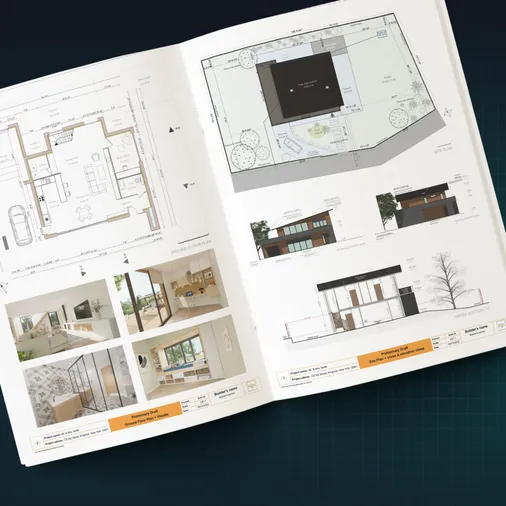
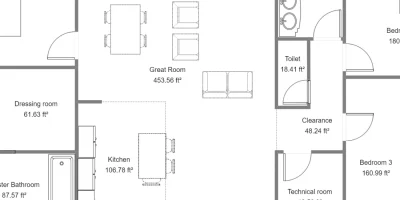
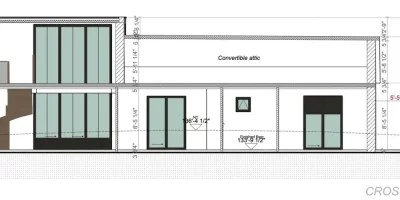
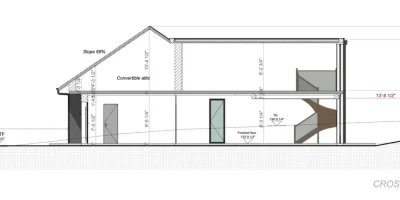
Plans – Get site plans, 2D floor plans, electrical plans, cross sections and elevation views — with all the technical details you need for a comprehensive project overview.
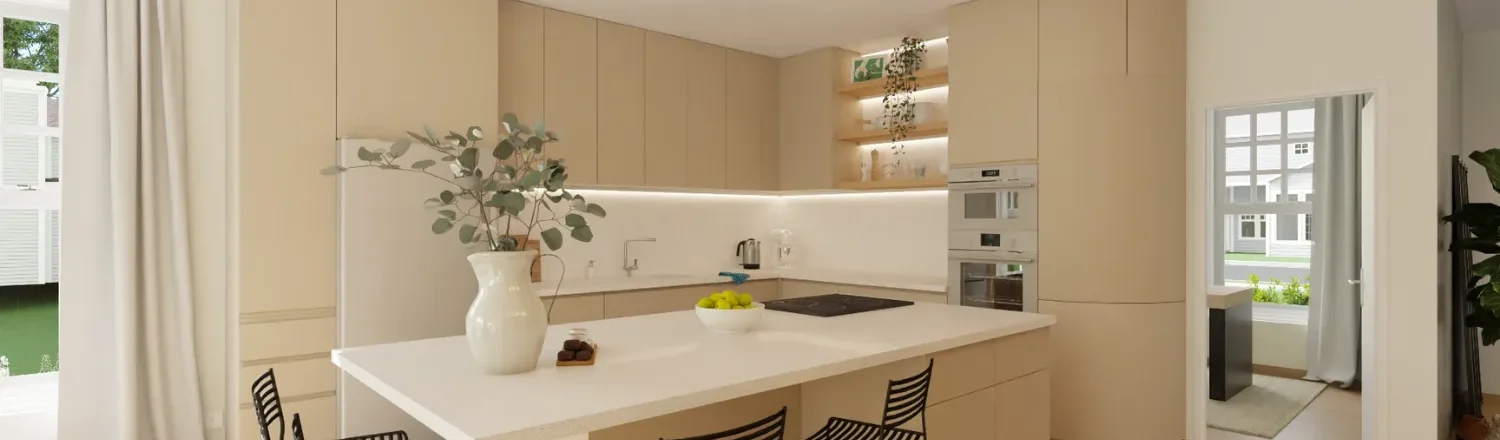
3D Visualizations – Use interior and exterior 3D renderings as well as 3D floor plans to help clients understand the finished project.
Documentation – Manage all your visual documents in one place, so it’s easier to present and sell your projects.
No credit card required, no commitment
Why Most Contractors Struggle to Get Leads Online
Here’s the hard truth about contractor marketing.
Most contractors are invisible online.
Why?
Not because they do bad work.
But because they can’t show what they can build.
Think about it from a homeowner’s perspective…
- They search online for a kitchen remodeler or a general contractor.
- They land on two websites.
- One has blurry phone photos of a half-finished job.
- The other has professional floor plans, photorealistic 3D renderings, and a polished project portfolio.
Who are they calling first?
The credibility gap is real.
Remember this – Your online marketing only works when your digital presence proves you’re a professional before anyone picks up the phone.
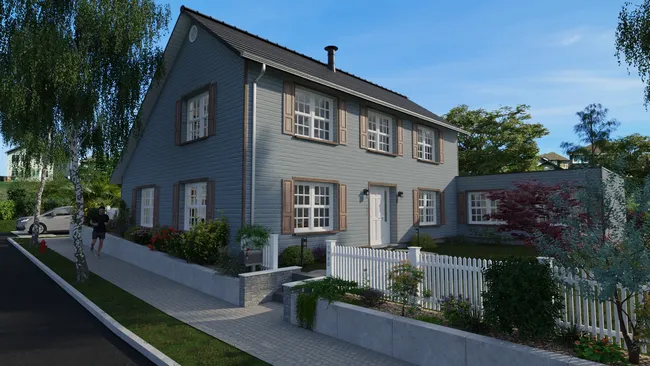
Most contractor marketing strategies focus on ads, search engine optimization, and search engine marketing, which matter.
But they skip the strong foundation: having something worth showing.
We’ve seen contractors we work with struggle with this exact problem.
They invest in a professional website and Google Ads, but their portfolio is empty or filled with low-quality images.
That’s like running ads for a restaurant with no menu.
Even the best contractor marketing services or digital marketing agencies can’t fix a weak portfolio.
So the first step in any digital marketing strategy isn’t picking a marketing channel.
It’s building a library of visual assets that prove your expertise to your target audience.
Here’s how to do that, the easy way.
What Serious Contractors Show In Their Online Presence

The contractors who close the most deals aren’t just better builders.
They’re better presenters.
So before a client ever picks up a phone to schedule the first meeting, when they find your online presence, they should already see evidence of your professionalism.
That means…
- Complete floor plans
- 3D renderings
- Branded proposals
- High quality project photos
These aren’t just design tools.
They’re marketing materials that do the selling before you walk through the door.
This is where a tool like Cedreo changes the game for your construction company.
Instead of spending days on design software or outsourcing to an architect, you create professional-grade visuals in a couple of hours.
That means every project concept becomes a marketing asset for your construction company.
Proof of process is proof of professionalism.
And in a competitive contracting or remodeling business, that proof is what separates the contractor who gets the callback from the one who doesn’t.
Here’s how to build the foundation of any contractor marketing strategy that actually works.
Floor Plans and Elevations that Signal Expertise
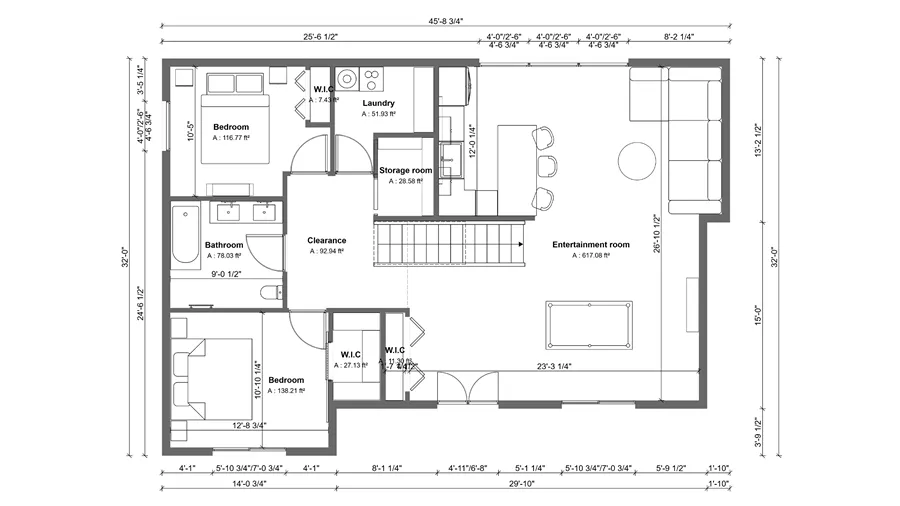
When a homeowner sees a detailed 2D floor plan with accurate dimensions and room layouts, they immediately feel like they’re dealing with a pro.
Add cross sections and elevations and you’ve gone beyond what most contractors ever show.
Floor plans communicate that you’ve thought through the project.
They show spatial relationships, traffic flow, and how rooms connect.
Elevation views show the exterior from every angle so clients know exactly what a finished home will look like from the street.
Experienced builders find that presenting a variety of plans in their online presence (website, socials, Google business page, etc.) builds trust faster than any sales pitch.
Clients stop asking “can you handle this?” and start asking “when can you start?”
3D Renderings Help Clients Visualize Before Signing

A photorealistic 3D rendering does something no amount of explaining can do.
It lets the client see the finished project.
- Interior renderings show lighting, materials, furniture placement, and finishes.
- Exterior renderings show the home with landscaping, lighting, and real-world context.
Cedreo generates these in about 5 minutes, with day and night lighting options and multiple camera angles.
One thing we hear all the time is that 3D renderings for contractors cut their revision cycles in half.
Clients approve faster because there’s nothing left to imagine.
That’s a massive advantage in your sales process!
And every rendering you create becomes a portfolio piece you can use across your digital marketing channels.
Branded Proposals and Project Documents
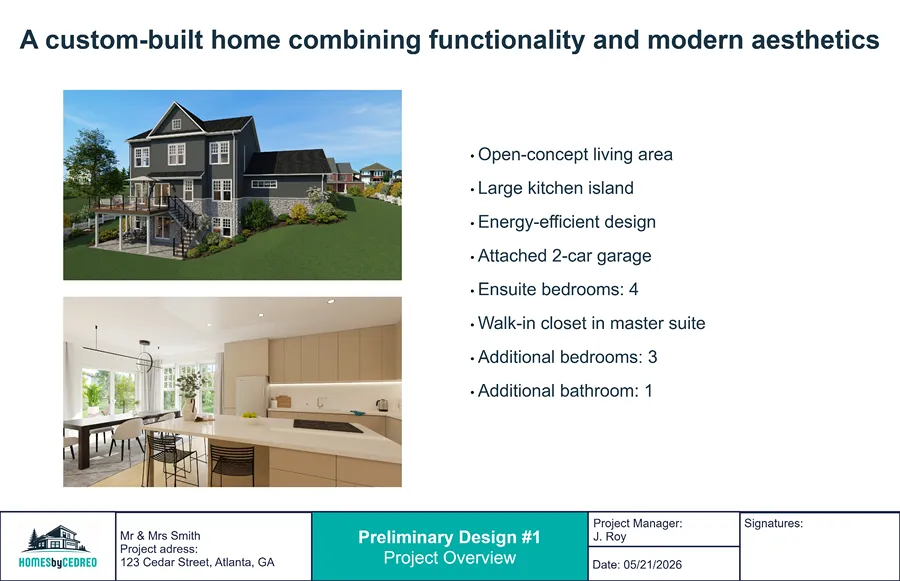
Your project presentation is often the last thing a client sees before deciding.
Make it count.
Cedreo lets you compile floor plans, renderings, and surface area tables into a single branded document with your company logo.
That means professional proposals, not a stack of loose printouts or a hastily formatted PDF.
These branded documents become powerful marketing materials.
Share them in proposals, on your website, or in social media posts.
They reinforce your brand every time a potential customer sees your work.
PRO TIP! Save every project presentation as a portfolio piece. Even if a project doesn’t close, the visuals are still marketing assets you can reuse across your digital marketing efforts.
Project Photos That Actually Look Professional
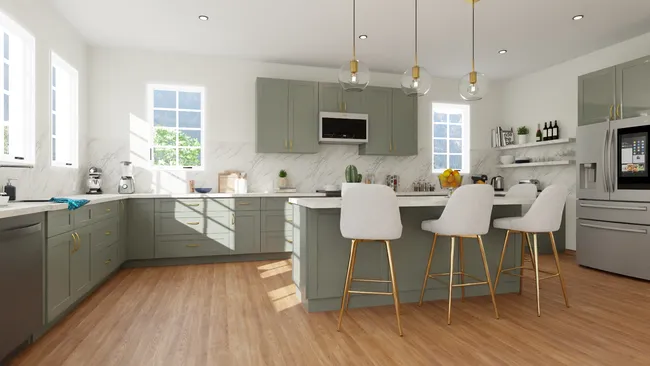
You don’t need a $3,000 camera to take portfolio-worthy photos.
Modern smartphones shoot in high enough resolution to look great on a website, a Google Business Profile, or Instagram.
What separates a good photo from a bad one isn’t the equipment.
It’s the framing and the light.
A few simple habits will make your finished project photos look polished every time:
- Shoot in natural light. Open blinds, turn on overhead lights, and avoid shooting at night or in a dark room. Flat, even light makes materials and finishes look their best.
- Shoot from corners. Standing in a corner and shooting diagonally across the room shows depth and gives a sense of the full space. Dead-center shots against a wall make rooms look flat and small.
- Keep the phone level. Tilted shots make walls look like they’re falling over. Most phones have a built-in grid or level guide in the camera app. Turn it on and use it.
- Clean the space first. Tools, cords, and construction debris in the background undercut even a great finish. Spend five minutes clearing the shot before you take it.
- Get close-ups of the details. Wide shots show the layout. Close-ups sell the craftsmanship. Tile work, trim, hardware, cabinetry joints…these are the details homeowners notice and clients brag about. Don’t skip them.
Take photos at every stage: demo, rough framing, mechanicals, and the finished result.
Process shots build credibility in a way that finished photos alone can’t.
They show homeowners that you run a tight, professional jobsite, which is exactly what they want to see before writing a big check.
PRO TIP! Show finished project photos next to your concept renderings to show that you can deliver on what you promised.
How to Use Those Assets to Create a High-Impact Online Presence
Once you have a library of floor plans, 3D renderings, proposals, and project photos, the question becomes: where do you put them?
The answer is…
Everywhere your potential clients are looking.
Each marketing channel serves a different purpose, but they all benefit from strong visuals.
Here’s how to deploy your Cedreo design assets and photos across the digital marketing channels that matter most for your contracting business.
Your Website: Build a Portfolio That Shows Up In Search Results & Converts
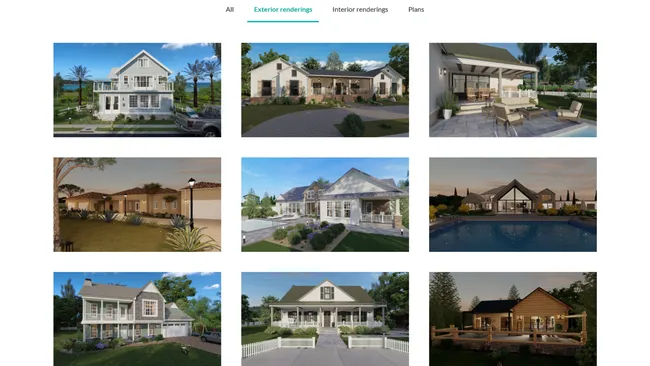
Your contractor website is your digital storefront.
And your portfolio page is the most important page on it.
This is where potential clients decide if your work matches what they want.
Here’s what a strong portfolio page looks like:
- A dedicated project entry for each job, with a short description of the scope
- Cedreo 3D renderings of the design paired with real photos of the completed build
- The before-and-after story: floor plan, rendering, finished result
- Clear labels for project type, location, and scope (e.g., “Kitchen Remodel, Austin TX – 400 sq ft”)
A professional website with a strong portfolio also boosts your search engine optimization.
Search engines and AI tools reward web pages with original, high-quality visual content.
A mobile friendly website with fast-loading images and clear project descriptions helps you rank higher in search results.
Do some keyword research to find out what homeowners in your area are typing into search engines.
Make sure each project page includes your core services, location, and relevant keywords so search engines can connect you with homeowners who search online for contractors in your area.
Strong content marketing on your site (project write-ups, how-to guides, local case studies) also boosts your search visibility.
Search engines reward websites that consistently publish useful, relevant content.
Google Business Profile: Visuals + Reviews
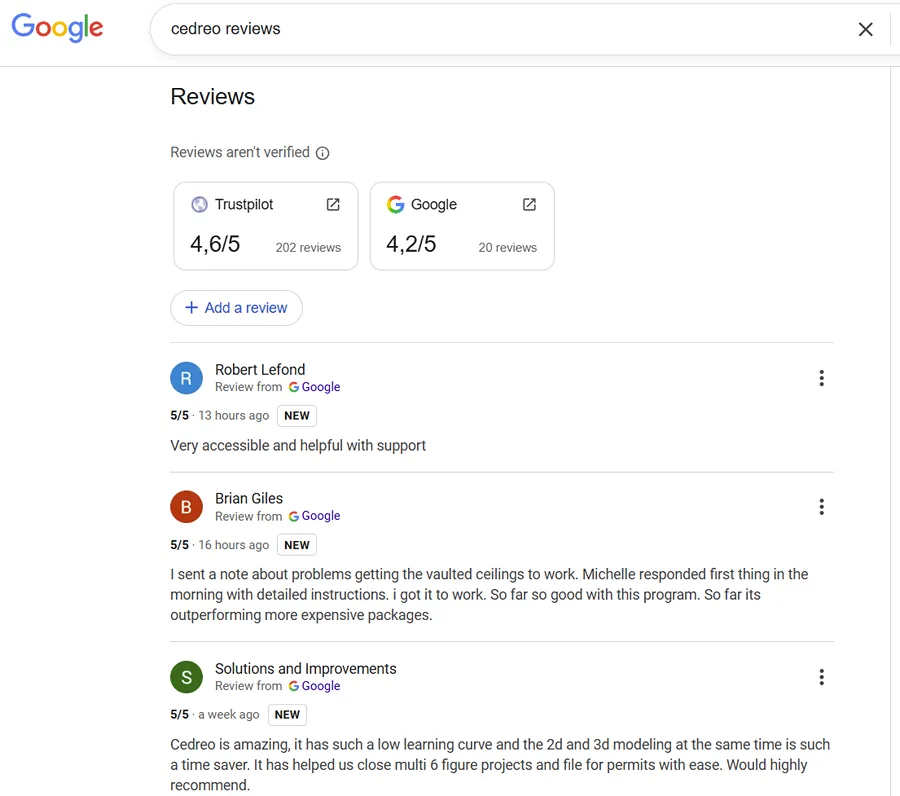
Your Google Business Profile is often the first thing potential customers see when they search online for local contractors.
Most profiles have a handful of grainy photos at best.
That’s a missed opportunity.
Upload your Cedreo 3D renderings, floor plans, and finished project photos directly to your Google Business profile.
Mix design visuals with real construction photos to show the full scope of your work.
This visual content helps you stand out in local search results and builds trust before anyone clicks through to your website.
Reviews are the other half of your Google Business strategy.
Ask every satisfied client to leave a review.
Then take their best quotes and share them on your social media platforms alongside project renderings and photos.
This kind of content marketing builds your social media presence and drives more traffic back to your profile.
Instagram: Visual Content & Social Media Marketing for Contractors

Instagram is a visual platform, which makes it perfect for social media marketing as a contractor.
The strategy is simple.
- Post before-and-after pairs using pre-construction photos of the location and Cedreo 3D renderings as the “before” (the design) and post project photos as the “after” (the build).
- Show work-in-progress shots to keep your audience engaged throughout a project.
- Share social media posts that tell the story of a project from concept to completion.
You can also ask your clients to post a photo of the finished work and tag your account so you can repost it.
User-generated content like this builds social proof and expands your reach to their followers.
And how often should you post?
You don’t need to post every day.
Consistent effort with quality content beats high volume with low quality every time.
Two or three strong posts a week with professional visuals will outperform daily phone snapshots.
Proposals: The Visual Advantage That Closes Deals
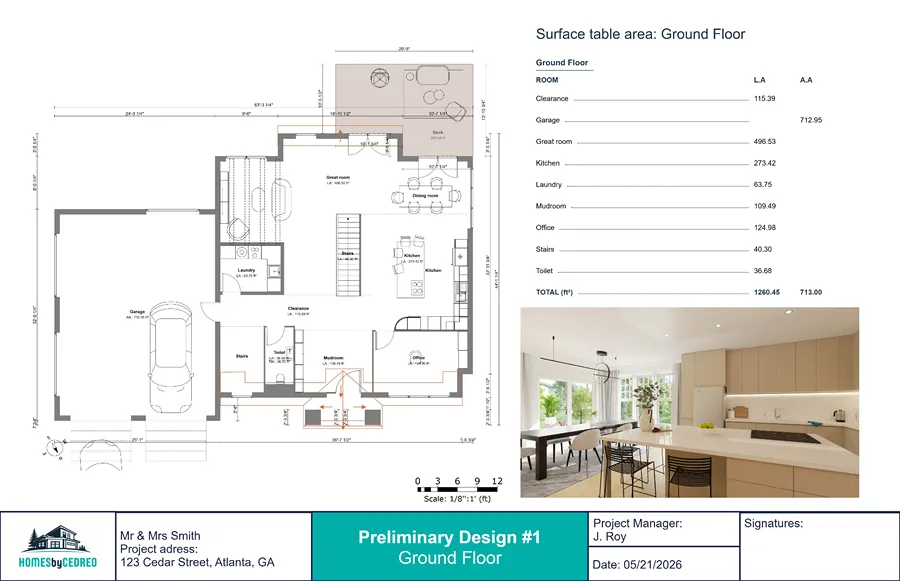
Here’s where your digital marketing assets directly impact your close rate.
When you show up to a meeting with a branded proposal that includes floor plans, 3D renderings, and surface area tables, you look like a different caliber of contractor.
And that’s because visuals are the number one conversion lever in proposals.
Clients don’t just want to hear about what you’ll build.
They want to see it.
Contractors who sell the fastest tend to send a preliminary 3D rendering before the first in-person meeting.
By the time they sit down with the homeowner, the project already feels real.
That shortens the decision cycle and increases your close rate significantly.
Other Contractor Digital Marketing Efforts To Boost Your Reputation
Visual assets are the foundation of online marketing for contractors.
But a complete contractor marketing strategy needs more than a portfolio.
These supporting marketing channels and strategies work together to build search visibility, generate leads, and keep your remodeling business top of mind.
Whether you handle the work yourself or hire a marketing agency for digital marketing services, understanding how each channel supports your construction marketing is important.
Local SEO: Show Up Where It Matters
Local SEO is how you get found when homeowners search online for contractors in your area.
It starts with your Google Business Profile, but it doesn’t end there.
Optimize your website for location-specific keywords.
If you’re a kitchen remodeler in Denver, your web pages should mention Denver, your neighborhoods, and the specific remodeling services you offer.
Build local citations (directory listings) with consistent name, address, and phone number across every platform.
The key directories every contractor should be listed on:
- Google Business Profile (the most important one)
- Yelp
- Houzz
- Angi (formerly Angie’s List)
- Better Business Bureau (BBB)
- HomeAdvisor
- Nextdoor Business
Each listing improves your local visibility and tells search engines (and Google’s search algorithm specifically) that your construction business is legitimate.
Search engine optimization for local terms takes time, but the local visibility it builds is worth the investment.
Local SEO is a long game that requires consistent effort, but it delivers some of the highest quality leads because these are homeowners actively searching for your services in your area.
Google Business Profile: How to Optimize It for SEO
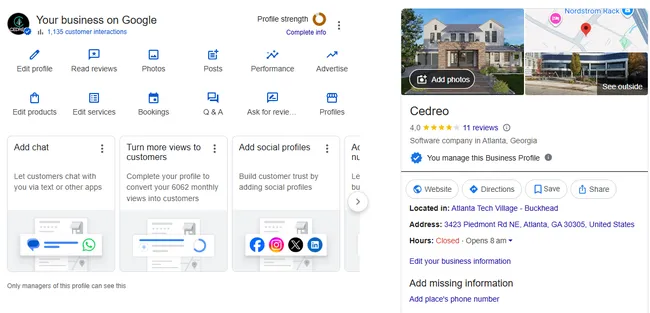
Most contractors claim their Google Business Profile (GBP) and then forget about it.
That’s a missed opportunity.
An optimized Google Business profile is one of the most powerful free tools in contractor marketing.
We’ve already talked about the importance of visuals on your GBP.
Here’s what a fully optimized profile looks like:
- Business name, address, phone number, and website filled out completely and consistently with your other listings
- The right primary category (e.g., “General Contractor,” “Remodeling Contractor,” “Home Builder”)
- A detailed business description that includes your core services and the cities or neighborhoods you serve
- Business hours kept up to date, including holiday hours
- Services section filled out with specific offerings (kitchen remodels, bathroom additions, deck builds, etc.)
- Posts published regularly (project updates, seasonal offers, before-and-after showcases)
- Q&A section populated with answers to common homeowner questions
Google uses your profile content to decide when to show your business in local search results.
The more complete and active your profile is, the higher you rank.
Treat it like a living page, not a one-time setup.
Online Reviews: Your Best Contractor Marketing Asset

Reviews are the digital version of referrals.
And they’re just as powerful for your search visibility.
More positive reviews on your Google Business profile and other places like Yelp and Nextdoor improve your ranking in local search results.
They also make potential clients more likely to contact you over a competitor with fewer (or worse) reviews.
So instead of leaving reviews up to chance, build a simple system: after every completed project, send a follow-up email with a direct link to your Google review page.
Make it easy and most clients will follow through.
Don’t just collect reviews. Respond to every single one, good or bad. Google rewards active engagement, and prospective clients notice when a contractor takes the time to reply, even if it’s replying to unhappy clients.
Google Ads and Local Services Ads
Social media advertising is one option, but paid search is where most contractors see the fastest results.
Paid advertising puts you at the top of the search results page immediately.
Google Ads let you target specific keywords like “kitchen remodeler near me” or “general contractor in [city].”
Local services ads appear above standard Google Ads and display your reviews, phone number, and a Google Guarantee badge.
For contractors, local services ads often deliver better results because they connect you with homeowners who are ready to hire.
Start a Google Ads campaign with a small budget, track your cost per lead, and scale what works.
Online advertising works best when it drives traffic to a professional website with a strong portfolio.
That’s why building your visual assets comes first.
Paid ads without a credible website is like targeted advertising that sends people to an empty store.
Email Marketing: Stay Top of Mind

Email marketing isn’t flashy, but it works.
While direct mail still has its place, email is faster, cheaper, and easier to track.
Build a list of…
- Past clients
- Leads who didn’t convert
- Anyone who’s shown interest in your remodeling services
Send a monthly email featuring your latest projects (with renderings), seasonal tips, or before-and-after showcases.
This keeps your contracting company in front of people who already know your work.
When they’re ready for another project or their neighbor asks for a recommendation, you’re more likely to be the first name they think of.
Or if you’ve got a slow period, send an email offering a discount or another incentive for clients contacting you for projects during that time.
Email marketing is a form of inbound marketing and content marketing that nurtures relationships over time.
But unlike paid marketing services, it costs almost nothing and can still be a steady source of repeat business and referrals.
Digital Marketing for Remodeling Contractors: What’s Different
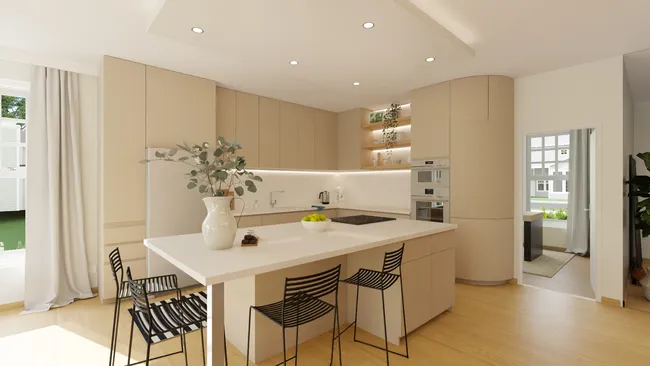
Digital marketing for home remodeling contractors has a few unique angles that set it apart from general contractor marketing strategies.
Here’s what sets remodeling contractor marketing apart:
Transformation content is your superpower.
- Before-and-after content performs better in the remodeling industry than almost any other type of post.
- A 3D rendering of the proposed design next to a photo of the original space tells a compelling story that homeowners share with friends and family.
Houzz is more powerful.
- Platforms like Houzz are goldmines for home remodeling companies and remodeling services providers.
- Homeowners go there specifically to find home remodeling companies and browse project ideas.
- Upload your best project photos and Cedreo renderings to your Houzz profile.
Neighborhood trust drives referrals.
- Nextdoor is a platform built around local communities, and it’s where homeowners ask their neighbors for contractor recommendations.
- Claim your business page, stay active, and let your satisfied clients do the talking.
Content marketing wins here.
- Regular posts showing the process (demo day, framing, finishes, reveal) keep your audience engaged and build a following of potential clients who are watching and waiting for the right moment to hire.
Any remodeling company that consistently shows its work online will eventually out-rank and out-sell competitors who rely on referrals alone.
It’s what helps a remodeling company build brand awareness and stand out in a crowded market.
Online Marketing for General Contractors: What’s Different
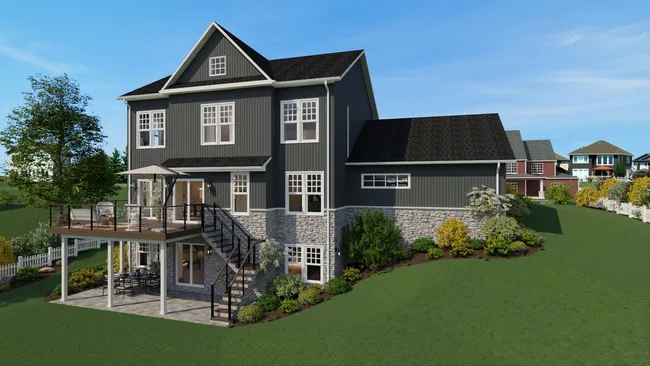
General contractors face a different challenge.
Your potential clients are both homeowners and other builders.
Your digital marketing strategy needs to speak to both audiences.
Here’s where to focus your online marketing as a general contractor:
Build a portfolio that shows your range.
- If you handle both commercial and residential projects, make sure your contractor website features both.
- Showing diverse capabilities signals to potential customers that your construction company can handle complex, large-scale work.
Use LinkedIn seriously.
- It’s where home builders, developers, and commercial clients look for partners.
- Share project case studies, industry insights, and your professional credentials.
- Build brand awareness with decision-makers who hire general contractors for bigger projects.
Showcase project scale.
- General contractors often work on larger, more complex builds.
- Use Cedreo to create detailed floor plans, site plans, and elevation views that communicate the scope and complexity of your work.
Target homeowners and builders separately.
- Your messaging should differ depending on who you’re reaching.
- Homeowners want to see finished results and understand cost.
- Builders and developers want to see process, timeline management, and your ability to coordinate subcontractors.
The key to digital marketing for general contractors is demonstrating the full extent of your capabilities.
A strong digital presence with diverse project examples positions your construction company as a business that can take on anything.
How to Know If Your Digital Marketing Plan Is Working as a Contractor
You don’t need a marketing agency to tell you if your strategic digital marketing is paying off.
You need three numbers or KPIs (Key Performance Indicators).
- Leads per channel. How many inquiries are you getting from your website, Google Business, social media, and paid ads? Track each source separately so you know which marketing channels deliver.
- Cost per lead. Divide your marketing investment for each channel by the number of leads it generated. This tells you where your money works hardest.
- Close rate by source. Not all leads are equal. Track which channels produce high quality leads that actually become paying clients.
Set up Google Analytics (GA4) on your professional website to track website traffic and see where visitors come from.
Review your lead sources monthly.
For example, if your Google Ads campaign drives website traffic but nobody converts, the problem might be your landing page, not the ad.
Check how visitors from different search engines and marketing channels behave once they land on your site.
For example, if Instagram generates engagement but zero leads, you may need stronger calls to action in your social media posts.
Contractors who track these numbers consistently make smarter decisions about where to invest their time and budget.
Remember…
- A marketing plan without measurement is just a guess.
- A marketing system with data behind it becomes a reliable engine for business growth.
Build a Contractor Online Marketing Strategy That Sells for You
The best digital marketing strategy for contractors starts with a strong foundation: professional visuals that prove your expertise.
Whether you run a home remodeling business or a general construction company, the same principle applies.
When your portfolio, proposals, and online presence are built on high-quality designs, every marketing channel works harder.
Cedreo gives contractors the tools to build that foundation fast:
- Create detailed 2D floor plans, cross sections, and elevation views
- Generate photorealistic 3D renderings in about 5 minutes
- Build branded project presentations with your company logo
- Access 10,000+ furnishing and material options
- Work from any computer with a cloud-based platform
Stop relying on referrals alone.
Start building the digital marketing assets that generate leads and sign contracts.
Sign up for a free Cedreo account today!
Digital Marketing for Contractors FAQs
How do I market myself as a contractor?
To market yourself as an independent contractor start by building a professional website with a portfolio of your work, including floor plan, 3D rendering, and project photos. Then optimize your Google Business Profile, collect reviews, and post project visuals on social media to build a strong digital presence.
What is the most effective digital marketing strategy for contractors and home remodeling companies?
The most effective approach combines visual proof (professional designs and renderings) with local SEO and a strong Google Business Profile. Cedreo helps contractors create these visual assets quickly so they can focus on winning projects.
How much should a contractor spend on digital marketing?
Most contractors allocate 5-10% of revenue to marketing. Start small with free channels like Google Business and social media, then invest in paid ads once you can track your cost per lead and return on your marketing investment.
How do general contractors get more leads online?
General contractors get more leads by showing diverse project portfolios on their website, optimizing for local SEO, running targeted local services ads, and staying active on LinkedIn. Cedreo makes it easy to create project visuals for every type of job.
Is Google Ads worth it for contractors and remodeling businesses?
Yes, when done right. Start with a small Google Ads campaign targeting high-intent keywords in your area and track your cost per lead. Local services ads often deliver even better results for contractors because they show your reviews and a trust badge.
What social media platform is best for contractors?
Instagram works best for visual content like before-and-after project photos. Facebook is strong for local community engagement, and LinkedIn helps general contractors connect with commercial clients and home builders.
How do I get more reviews as a contractor?
Send a follow-up email or text message after every completed project with a direct link to your Google review page. Create a system for consistently asking for reviews and make it easy for clients to leave them.
Does SEO work for small contracting businesses?
Yes, local SEO is especially effective for small contracting businesses because it targets homeowners searching in your specific area. With consistent effort on your Google Business Profile and contractor website, you can compete with larger companies in local search results.
What is local SEO for contractors?
Local SEO is the process of optimizing your online presence to appear in local search results when homeowners search for contractors in your area. It includes Google Business Profile optimization, local keywords on your website, directory listings, and reviews.
How can remodeling contractors stand out online?
Remodeling contractors stand out by showcasing transformation content. Use Cedreo to create 3D renderings of proposed designs, pair them with photos of completed projects, and share them across your website, Houzz profile, and social media platforms.
How do contractors use 3D renderings in their marketing?
Contractors use 3D renderings on their website portfolio, Google Business Profile, social media, and in client proposals. Cedreo generates photorealistic interior and exterior renderings that help potential clients visualize potential projects.
What is the best way to build an online portfolio as a contractor?
Create a dedicated portfolio page on your website showcasing your best projects with floor plans, 3D renderings, and finished photos. Cedreo helps you build a library of professional design assets that make your portfolio stand out from competitors.