Proven strategies for contractors who want more jobs, better margins, and a construction business that scales without burning out
Growing a contracting business isn’t about working more hours.
It’s about working on the right things.
Most construction professionals hit a ceiling around two or three projects at once and can’t figure out why.
The answer isn’t always a bigger crew or new equipment.
It’s often the handful of moments before work begins: how leads find you, how you show up online, how you build trust, and how you justify your price.
This guide walks through six stages every construction business moves through, from lead generation to scaling operations.
Most contractors are good at one or two of these stages.
The best contractor business growth comes when you’re good at all 6.
So by the end, you’ll have a clearer picture of where your business is likely losing time and money and exactly what you should fix first.
Key Takeaways
- The biggest levers for business growth happen before work begins: leads, trust, and proposals.
- Design-build firms win bids because they show clients the finished project. A general contractor can close that gap without hiring designers.
- Visual proposals with floor plans and 3D renderings consistently outperform text-only estimates head to head.
- Cedreo gives contractors a way to create client-ready plans and photorealistic renderings in about two hours, so you can sell faster and grow your construction business with less chaos.
Why trust us? Here at Cedreo, we’ve got 20+ years of experience working with housing pros in the home design space. So we know what it takes for contractors to create project designs that help them land more clients!
See How You Can Create Complete Projects with Cedreo
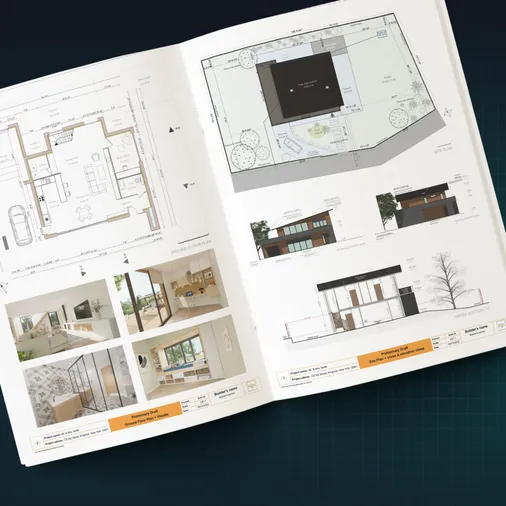
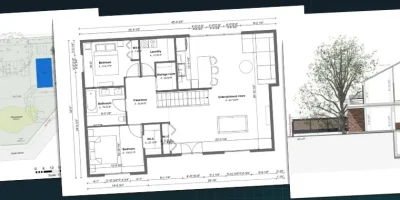
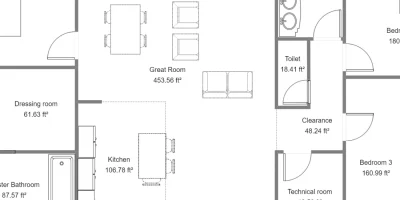
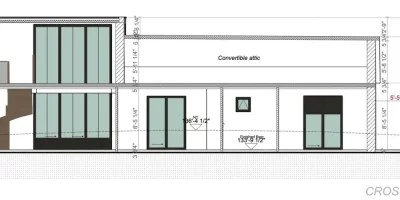
Plans – Get site plans, 2D floor plans, electrical plans, cross sections and elevation views — with all the technical details you need for a comprehensive project overview.
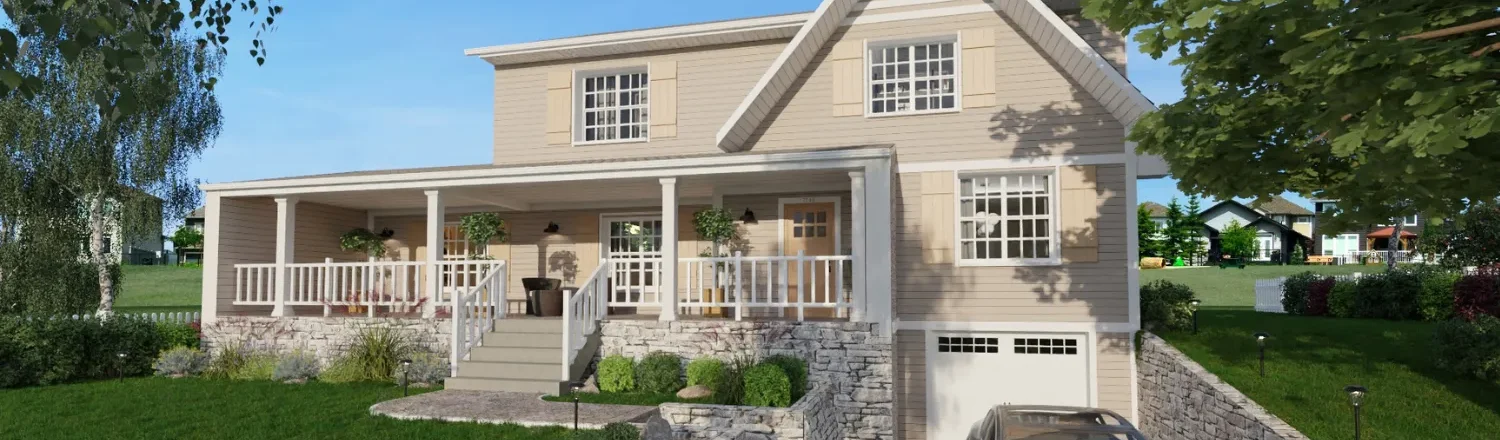
3D Visualizations – Use interior and exterior 3D renderings as well as 3D floor plans to help clients understand the finished project.
Documentation – Manage all your visual documents in one place, so it’s easier to present and sell your projects.
No credit card required, no commitment
Stage 1: How to Get High-Quality Contractor Leads
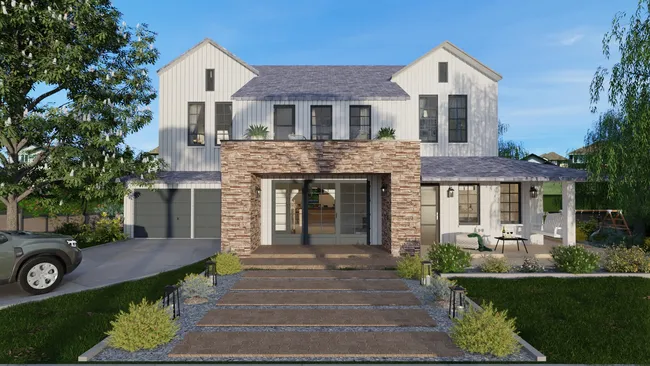
The best leads don’t come from platforms…they come from making your work visible and letting your reputation do the pre-selling before the phone rings.
You’ve probably seen a lot of contractors chase leads the wrong way.
They pay for shared lead services, compete with five other independent contractors on price, and wonder why their close rate hovers around 5%.
The contractors with real business growth do the opposite.
They focus on fewer, warmer leads that close at 40-60%.
Here’s what separates a high-quality contractor lead from a time waster:
- They’ve already seen your work. A neighbor from across the street showed them the remodel, or they found your portfolio on Houzz. They arrived with trust already built.
- They have a specific project in mind. They’re not “thinking about maybe doing something to the kitchen someday.” They’ve decided.
- They’re not bidding you against three other contractors. You’re the first call, not the last resort.
- They match your target audience. They want the kind of work you do best, in the price range you actually want, and they fit the type of business you’re trying to grow.
In addition to word of mouth recommendations, online reviews are a huge part of building trust.
A small business with 50+ five-star reviews on Google and Houzz pre-sells potential clients before the first call.
Reviews are proof of high quality work, and proof of high quality work is what gets you the next inquiry.
The contractors who win here aren’t necessarily paying for more leads.
They’re leveraging their current work to build trust and generate leads organically.
Read the article on how to generate leads for contractors →
Stage 2: How to Set Up Your Contracting Business Online So People Actually Find You
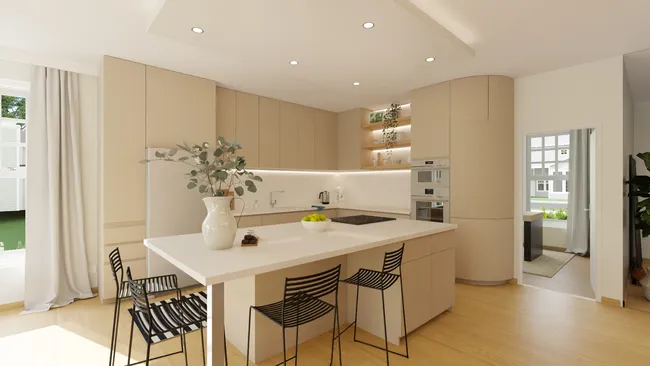
Set up your contracting business online with professional visuals and consistent online reviews so clients can find you and arrive at the first meeting with half the trust already built.
When a prospect Googles your name after a referral, the next 60 seconds decide whether they call you or keep scrolling.
A thin Google Business Profile, outdated Houzz portfolio, or social feed full of grainy jobsite photos creates doubt.
A complete presence with well-taken project photos, photorealistic renderings, reviews, and a clear portfolio closes the deal before you’ve spoken.
Over 90% of homeowners search online for contractors before calling one.
The three channels that matter most for a small construction business:
- Google Business Profile: photos, service offerings, service areas, and reviews. This is the first result most prospects see.
- Houzz: where serious homeowners plan remodels. Highest-intent audience in the construction industry.
- Social media (Instagram and Facebook): where referrals get reinforced and before/after posts travel.
- Local organizations: chambers of commerce, BNI groups, and home builder associations keep your construction company top of mind with local referral partners.
The goal isn’t to post everywhere.
It’s to show up consistently in the places your target audience actually looks, with visuals that prove you can execute.
Keep an eye on industry trends too.
Homeowners’ tastes shift, and a construction company that posts content aligned with what people are searching for this season gets found more often.
A strong reputation online doesn’t replace word of mouth.
It amplifies it.
Read the article on digital marketing for contractors →
Stage 3: How to Build Client Trust Before Work Starts
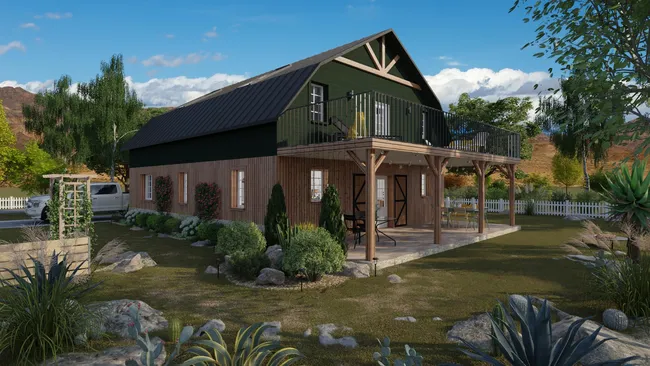
Build client trust with 3D project visuals that clearly communicate designs and ideas.
Show clients exactly what their specific project will look like.
Floor plans combined with 3D renderings are huge when it comes to building client confidence, and are so much better than just verbal explanations or floor plans alone.
Think about what happens in a typical first meeting.
You walk through the space, take notes, listen to what the client wants, and promise to come back with a proposal.
You explain your ideas.
They try to picture the finished kitchen.
Their spouse ends up picturing something different in their mind.
Nobody agrees on what they actually want.
The deal goes cold, or they agree to start the project but the end result misses client expectations because it’s not what they were imagining.
Now imagine a different meeting.
You come back with a photorealistic 3D visual of their specific space, their layout, their finishes, their cabinets.
Suddenly everyone is pointing at the same screen, making decisions together, and saying yes.
That’s the trust-building moment most contractors skip because they think it requires a design team.
It doesn’t.
Smart contractors use contractor software for home design like Cedreo.
- You don’t need a CAD background
- You don’t need to be a tech whiz
- And you can still create realistic 3D project visuals fast
Read the article on Cedreo 3D renderings for contractors →
Stage 4: How to Write Proposals That Win Business and Justify Your Price

Winning proposals include a combination of floor plans and 3D visuals and not necessarily the lowest price.
Contractors who lose bids rarely lose on price…they lose because the proposal didn’t show why the higher price is worth paying.
Picture the scenario every contractor has lived through.
Three bids on a remodel project: yours at $42,000, the others around $31,000, all on one-page estimates with different logos.
From the homeowner’s chair, there’s no visible reason to pick the most expensive option.
So they don’t.
A winning contractor proposal flips that math by giving the client something concrete to compare beyond the bottom-line number.
From what we’ve seen work, the proposals that close at the highest rate share a few common traits:
- Clear sections: cover page, credentials, scope, visuals, pricing, timeline, payment terms, and contract language.
- A visual package with floor plans and photorealistic 3D renderings of the actual project, not stock images.
- Inclusions and exclusions spelled out so scope creep dies before it starts.
- A pricing format that fits the client (lump sum for residential remodels, line items for commercial work).
- A delivery moment with a walkthrough conversation, not a cold email attachment.
A strong visual proposal also gives you a competitive advantage on high-quality projects, where the client most needs help picturing how the finished construction project will come together.
It shortens decision making, because clients don’t need to schedule three more meetings to “think it over.”
They’ve already seen the answer.
Read the article on contractor proposal templates →
Stage 5: How to Compete With Design-Build Firms
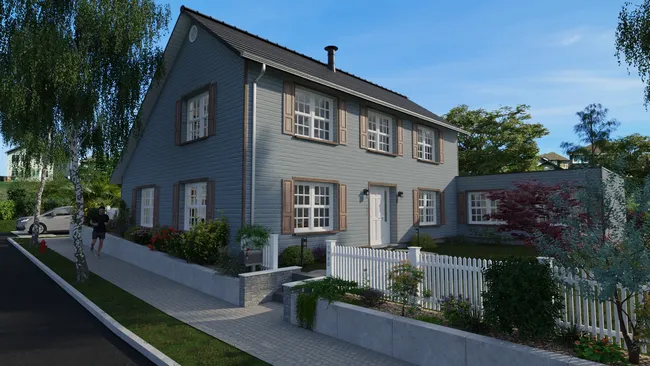
Contractors can compete against design-build firms by using modern software like Cedreo to create professional project visuals themselves.
Design-build firms win because they show the project before signing.
A contractor with the right tools can close that gap without the overhead of an in-house designer.
Here’s the honest truth contractors need to understand.
The design-build advantage isn’t structural.
It’s presentational.
Design-build firms aren’t necessarily winning because they build better.
They’re winning because they bring floor plans, renderings, and material selections to the first real meeting while the GC down the road is still promising an estimate “by next week.”
And when he does show up, it’s just a written scope of work, a floor plan, and a price tag.
Three specific moves level the playing field and give you a real competitive edge:
- Produce high-quality client-facing deliverables: Use Cedreo to create floor plans, elevations, renderings, and project presentations. Clients don’t know or care what software made them.
- Designate a single point of contact per project. One project manager, one phone number, one accountable name.
- Roll design work into the total project price. No itemized design fee makes your proposal feel cleaner than a design-build invoice with three prices.
Contractors who make these changes land projects they used to lose, at higher margins, and without adding headcount or restructuring their organizational structure.
Read the article on design-build vs. general contractor →
Stage 6: How to Organize Projects and Job Sites to Scale Without Chaos

Contractors who struggle to scale are disorganized before the construction process starts, not during it.
Scope creep, project delays, and angry clients at week six are almost always downstream symptoms of an upstream failure.
The project wasn’t visually locked before work began.
The fix sits in the pre-sale process.
Lock the scope visually and contractually before you commit a single hour of crew time, and most of the chaos disappears on its own.
Contracting businesses who can scale to managing multiple projects at once do a few things differently to streamline operations:
- Run design and estimates in parallel, not in sequence. While the estimator is pulling costs, you’re refining visuals with the client.
- Pre-qualify budget in meeting one. Share typical ranges by project type. Serious clients appreciate the honesty. Window shoppers disappear early.
- Use a weekly client update cadence. A short email or call every Friday with what finished, what’s next, and what decisions are needed kills 80% of reactive calls and keeps project timelines on track.
- Document contingencies upfront. Hidden water damage, outdated wiring, asbestos allowances. Put them in the contract and the “surprise” conversation goes away.
- Track expenses by project, not by month. Without per-project numbers, you can’t see which jobs actually make money.
- Set project milestones with payment triggers. Tie deposits and progress payments to visible completion points so cash flow follows the work.
- Review your annual critical numbers quarterly. Revenue per job, gross margin, close rate, and average project value tell you where the real opportunity is.
- Close skill gaps on the crew before they cost you bids. Identify where training or a new hire unlocks more money, then invest where the return is clearest.
- Choose contractor software wisely. From a shared spreadsheet to full on project management software, choose software that fits your business needs and preferred workflow.
Read the article on how general contractors streamline construction & remodeling projects →
How Cedreo Helps You Grow Your Construction Business at Every Stage
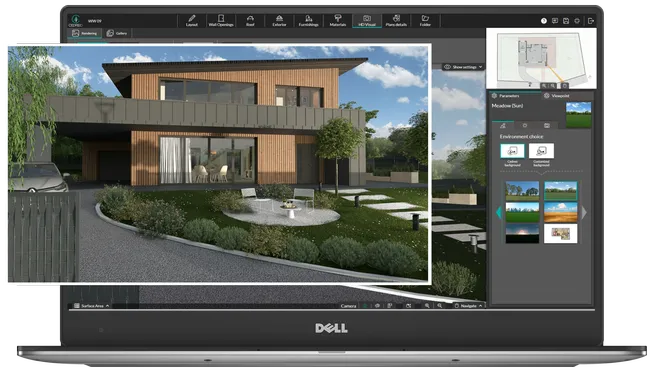
Every stage above ties back to a key strategy that the strongest construction companies execute well…use visuals to clearly communicate design ideas and almost every downstream business problem gets smaller.
That’s the upstream lever for sustainable growth in any construction business.
Cedreo is the tool contractors use to pull that lever without a design team, a CAD license, or a 6-month learning curve.
It also gives small construction businesses a way to gain access to the kind of visual presentation that used to be reserved for big firms with in-house designers.
Here’s how Cedreo fits into each stage of growing a contractor’s new business:
Cedreo Helps You Get Leads

The best contractor leads arrive already decided.
They’ve seen your work, heard your name from a neighbor, or found your portfolio online and thought “that’s who I want.”
Cedreo accelerates that process by giving you a before-and-after asset that no competitor with a phone camera can match.
A photorealistic 3D rendering of the planned project paired with the finished result becomes content clients share on neighborhood apps, screenshot for their spouse, and post on Facebook.
The construction industry runs on word of mouth, and Cedreo gives every word-of-mouth conversation a visual to attach to.
Your next job is often sitting inside your current one.
Cedreo makes it visible.
“Really effective. It has overall helped me jump start my business.”
Cedreo Helps Build Your Online Presence

When a prospect Googles your name after a referral, what they find either confirms the decision or creates doubt.
Cedreo gives every construction company a consistent stream of professional-grade visual content.
Floor plans, elevations, and photorealistic renders that populate your Google Business Profile, your Houzz portfolio, and your website with the kind of material that makes a contractor look established, thorough, and worth paying more for.
You’re not posting jobsite photos shot in bad light.
You’re showing prospects exactly what you design and exactly what you build.
That gap between you and the contractor who sends a one-page estimate is visible before anyone picks up the phone, and it pulls in new customers consistently over time.
“So simple to use and great with renderings.”
Cedreo Helps Build Client Trust Before Work Starts

The single most common reason a homeowner hesitates to sign is they can’t picture the finished project.
Cedreo resolves that in the first or second meeting.
You open a laptop, show them a rendered visual of their specific space, their layout, their materials, their finishes, and the uncertainty disappears.
Builders experience faster sign-offs and fewer revision requests after switching to Cedreo.
The client made their decisions before construction began, not during it.
That single shift eliminates most of the change orders that eat your margin in a typical remodel.
It also keeps satisfied clients in your referral pipeline for years, because the project they got matched the project they pictured.
“The greatest benefit has been to allow our clients to visualize their projects.”
Cedreo Helps You Win the Bid

When two contractors submit proposals for the same job, the one that includes a polished presentation with floor plans and photorealistic renderings wins the comparison.
Cedreo lets you attach a complete visual package to every proposal in roughly the same time it used to take to write the scope of work.
Your price is no longer the only thing the client is comparing.
They’re comparing what they’ll get.
That’s a fundamentally different conversation, and it’s where the real margin on a construction project comes from.
It also gives you the confidence to pursue projects in the price tier above your current sweet spot, because the proposal does the upselling for you.
“Easy to learn. I’ve only been using it for a few hours and have a presentation for my client”
Cedreo Helps You Compete With Design-Build Firms
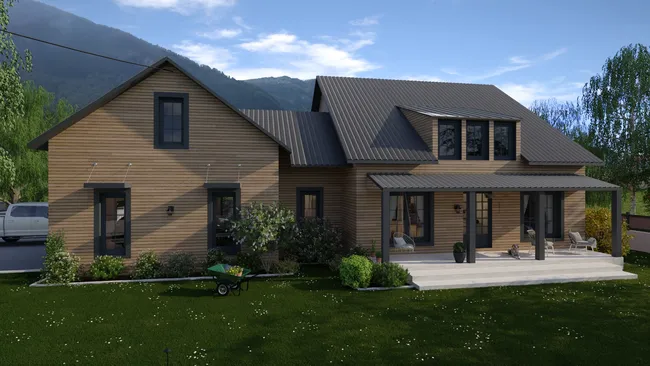
Design-build firms charge a premium partly because they show clients the finished project before signing.
With Cedreo, you deliver the same client experience.
A complete set of plans and renderings before the contract is signed, without the overhead of an in-house designer.
You compete on the strength of your presentation, not just the strength of your reputation.
For a general contractor who’s watching work go to design-build competitors, that’s the single change that flips the outcome and unlocks more business in markets that used to feel out of reach.
“I am using Cedreo as a graphical tool to communicate with my clients and my team, as well as a way to produce drawings, without having to go to the architect.”
Cedreo Helps You Scale Without Chaos

Scope creep and change orders are almost always downstream symptoms of an upstream failure.
The project wasn’t visually locked before work started.
Cedreo gives every construction project a shared visual reference.
A floor plan, elevations, and renderings that every party has seen and signed off on before day one.
When a client says “that’s not what I pictured,” you have a document that shows it’s exactly what they approved.
That single upstream action saves more time across a project than any scheduling tool or daily log, and it supports expansion into bigger, more complex projects without adding headcount.
“Terrific platform for creating spaces without the steep learning curve experienced with other products. A simple user interface mixed with excellent customer service make Cedreo a great addition to any building professional looking to expand their business.”
Build a Stronger Construction Business with Cedreo
Growing a construction business doesn’t require a bigger crew or a fancier office.
It requires better tools at the upstream moments that decide every project.
Cedreo helps contractors grow their business.
- Create client-ready 3D presentations in about two hours
- Win more projects with visual proposals that justify a premium price
- Build trust earlier and sign contracts faster
- Compete with design-build firms without hiring a designer
- Lock scope visually before work begins to eliminate costly change orders
- Turn every finished job into marketing assets that support expansion into new markets
“Best floorplan and design software for Contractors. As a designer and contractor, I can layout homes and I can generate detailed rendering to clients myself.”
Sign up for a free Cedreo account today and start growing your business!
Contractor Business Growth FAQs
How do you start a contracting business?
Starting a contracting business requires legal foundations such as a contractor’s license, insurance, and a clear business plan that defines your service offerings and target market.
Then use software like Cedreo to turn projects into a professional visual portfolio that serves as the foundation of your marketing plan.
How do you grow a contracting business?
You grow a contracting business by improving close rates on the leads you already get, not just by getting more leads.
Visual proposals created with Cedreo, a professional online presence, and a locked-in scope before work begins do more for long term success than any marketing spend.
How do you scale a construction business without hiring more staff?
Scale without hiring by fixing what happens before work begins: pre-qualify clients, lock scope visually, and run design and estimates in parallel.
Growing a construction business requires smarter systems, not just more staff or new equipment, and Cedreo makes the pre-sale process faster so you can take on more work with the same team.
What tools do successful contractors use to run their business?
Successful contractors use project management software, accounting tools, estimating software, and design tools like Cedreo that let them produce client-ready floor plans and renderings without a design team.
The biggest ROI usually comes from tools that shorten the pre-sale process and improve client communication.
How long does it take to grow a contracting business?
Meaningful business growth typically takes 12 to 24 months of consistent work on referrals, online presence, and close rate improvements, all guided by a clear business plan.
Contractors who use Cedreo to upgrade their proposals often see close rate gains within the first few projects.
What is the biggest mistake contractors make when trying to grow?
The biggest mistake is chasing more leads and spending on ads before fixing a broken sales process.
Cedreo helps improve your sales process by making it easy to generate high quality visuals that build trust and clearly communicate design ideas.
How do 3D renderings help independent contractors grow their business?
3D renderings help contractors close more jobs, justify higher prices, and reduce change orders by showing clients the finished project before work starts.
Cedreo’s photorealistic renderings take just minutes to generate and become portfolio content, marketing assets, and sales tools all at once.
What is the difference between getting leads and getting clients?
Leads are people who show interest; clients are people who sign contracts and pay you.
Most small business contractors have a lead problem that’s actually a conversion problem, and better visuals turn more of the leads you already have into paying clients.
How do you build a contracting business that generates referrals?
Generate referrals by giving clients something memorable to share: a beautiful rendering paired with the finished result, a smooth project experience, and a follow-up ask at the moment of maximum satisfaction (the final walkthrough).
Cedreo makes your construction company’s work visually shareable so referrals happen naturally as your business grows.