Most contractors lose bids because their proposal didn’t show why their price is worth paying. Here’s how to fix that.
You lost the bid because the other guy undercut you.
You’re sure of it.
But here’s the truth most contractors miss: price is rarely why you lose.
The real issue is that your construction proposal template didn’t show the client why paying more is worth it.
When a homeowner gets two bids side by side, they can’t see your 20 years of experience or your commitment to quality unless your proposal proves it with a clear understanding of what you deliver.
A strong construction proposal is a sales document that builds trust and compelling content showing what you’re delivering.
This guide shows you how to create winning proposal templates with all necessary information and project management details that close more deals.
Plus, learn how adding 3D renderings to proposal templates saves time and justifies higher costs to price-sensitive clients.
Key Takeaways
- The #1 reason contractors lose bids isn’t price. Proposal templates with strong visual documentation prove your unique value, building trust and justifying higher prices.
- The best proposal templates are complete sales documents structured around 8 core sections.
- Proposal templates save time. Use the same template for every client project with minor customizations and personalization for each specific project needs.
- With Cedreo, create full 3D home designs and professional presentations with 3D renderings and floor plans in about 2 hours.
Why trust us? Here at Cedreo, we’ve got 20+ years of experience working with housing pros in the home design space. So we know what it takes for contractors and general contractors to create project proposals that help them land more clients!
See How You Can Create Complete Projects with Cedreo
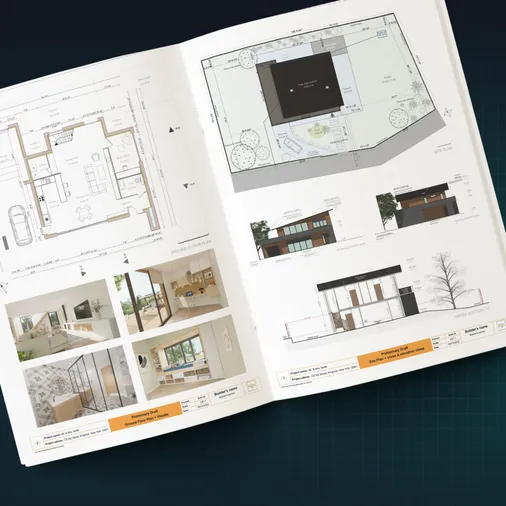
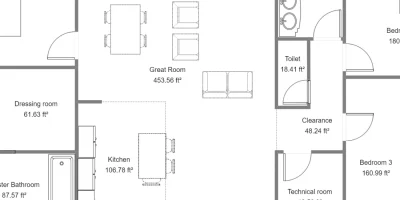
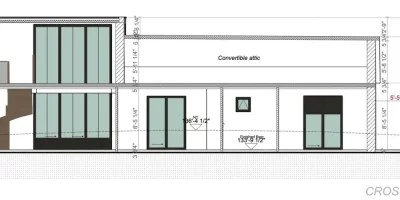
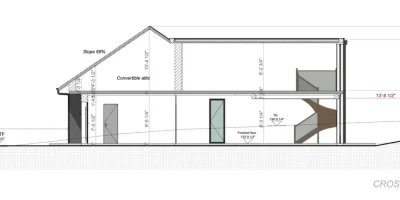
Plans – Get site plans, 2D floor plans, electrical plans, cross sections and elevation views — with all the technical details you need for a comprehensive project overview.
3D Visualizations – Use interior and exterior 3D renderings as well as 3D floor plans to help clients understand the finished project.
Documentation – Manage all your visual documents in one place, so it’s easier to present and sell your projects.
No credit card required, no commitment
Why Contractors Lose Bids (It’s Rarely the Price)
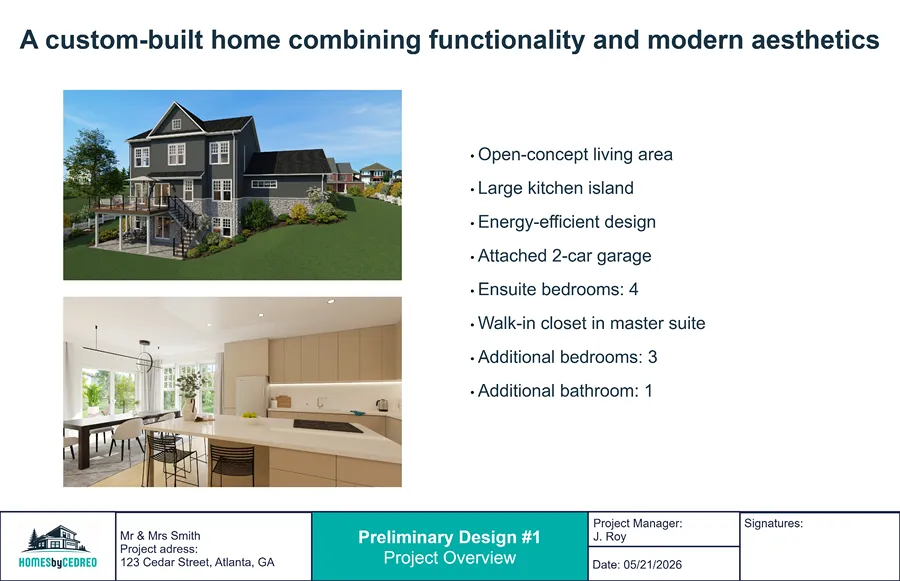
If you do high-quality work, your proposal and presentation need to match that quality.
Otherwise, clients can’t understand the reason for the pricing difference between your services and the cheaper competitor’s.
Here’s a common example:
The scenario: A homeowner gets three bids for a kitchen remodel. Yours is $42,000. The other two are around $31,000.
The problem: All three contractors sent a one-page estimate with line items and a total cost. No visuals, no explanation of services, no compelling content.
The result: From the client’s perspective, there’s no visible difference in quality between contractors. Just an $11,000 gap.
Why would they pick the most expensive option?
They wouldn’t.
One thing we’ve noticed from contractors we work with is that their close rate jumped once they stopped sending basic quotes and started submitting construction proposal templates with high-quality visual documentation.
The proposal process is the main place you can prove your unique value before the project starts.
High-end construction companies understand this: proposal templates are not just paperwork.
They’re sales documents that determine whether you win or lose the entire business.
What a Contractor Proposal Actually Is (vs. a Quote or Estimate)
A lot of people use proposal, quote, and estimate interchangeably.
But really there’s a difference.
Understanding the difference between a proposal, a quote, and an estimate is essential before you submit your next bid.
- An estimate gives a rough cost for initial budgeting.
- A quote locks in a specific price for a defined scope.
- A construction proposal template delivers everything: your services, project timeline, material costs, payment terms, and legal agreement all in one professional document.
| Estimate | Quote | Proposal | |
| Purpose | Rough ballpark for budgeting | Fixed price for a defined scope | Full sales document with scope, visuals, timeline, and terms |
| Detail Level | Low | Medium | High |
| Binding? | No | Usually yes, for a set period | Becomes binding when signed as a contract |
| Best For | Early conversations | Simple, well-defined jobs | Larger residential projects and remodels |
Think of it this way: an estimate opens the conversation, and a construction proposal closes the deal.
For larger construction projects (full remodels, additions, new builds), a proposal is what separates contractors who compete on price from those who compete on value.
8 Sections Every Winning Construction Proposal Template Needs (+Examples)
All professional proposal templates for construction work include 8 essential components that build client confidence and close deals.
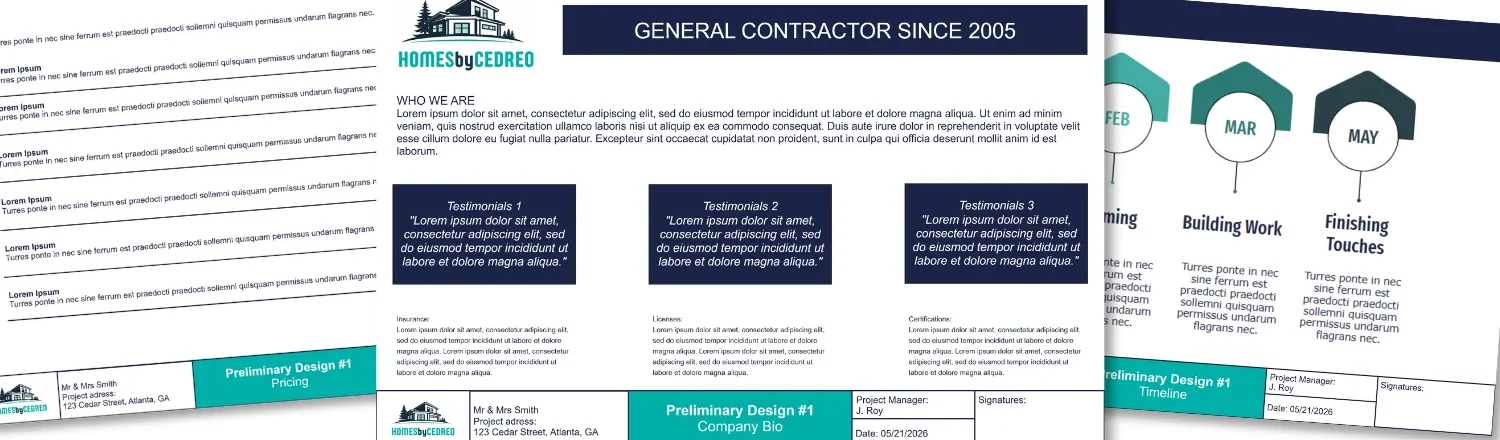
Here are details on each of the 8 sections, and a sample page created with Cedreo.
PRO TIP! – Build a project with a proposal template in Cedreo. Then duplicate it for each new project so you can reuse the template.
1. Cover Page: Brand and Project Title
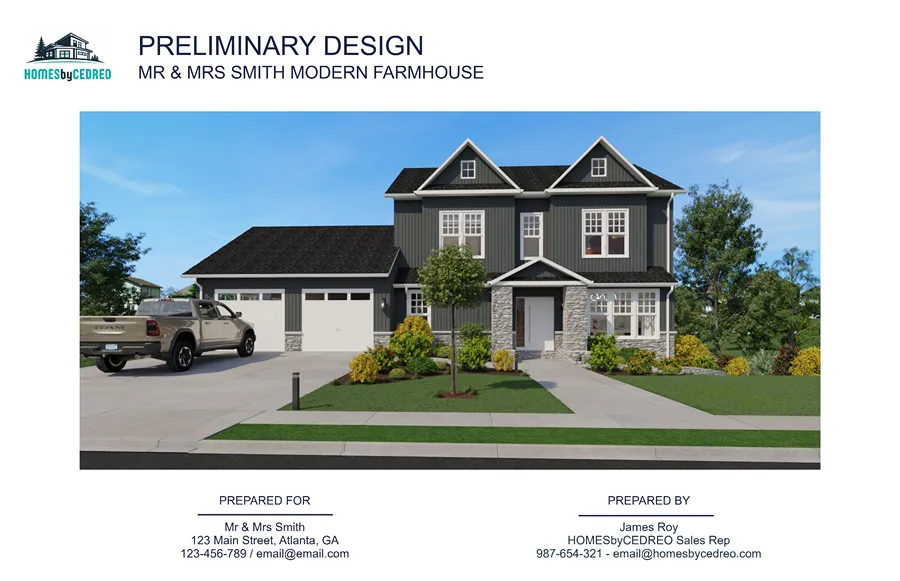
The cover page is the first thing clients see when they open your construction proposal template.
A professional cover page signals that you run a serious business, not a side hustle.
Most contractors skip this entirely, so even having one makes your business stand above the competition.
What to include on the cover page:
- Your company name and logo
- Project title (example: “Smith Kitchen Remodel” or “142 Oak St. Addition”)
- Client name and contact details
- Date of submission
- Your license number and company contact details
2. Company Bio: Contact Details, License, Past Projects and References
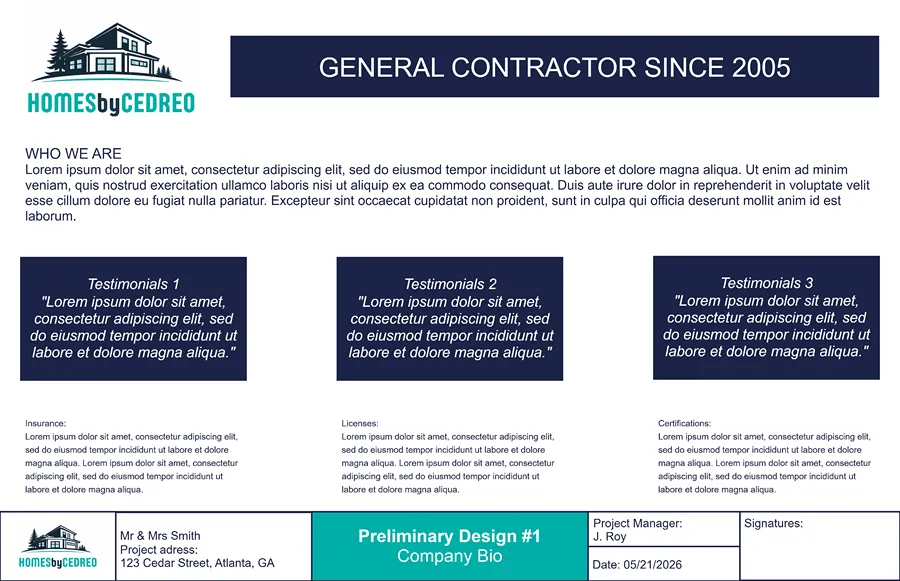
This section is where you start building trust before the client even sees pricing.
A brief description of your company, experience, and qualifications goes a long way toward winning potential clients over.
What to include:
- Years in business and areas of expertise
- Licenses, insurance, and certifications
- Client testimonials or references from completed projects and past projects
- A short paragraph on your company’s unique value and approach
The goal is a clear understanding of who you are and why you’re qualified for their specific needs.
3. Differentiator: House Plans, 3D Renders, and Surface Tables
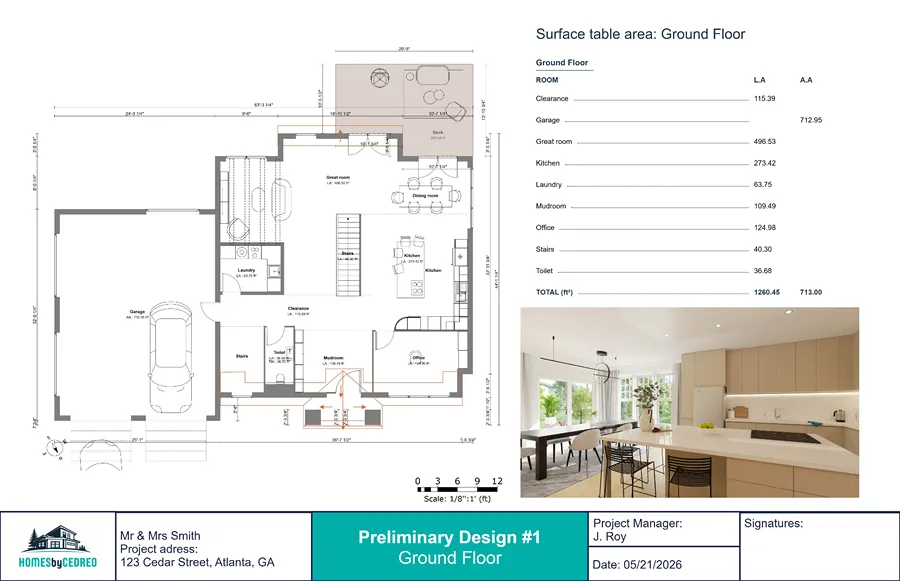
This is the section that separates great proposal templates from average ones.
Visual documentation (2D floor plans, 3D renderings, surface area tables) gives clients proof that you’ve already thought through their project in detail.
What to include:
- 2D floor plans with dimensions and surface area tables
- 3D renderings showing the finished project with exact material selections
- Elevation views and cross sections
When clients can see what they’re paying for, your price becomes easier to accept and change orders drop dramatically.
PRO TIP! – Lead with a rendering of the finished project right after the cover page, before the pricing section.
4. Detailed Scope of Work: Inclusions and Exclusions
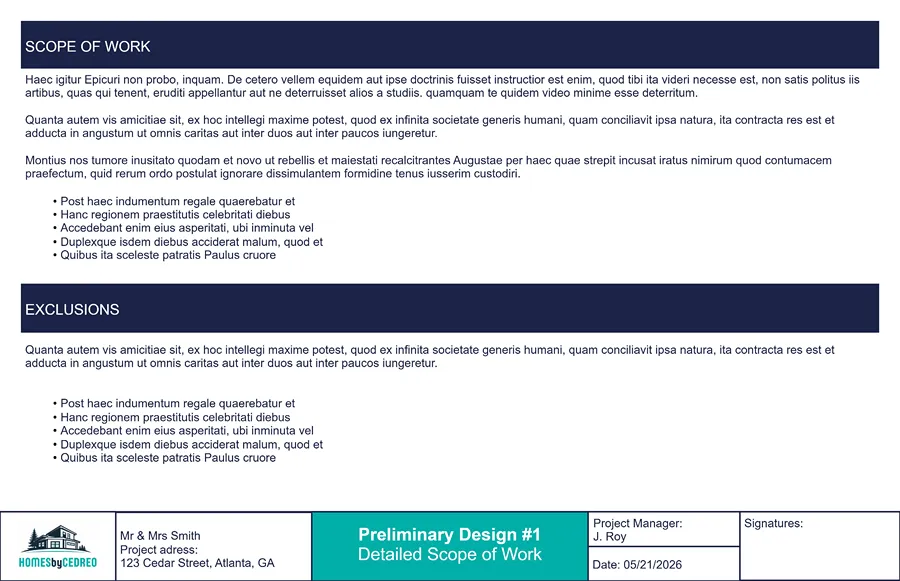
A detailed scope of work is the backbone of any construction proposal.
This is where you spell out exactly what the job includes and, just as important, what it doesn’t.
Clarity is key.
What to cover:
- A project overview describing the work in plain language
- Specific tasks: demolition, framing, electrical, plumbing, finishes
- Materials to be used (with allowances if applicable)
- What’s excluded: could be things like landscaping, permits, appliance purchases
- Any assumptions the scope is based on
Vague project scope is the #1 cause of disputes, change orders, and unhappy clients.
Construction companies that document other details and exclusions clearly protect themselves from absorbing costs that were never part of the agreement.
5. Pricing: Lump Sum vs. Line Items
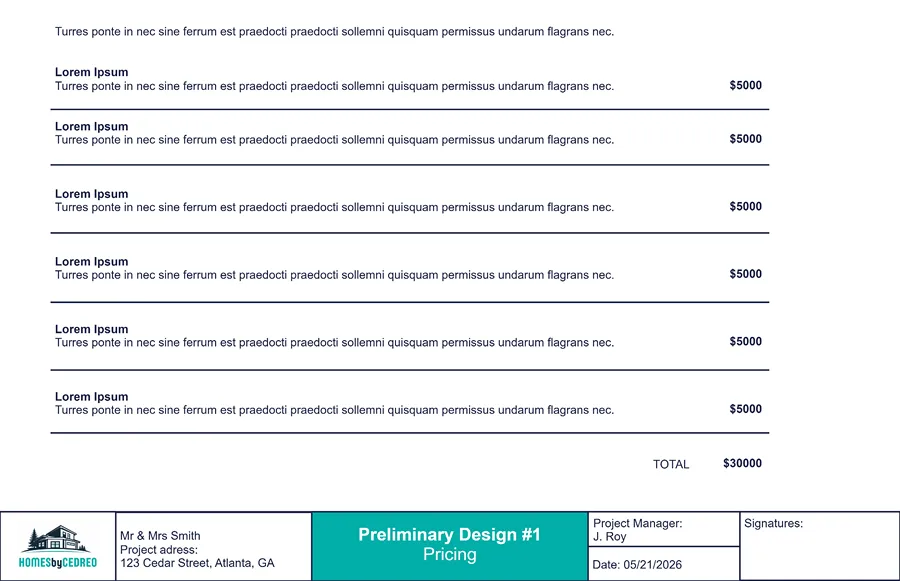
How you present your costs matters almost as much as the number itself.
There are two common formats:
- Lump sum pricing: One total price for the complete job. Best for residential clients who want simplicity.
- Itemized pricing: Costs broken down by labor, materials, subcontractors, and overhead. Best for commercial clients and general contractors.
For a lot of contractors, lump sum closes faster on residential projects because it keeps focus on value rather than picking apart individual labor and material costs.
6. Timeline: Phases and Milestones
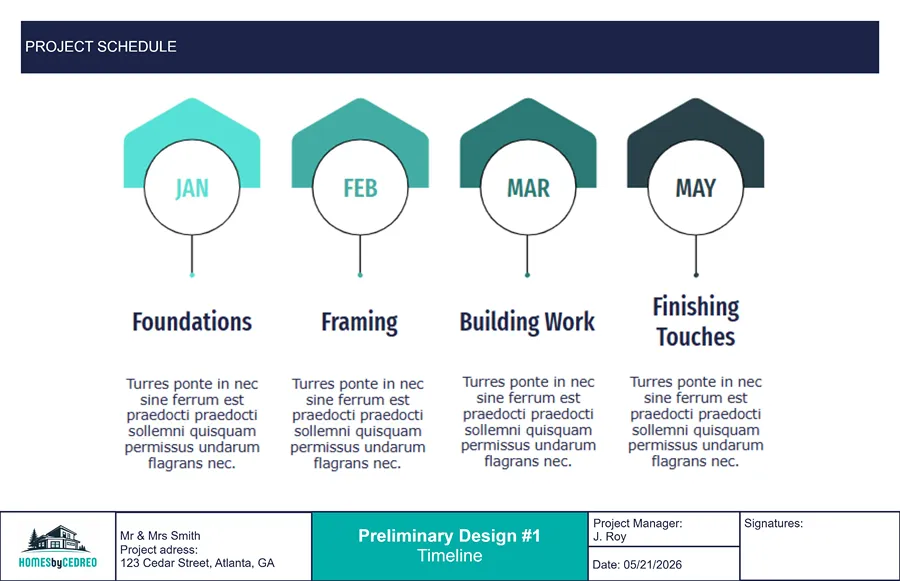
Clients want to know when the project starts, when it ends, and what happens in between.
A project timeline with milestones gives them that confidence.
Outline each phase:
- Pre-construction (design finalization, material ordering)
- Demolition and site prep
- Rough-in work (framing, electrical, plumbing)
- Finish work (cabinets, countertops, flooring, paint)
- Final walkthrough and punch list
A clear project schedule sets realistic expectations and protects you if delays come from the client’s side.
7. Payment Terms: Schedule and Deposits
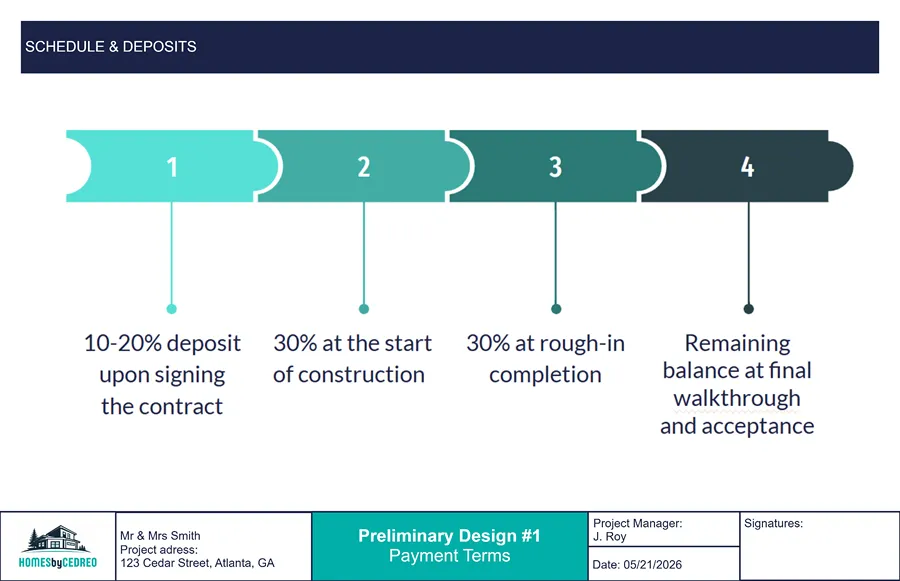
Payment terms outline when and how the client pays.
This is a section most contractors gloss over, but it’s one of the most important parts of the agreement.
A typical payment schedule for residential construction projects:
- 10-20% deposit upon signing the contract
- 30% at the start of construction
- 30% at rough-in completion
- Remaining balance at final walkthrough and acceptance
Keep in mind that payments schedules can vary widely based on the project type and scope.
However you choose to do it, the proposal should define payment methods, late fees, and what triggers each milestone.
It can be tough to talk about payments, but a well-defined payment schedule protects your cash flow and removes confusion from the process.
8. Terms and Conditions: Change Orders and Warranty
This is the legal backbone of your contractor proposal.
It protects both you and the client when things don’t go exactly as planned.
Key items to cover:
- Change order process: how changes are requested, priced, and approved
- Warranty details: what’s covered, for how long, and how to submit a claim
- Dispute resolution: mediation or arbitration clauses
- Cancellation policy and insurance liability details
It’s a good idea to have a lawyer review your standard terms.
Then reuse them in every proposal template going forward.
Why a Full Plan Set + Renderings Combo Makes Your Construction Proposal Stand Out
When a client is choosing between your $42,000 kitchen remodeling proposal and a $31,000 bid from a competitor, the best way to justify the gap is to show them exactly what they’re getting.
Detailed plans and high-quality renderings are the strongest price justification you can put in any construction proposal template.
What Clients Actually See When They Open Two Competing Proposals
Put yourself in the homeowner’s shoes.
- One proposal arrives as a single page with a list of costs and a flat 2d floor plan.
- The other arrives as a branded document with a cover page, a 3D rendering of their future kitchen, detailed floor plans, a clear scope of work, and a professional payment schedule.
Which contractor feels more trustworthy?
Which creates an emotional connection to the project?
The answer is obvious, and it has nothing to do with price.
Remember… high-quality visual documentation does the heavy lifting that words alone can’t.
What a Complete Cedreo Package Signals to Clients
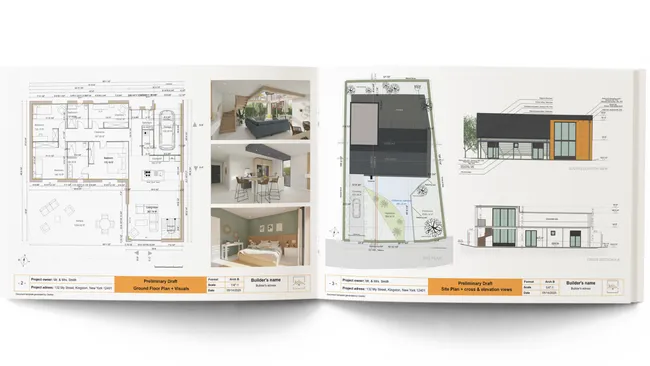
A high quality project presentation built inside software like Cedreo sends three powerful signals.
- Process maturity. It shows that you have a professional design process. You plan before you build.
- Attention to detail. A rendered design with specific materials and finishes proves you’ve listened to the client and incorporated their preferences.
- Trust. When a client can see the finished result before signing the contract, it removes uncertainty. That trust is what makes them comfortable paying a premium.
We work with contractors all the time who close deals faster thanks to presentations with high-quality visuals built in Cedreo.
The Cedreo Workflow: Go From Idea to Proposal Faster than Ever
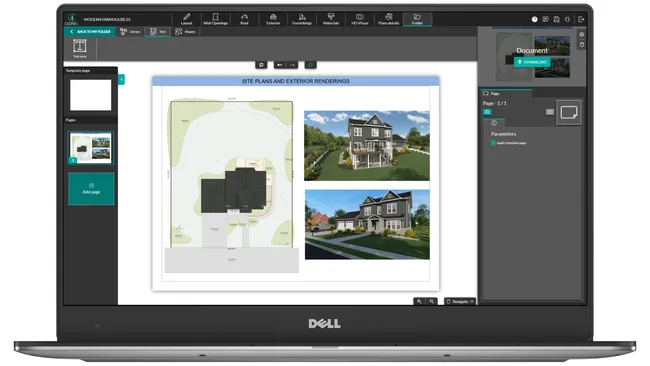
Here’s the concern most contractors have: “I don’t have time to create 3D designs and renderings for every proposal.”
That’s fair.
And honestly, with most software, that’s the way it is.
But with Cedreo’s contractor software, creating a proposal-ready visual package doesn’t take days.
It takes about 2 hours.
Here’s what that workflow looks like:
- Draw or import the floor plan. If you have an existing blueprint, import it as a background layer and trace over it.
- Add wall openings (doors, windows, sliding doors). Customize dimensions in the side pane.
- Furnish and finish the space. Apply surface materials to walls, floors, and countertops.
- Generate photorealistic interior and exterior renderings. Each one takes about 5 minutes.
- Combine floor plans, elevations, 3D views, your logo, notes, and other text into a single project presentation inside Cedreo.
No CAD experience needed.
That 2-hour investment in high-quality general contractor proposal templates can be the difference between winning a $40,000 construction project and losing it.
PRO TIP! – Even if clients end up going with another contractor, your time spent on the proposal isn’t lost. Add the visuals you created to your website portfolio or social pages as part of your contractor digital marketing.
If you don’t have an account, you can create a FREE one now…no credit card required.
Remodeling Proposal Template: Kitchen and Bathroom Specifics
General construction proposal templates cover the basics, but a home remodeling proposal template needs extra detail in specific areas where clients are most nervous.
Kitchen and bathroom remodels are high-emotion, high-cost construction projects.
Cedreo visuals are a huge help here.
A kitchen or bathroom rendering with before-and-after views in the proposal eliminates the #1 source of post-contract disputes, which is “that’s not what I pictured.”
Here’s what to specifically include in your kitchen and bath proposals to help prevent scope creep and missed expectations.
Kitchen Remodel Proposal Template: What’s Specific
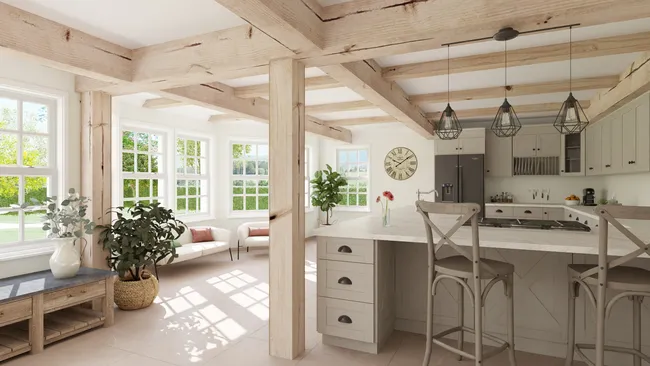
Kitchen remodeling proposal templates need to go deeper on materials, layout, and appliance details than a standard construction proposal letter.
Beyond the core 8 sections, your kitchen remodel template should include:
- Cabinet layout with dimensions and style (flat panel, shaker, custom)
- Countertop material and edge profile (granite, quartz, butcher block)
- Appliance specifications: brand, model, who supplies them, and installation scope
- Material allowances: set a dollar amount per category so the client knows the budget
- A 3D rendering of the finished kitchen showing cabinets, countertops, and finishes
From what we’ve seen, kitchen remodel disputes almost always come down to “that’s not what I pictured.”
A rendering in your construction proposal template eliminates that problem before construction starts.
Bathroom Remodel Proposal Template: What’s Specific

Bathroom remodels have their own set of project details that belong in the proposal template.
Beyond the standard sections, include:
- Fixture selections: specific vanity, toilet, shower/tub models
- Tile layout and materials (floor tile, wall tile, accent tile)
- Waterproofing scope: shower pan, cement board, membrane details
- Plumbing relocation scope (if moving fixtures from current locations)
- A 3D rendering showing the finished bathroom with selected finishes
Bathroom remodels are where scope creep hits hardest because clients change their minds on finishes constantly.
Your proposal template should help lock in selections early.
How to Present the Proposal: In-Person vs. Digital Delivery
How you deliver your construction proposal template matters almost as much as the content inside it.
In-person Presentation (Highest Close Rate)
Sitting down with the client and walking through each section gives you the highest chance of signing the contract on the spot.
Use the renderings to guide the visual conversation:
- Start with the design visuals so the client is emotionally invested before seeing costs
- Walk through the scope section to show you’ve thought through every project detail
- Present pricing last, after the client already understands the value of your services
- Answer questions in real time and address objections before they harden into a “no”
PDF Email Delivery
Not every client wants an in-person meeting.
Some prefer reviewing proposal templates on their own time.
Best practices for submitting a digital construction proposal:
- Name the file clearly (example: Smith_Kitchen_Remodel_Proposal.pdf)
- Write a short cover email that frames the proposal as a next step, not a cold send
- Include a signature page so the client can sign and return the agreement digitally
- Follow up within 48 hours if you haven’t heard back
Cedreo’s PDF export and presentation documents feature makes delivering a visual proposal package straightforward.
Combine your plans, renderings, and surface area tables into a professional document ready to send.
5 Proposal Mistakes That Cost Contractors Jobs
Even the best construction proposal template can’t save you from these common errors.
Avoid them and you’ll be ahead of most construction companies in your market.
1. Vague Scope of Work
A vague scope leads to disputes, scope creep, and clients who feel blindsided by costs they didn’t expect.
When the proposal says “renovate kitchen” without specifying what that includes, every detail becomes a negotiation after the contract is signed.
How to avoid it:
- List every task included (demolition, framing, electrical, plumbing, labor, finishes)
- List everything excluded (appliance purchases, landscape, permits)
- Include material specifications or allowances for each major category
- Add a clause stating that any work not listed requires a signed change order
2. No Visual Documentation
Submitting a construction proposal template without renderings and floor plans forces clients to imagine the finished product on their own.
Their imagination rarely matches reality, and that gap is where disputes and dissatisfaction live.
How to avoid it:
- Include at least one 3D rendering of the primary space
- Add a 2D floor plan with dimensions and room labels
- Show material selections in the renderings so clients see actual finishes, not guesses
This is where the proposal writing process separates serious construction companies from everyone else.
3. Wrong Pricing Format for the Client Type
Using itemized pricing when you should lump-sum (or vice versa) can cost you the job.
Some clients see a long itemized list and start crossing things off to save money on labor and material costs.
How to avoid it:
- For residential homeowners: lean toward lump sum with category-level breakdowns
- For commercial or investor clients: use detailed line items by labor, materials, and overhead
- When in doubt, ask the client what format they prefer
4. Sending the Proposal Cold Without a Walkthrough Conversation
Emailing a construction proposal without context is one of the most common contractor mistakes.
The client opens it, scrolls to the price, and forms an opinion before reading your scope, services, or previous work.
How to avoid it:
- Always try to present the proposal in person or via video call first
- If you must email it, write a cover email highlighting key project details and next steps
- Schedule a follow-up call within 48 hours of submitting to walk through any questions
5. No Follow-Up System
You send the construction proposal, the client says they need to think about it… then silence.
Most contractors lose deals not because the client said no, but because nobody followed up.
How to avoid it:
- Set a reminder to follow up 48 hours after submitting
- Send a second follow-up one week later if you still haven’t heard back
- Keep the follow-up short and helpful, not pushy
- Track every proposal you send and its status (sent, followed up, signed, lost)
A simple follow-up process can increase your close rate by 20% or more.
Build Winning Proposals That Showcase Your Services
Contractors who present their unique value clearly and persuasively win more construction deals and close more projects.
They’re not always the cheapest.
They’re the ones who use professional proposal templates with compelling visuals that prove value and justify higher costs.
Ready to put your best foot forward on every bid?
Use Cedreo to create a winning proposal template with professional visuals in about 2 hours.
Sign up for a free Cedreo account today!
Contractor Proposal Template FAQs
What should a general contractor proposal include?
A complete contractor proposal includes a cover page, company bio, visual documentation (plans and renderings), scope, pricing, project timeline, payment schedule, and terms and conditions. Use professional proposal templates with compelling visuals to stand out from competitors.
What is the difference between a contractor proposal and a quote?
A quote is a fixed price for a defined scope. A contractor proposal template is a complete sales document with all necessary information: company details, scope, visuals, timeline, costs, payment terms, and legal agreement.
How long should a contractor proposal be?
Most contractor proposals for residential construction projects run 5 to 15 pages depending on project complexity and scope. Adding visuals adds pages but dramatically increases proposal impact.
What is a remodeling proposal template?
A remodel proposal template includes standard sections plus remodel-specific details like cabinet selections, countertop materials, fixture choices, tile layout, and before-and-after 3D renderings.
How do I write a kitchen remodel proposal?
Start with the 8 standard construction proposal template sections. Then add kitchen-specific details including cabinet layout, countertop materials, appliance specifications, material allowances for each category, and 3D renderings of the finished kitchen.
What should a bathroom remodel proposal include?
Include fixture selections, tile layout and materials, waterproofing scope, plumbing relocation details, before-and-after visual documentation. The best contractor proposals also include 3D renderings of the finished space.
How do general contractors format bids for commercial projects?
Use detailed line-item proposal templates with separate sections for labor costs, materials, subcontractors, and overhead. Commercial clients expect transparency and detailed breakdown of every construction cost.
Should I include 3D renderings in a contractor proposal?
Yes. 3D renderings are the most effective way to justify pricing and differentiate your proposal templates from competitors. Save time by creating them with software like Cedreo.
How do I justify a higher price in a contractor proposal?
Show clients exactly what they’re getting: detailed visual documentation, thorough scope definition, references from previous completed work, and a clear project timeline showing your construction process.
How do I present a contractor proposal to a client?
In-person presentations have the highest close rate. Walk through design renderings first, then scope, then pricing. For digital delivery, send a professional PDF with a detailed cover email and a signature page.
How can contractors reduce change orders before they break ground?
Use detailed visual documentation in proposal templates. When clients see 3D renderings and floor plans of the finished project before construction begins, they request fewer changes and change orders drop dramatically.