You need a digital marketing strategy that wins clients without relying on word of mouth. Here’s how design-build firms make that happen.
Word of mouth got you here.
It won’t get you to the next level.
That’s the wall most design-build firms hit the moment they try to scale into a new area or a bigger project type.
Strong design-build marketing is what gets you over it.
When referrals slow down, the calls stop, your pipeline thins out, and suddenly you’re competing on price with every general contractor in town.
That’s a losing game, because price is the one thing a cheaper builder can always beat you on.
The fix is a marketing strategy that sells the value of your integrated process and brings in qualified leads whether or not someone passes your name along.
This guide breaks down the full marketing plan that works for the contractors, builders, and remodelers who run design-build firms: branding, visual portfolios, websites, social media, local SEO, and paid advertising.
If you want the bigger picture on how the model works end to end, start with our design-build construction guide, then come back here to build a marketing strategy around it.
Let’s get into it.
Key Takeaways
- A strong design-build marketing strategy sells the value of your integrated process, not just a list of services.
- Branding and a clear unique perspective are what separate your firm from the general contractors you compete with.
- Your visual portfolio, website, social media channels, and local SEO are the channels that generate leads most reliably for design-build firms.
- Cedreo helps design-build firms create photorealistic 3D renderings and branded presentations that turn prospects into qualified leads.
Why trust us? Here at Cedreo, we’ve got 20+ years of experience working with housing pros in the home design space. So we know what it takes for design-build contractors to create project visuals that help them land more clients!
See How You Can Create Complete Projects with Cedreo
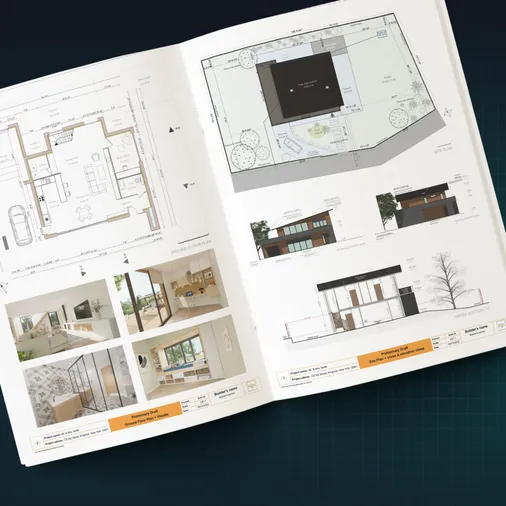
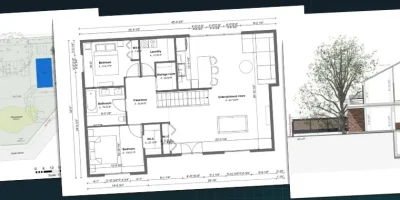
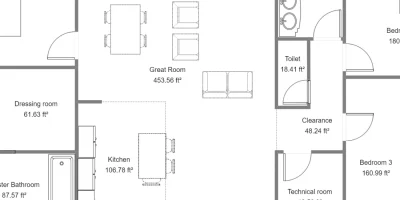
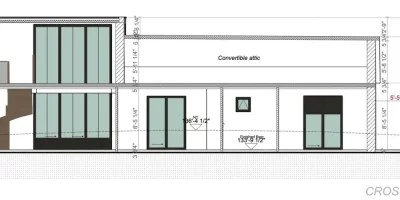
Plans – Get site plans, 2D floor plans, electrical plans, cross sections and elevation views — with all the technical details you need for a comprehensive project overview.
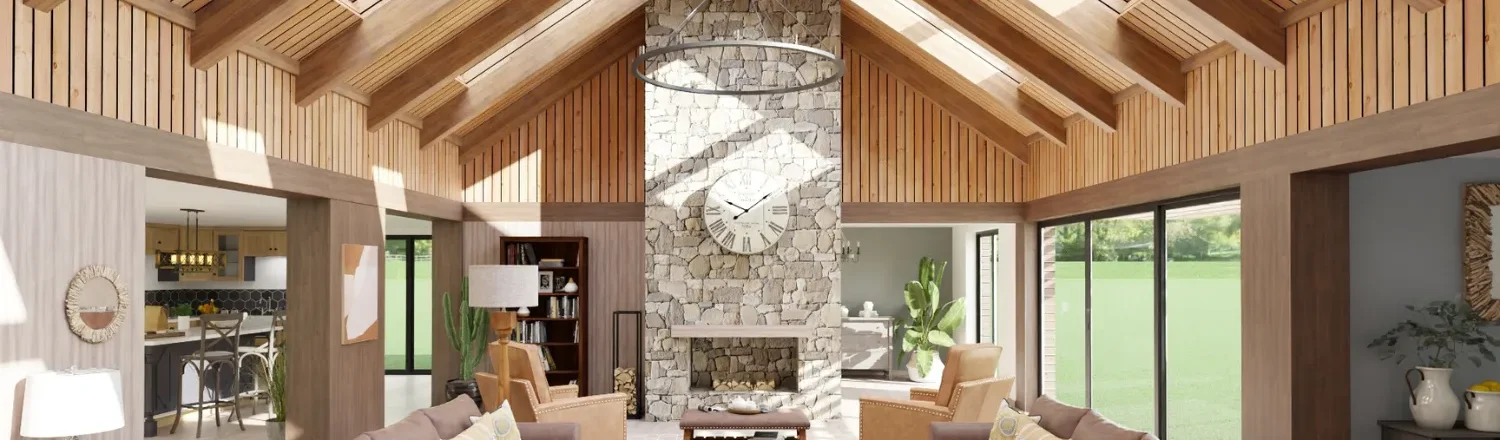
3D Visualizations – Use interior and exterior 3D renderings as well as 3D floor plans to help clients understand the finished project.
Documentation – Manage all your visual documents in one place, so it’s easier to present and sell your projects.
No credit card required, no commitment
Start With a Design-Build Marketing Strategy That Beats General Contractors
Tactics fail without a strategy behind them.
Before you spend a dollar on advertising or post a single render, your design-build marketing needs a brand strategy.
A comprehensive marketing strategy starts with three things: knowing who you sell to, owning a clear position in your market, and showing up consistently everywhere.
Define Your Ideal Customers and Target Market
Everything in your marketing plan depends on knowing your ideal customers.
Get specific about the target market for your design build firm: the project types, budgets, and neighborhoods that fit your firm best.
The builders we’ve seen who sell the fastest tend to pick a narrow target audience and own it, rather than chasing every lead in town.
So build a simple profile of your ideal clients:
- The project types and budget range you want more of
- Where your potential clients live and what they value most
- The pain points that push them toward design build over a traditional builder
- Which social media channels and online audiences they spend time in
When you understand your potential customers this well, every piece of marketing speaks directly to them.
Marketing to a focused target audience beats marketing to everyone, because in a crowded industry tailored messages turn more potential customers into qualified leads.
Position Your Firm as the Industry Expert
Buyers hire the firm they trust most, not always the one with the lowest cost.
Your job is to become the obvious industry expert in your market, so position every piece of content to build that authority.
You earn that credibility and prove your expertise by sharing a unique perspective only your team can offer:
- Explain the design build process in plain language your target clients actually understand
- Show the thinking behind your beautiful designs, not just the finished photos
- Publish lessons from real projects that demonstrate hands-on expertise
Over time, that consistent point of view turns your firm into a recognized authority and the name people in your community trust first.
This positioning strategy lets you charge for expertise instead of competing on hourly cost like the rest of the industry.
PRO TIP! Promoting your services as a premium, full-collaboration offering keeps your firm out of the race to the bottom and protects your business.
Build Consistent Branding Across Every Touchpoint
Your branding is everything a prospect sees, reads, and feels about your firm.
Consistent branding (your logo, colors, voice, and visuals) helps you effectively communicate one clear message everywhere your firm shows up.
Keep your branding consistent across every touchpoint:
- Your website and service pages
- Your social media channels
- Proposals and presentation documents
- Truck wraps, signage, and business cards
- Email signatures and advertising
That consistency leaves a lasting impression and builds the social proof that makes choosing your firm feel like the safe, low-risk decision.
PRO TIP! Build a one-page brand kit (logo files, color codes, fonts, and your one-sentence value proposition) and give it to everyone who creates content for your company. Consistent branding gets a lot easier when the whole team works from the same playbook.
Build a Visual Portfolio That Does the Selling Before the Meeting
Your portfolio is your best salesperson, and it never takes a day off.
For design-build firms, the work has to look as good on a screen as it does in person, because a screen is where most of your audiences meet you first.
Use 3D Renderings as Your Primary Marketing Asset
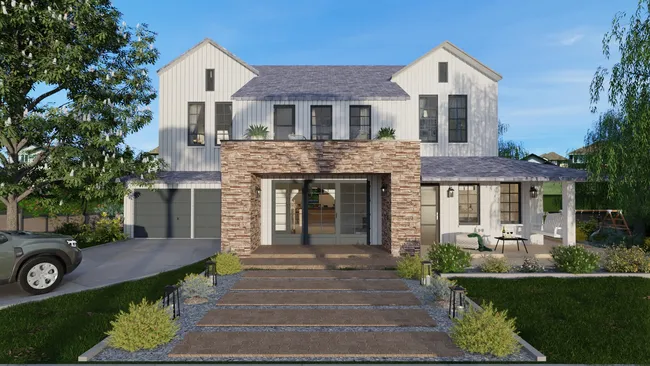
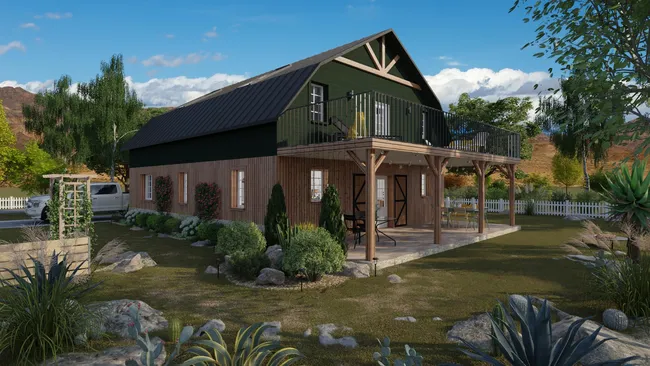
3D renderings are the most versatile marketing asset a design-build firm can own.
Cedreo produces photorealistic renders that work everywhere your prospects look: website galleries, social media, and your Google Business Profile.
A great render is the most powerful tool a smaller firm has to compete visually with bigger competitors.
Make one render, then use it a dozen ways across your marketing:
- Website hero images and project galleries
- Instagram and Pinterest posts
- Short video clips and reels for social
- Google Business Profile photos
- Proposal documents and pitch decks
- Email campaigns and paid advertising
PRO TIP! Generate two versions of every hero render, one for daytime and one at dusk with the interior lights glowing. The night shot almost always pulls more engagement on social media.
Photograph Every Completed Project With Intention
Treat project photography as a marketing investment, not an afterthought.
Renders sell the dream, but real photos prove you deliver, and you need both.
Plan every shoot like this:
- Schedule the photographer for the day after final cleanup, before the client moves their stuff in.
- Shoot the same angles you rendered, so you can run a concept-versus-finished comparison later.
- Capture wide room shots, then close-ups of the details that justify your price (custom millwork, tile work, hardware).
- Get one strong exterior at golden hour for the portfolio cover.
- Grab a few vertical frames and a short video walkthrough for Instagram and Pinterest.
Remember…project photography should be intentional, not just one of your workers taking a few quick pics with their smartphone.
Match Portfolio Visuals to Your Target Project Type
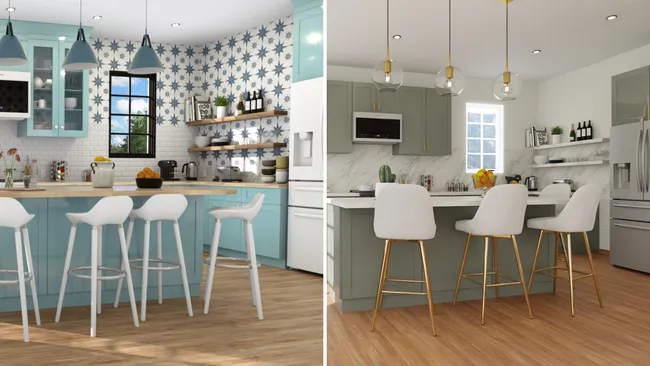
Your portfolio should mirror the work you want more of, not just the work you’ve already done.
A firm chasing custom new builds needs different imagery than one targeting kitchen and bath remodels, so segment by target market accordingly.
Lead your portfolio with the beautiful designs that match your ideal customers and the jobs with the best margins:
| If you target… | Lead your portfolio with… |
| Custom new builds | Full exterior shots, dramatic open-concept interiors, and site-plan-to-finish before-and-afters |
| Whole-home remodels | Side-by-side before/after rooms and shots that show the structural changes |
| Kitchen and bath remodels | Tight, detail-rich images of finishes, fixtures, and layout flow |
| Additions | Photos that show how the new space blends seamlessly with the original home |
Keep Your Whole Team Working From the Same Projects
Design-build is a team sport, so your marketing visuals shouldn’t live on one person’s laptop.
Producing renders, before-and-afters, and proposal visuals usually pulls in your designers, project managers, and sales staff, so everyone needs access to the same work.
That’s exactly what Cedreo’s Enterprise plan is built for, because it lets a firm work as a team and share projects across the whole company.
For a busy, higher-volume firm, that shared access means consistent branding, no duplicated work, and faster turnaround on every client-facing visual.
Use Your Website as to Generate Leads
Your website should do more than sit there looking nice.
Done right, it’s a hard-working part of your marketing plan, and even helps sort tire-kickers from qualified leads around the clock.
The Design-Build Firm Homepage That Converts
Your homepage has about five seconds to prove a visitor is in the right place.
Above the fold (the section of a webpage visible immediately without scrolling), lead with a large 3D render or a standout finished photo, your one-sentence value proposition, and a single clear call to action.
Effectively communicate the design-build advantage in one line, something like: “One team handles your design and your build, so you get one contract, one point of contact, and zero finger-pointing.”
On using renders versus photography above the fold: a clean, photorealistic render reads as aspirational, while a real photo reads as proof, so test both and lead with whichever converts more potential clients in your market.
It also helps to spell out how your model differs from the alternative, which is exactly what a design-build vs. general contractor breakdown does for an undecided prospect.
Service Pages That Rank and Convince
Give every project type its own dedicated service page.
A custom home page, an addition page, and a full-remodel page each rank for their own keywords and speak to a different buyer, so don’t bury all your services on one page.
If someone searches “bathroom remodeling company”, they are more likely to find and contact you if you have a dedicated service page for bathroom remodels rather than placing bathroom remodel services on a generic service page along with custom builds, additions, kitchen remodels, basement finishing, etc.
Open each service page with a specific client pain point, not a bulleted list of services.
Compare these two openers:
- Weak: “We offer custom home design, permitting coordination, and construction management.”
- Strong: “Tired of getting bounced between separate architects and a builder who blame each other when something goes wrong? Here’s how our one-team model fixes that.”
The strong version names the frustration your ideal customers actually feel, then positions your services as the answer.
It also sells what general contractors can’t: real collaboration between your designers and your build crew under one roof, instead of a handoff between strangers.
That collaboration between design and build is your strongest selling point, so say it plainly.
Before/After Case Studies as Conversion Content
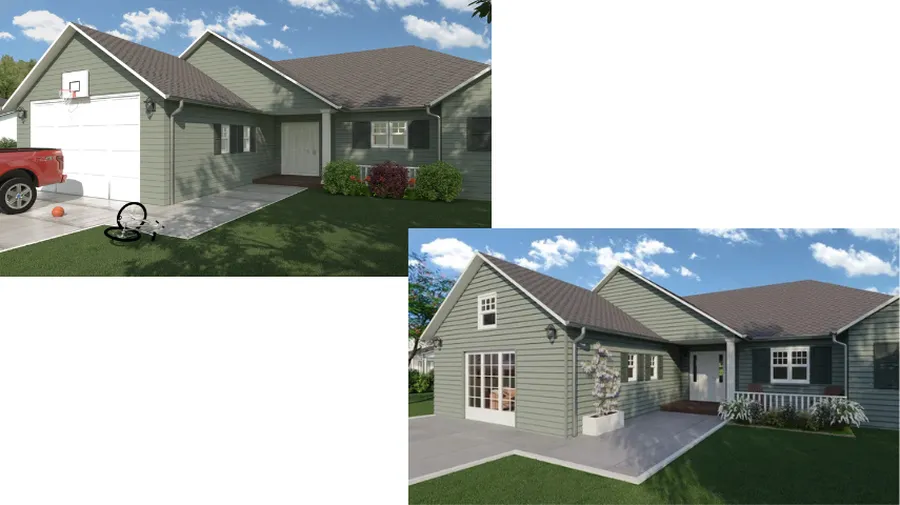
Before-and-after case studies are the most persuasive content a design-build firm can publish.
They show transformation, and transformation is what your clients are actually buying.
Before-and-after visuals produced in Cedreo (a concept render next to the finished photo) are one of the most compelling formats for design-build case studies.
Build each case study around a simple arc:
- The problem the client came to you with
- Your concept render showing the proposed solution
- The finished-project photo from the matching angle
- A one-line client quote and the result (timeline, square footage added, value created)
Done well, each case study doubles as social proof that quietly answers the question every prospect is asking: can this firm really pull it off?
How to Market a Design-Build Firm on Social Media
Social media is where homeowners go to gather ideas long before they’re ready to spend.
Show up consistently with great visuals, and you start building brand awareness with your future buyers while they’re still dreaming.
Instagram and Pinterest: Design-Build’s Strongest Channels
Instagram and Pinterest are the highest-payoff social media channels for design-build firms.
Both are visual-first and built for exactly what you sell to your audiences: beautiful, finished spaces.
- Instagram is where you build trust and show personality through project reveals, short video clips, and your team at work.
- Pinterest works like a search engine for home ideas, so your renders and finished photos can drive traffic for years after you post them.
What to Post and How Often
Aim for three to five posts a week, with a mix that’s roughly 80% value and 20% promoting your services.
Consistency beats volume, so pick a cadence you can actually keep.
| Content type | How often |
| Finished project photos | 1-2 times per week |
| Before-and-after reveals | Weekly (your highest-engagement format) |
| 3D renders of in-progress designs | Weekly |
| Short video and behind-the-scenes clips | 1-2 times per week |
| Client testimonials and reviews | Every other week |
| Educational tips on the design build process | Weekly |
Use 3D Renders to Build a Feed Before You Have Enough Finished Projects
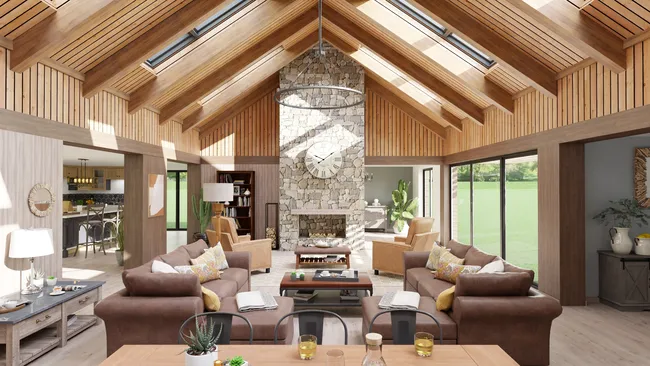
New firms can fill a credible feed with 3D renders long before they have a deep photo library.
This is one of the biggest advantages design technology gives a younger firm.
Remodelers we work with who are just starting out lean on renders to look established from day one.
Keep creating concept renders of real proposals (with client permission), spec-design concepts you’d love to build, and quick material or layout variations of the same space.
PRO TIP! Caption every render clearly as a design concept. Being upfront keeps your credibility intact, and prospects still respond to the quality of the visual.
Local SEO for Design-Build Firms
Most of your buyers start with a search like “design-build contractor near me.”
Local SEO is how you make sure your firm is the one they find on the internet first.
Google Business Profile Optimization
Your Google Business Profile is the single most important local SEO asset you own.
It’s free, and it controls how you show up in map results and the local pack: the top 3 business listings shown in local Google search results.
Lock down these basics with your Google business profile:
- Choose the most specific primary category (for example, “Design-build firm” or “Custom home builder”).
- Fill out every field: services, service areas, hours, and a keyword-rich description.
- Upload your best project photos and renders, and add new ones every month.
- Post updates regularly, the same way you would on your other social media channels.
You can manage all of this for free through Google Business Profile.
Target the Right Local Keywords
Use target keywords that pair what you do with where you do it.
Generic terms like “home builder” are too broad and too competitive to win against established competitors.
Go after combinations your ideal customers actually type:
- “design-build firm [city]”
- “custom home builder [city/region]”
- “whole home remodel [city]”
- “home addition contractor [city]”
Work those phrases naturally into your service pages, page titles, and Google Business Profile.
Reviews as a Ranking and Trust Signal
Reviews boost both your local ranking and your reputation.
Google rewards a steady stream of recent, detailed reviews, and they double as the social proof prospects read before they ever call.
Ask for a review at the moment a client is happiest: the final walkthrough.
Send a direct link to your Google profile so leaving one takes 30 seconds, not 30 minutes, and watch your reputation compound over time.
Paid Advertising for Design-Build Firms
Paid advertising fills the gap while your organic marketing builds momentum.
Used well, advertising puts you in front of high-intent buyers the day you turn it on.
Google Search Ads capture people who are already looking, so bid on intent-heavy terms like “design-build contractor [city]” and “custom home builder near me.”
Send that traffic to the matching service page, never your homepage, so the message stays consistent.
Meta Ads (Facebook and Instagram) play to your strength, because the platform’s targeting technology rewards visual-heavy formats and lets you reach very specific audiences.
Run your best before-and-after carousels and short video reels to build brand awareness and retarget people who already visited your site.
Whatever channel you choose, set a monthly budget you can sustain, then judge every campaign by cost per qualified lead, not vanity metrics like clicks.
Test new content often, because the firms that treat advertising as ongoing innovation beat the ones that set it and forget it.
PRO TIP! Point search ads at buyers who are ready now, and point Meta ads at the dreamers still 6 to 12 months out. Matching the channel to the mindset helps keep your cost per lead down.
Turn Every Project Into Future Marketing
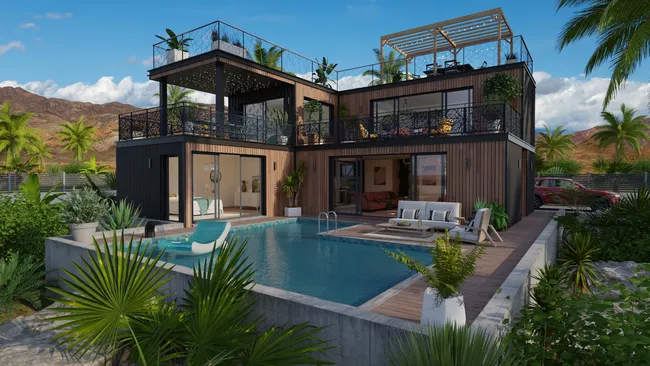
Every job you finish is raw material for your next three leads, if you have a system to capture it.
The firms that grow fastest treat marketing as the last phase of every project, not a separate task.
Build a simple capture routine into your project closeout:
- Testimonials: Record a short video or written quote at the final walkthrough, while the excitement is fresh.
- Photography: Schedule the professional shoot before the client moves in, so the space is camera-ready.
- Reviews: Text the client a direct Google review link within 24 hours of handover to protect your reputation.
- Referrals: Ask for one introduction to someone planning a similar project, and make it easy to say yes.
- Public relations: Pitch standout projects to local press and enter them in industry awards to keep building authority.
A repeatable closeout methodology means every project delivers the same excellence and the same marketing payoff.
PRO TIP! It pays to make a strong impression from the very first touchpoint, too, and design-build proposals set that tone before a contract is ever signed. Presentation documents generated in Cedreo can include branded visuals and your firm’s identity elements, so you look professional from the very first meeting.
Win More Design-Build Clients With Better Visuals
You can have the sharpest design-build marketing plan in your market, but if your branding and imagery look flat, prospects scroll right past.
A smart design-build marketing strategy backed by strong visuals is one of the most powerful tools for driving business growth.
That’s where Cedreo gives design-build firms an edge:
- Photorealistic 3D renderings for your website, social, and advertising
- Before-and-after visuals that turn projects into case studies
- Branded presentation documents that win client buy-in
- Complete designs in as little as a couple of hours, no CAD degree required
Sign up for a free Cedreo account today!
Design-Build Digital Marketing FAQs
How do design-build firms typically get new clients?
Most still rely heavily on referrals and repeat clients, but the firms that scale add a marketing strategy built on a strong website, local SEO, and social media.
Tools like Cedreo help them create the visuals that turn that online attention into qualified leads.
What should a design-build firm’s website include?
A design-build firm’s website should include a clear value proposition above the fold, dedicated service pages for each project type, and before-and-after case studies that prove results.
Cedreo renderings and presentation documents give those pages the polished visuals that convince visitors to reach out.
How do I market a design-build firm on social media?
Post three to five times a week on Instagram and Pinterest with a mix of finished photos, before-and-after reveals, short video, and 3D renders.
Firms using Cedreo can keep a steady feed even before they have a large photo library by posting concept renders.
What is the best way to show design-build work to prospects?
Pair photorealistic 3D renderings of the proposed design with finished photos so prospects can see the full transformation.
Cedreo lets you produce those concept renders in minutes for any pitch or proposal.
Should design-build firms run Google Ads?
Yes, design-build firms can run Google ads to capture high-intent local searches like “design-build contractor [city]” while your organic SEO builds up.
Sending that advertising traffic to a service page with strong Cedreo visuals helps keep your cost per qualified lead down.
How do 3D renderings help design-build firms win clients?
Renderings let prospects see and emotionally connect with the finished space before construction starts, which builds confidence and speeds up decisions.
Cedreo makes it easy for non-designers to generate high-quality photorealistic renderings that help their business stand out.
How does local SEO work for construction firms?
It centers on an optimized Google Business Profile, location-specific service pages, and a steady stream of recent reviews so you appear when locals search nearby.
Filling your profile with Cedreo project visuals helps your listing and your reputation stand out.
What type of content performs best for design-build firm marketing?
Before-and-after content wins almost every time because it shows the transformation buyers are paying for.
Cedreo makes this easy by letting you place a concept render right next to the finished photo.
How do I ask clients for reviews and referrals after a design-build project?
Ask at the final walkthrough when satisfaction peaks, then text a direct review link right away.
The handoff is also a good time to request an introduction to someone planning a similar project.