The best architect apps in 2026 streamline workflows and help you land more clients.
In 2026, clients expect 3D visuals and clear communication, not weeks of back-and-forth.
If your architecture apps look and feel like old CAD, you pay for it with weeks of training, pricey licenses, and features that slow you down.
This is especially true if you’re a building contractor and not a full-time architect with years of training.
Maybe you’ve tried complex professional architect apps only to find them so complicated and clunky that simple changes end up taking hours.
Or maybe you’re trying to include 3D images in your project presentations, but slow 3D rendering times leave clients waiting 30 minutes per view, while the deal cools off.
On the flip side, many consumer tools look nice and are fast to learn but fall apart when you need professional floor plans, documentation, and clean handoffs.
That’s why this 2026 guide breaks down the best app for architects and builders.
We present multiple apps for a variety of use cases that help you design faster, communicate better, and close projects with less rework.
Key Takeaways
- The best architect apps help you move from idea to client-ready visuals fast, so you can price and sell the job with confidence.
- Pick tools that match your workflow stage: early concept, detailed plans, project management, estimating, or field communication.
- Prioritize speed, ease of use, and export options, because slow tools and messy handoffs from one app to another create rework and kill margins.
- Cedreo helps housing pros create house plans, 3D renderings, and presentation documents faster, which makes it easier to win approvals and close projects.
Why trust us? Here at Cedreo, we’ve got 20+ years of experience working with professionals in the home design space. We’ve seen firsthand the kind of software that helps architects, contractors and builders design faster and land more jobs!
See How You Can Create Complete Projects with Cedreo
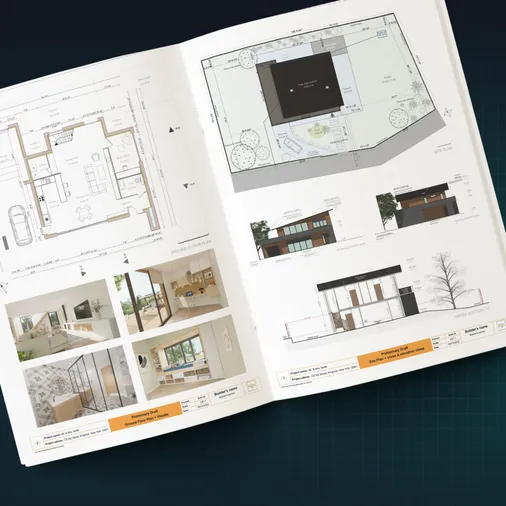
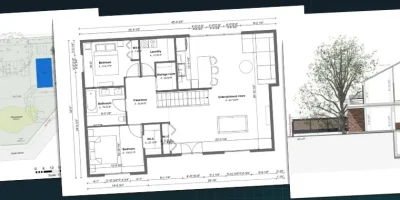
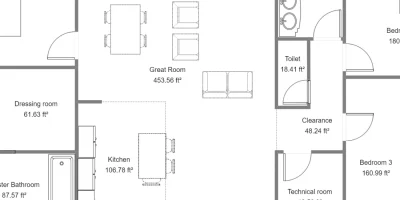
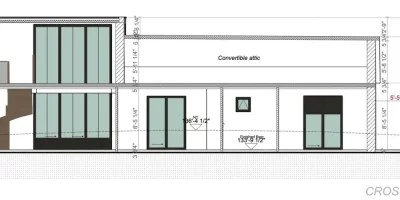
Plans – Get site plans, 2D floor plans, electrical plans, cross sections and elevation views — with all the technical details you need for a comprehensive project overview.
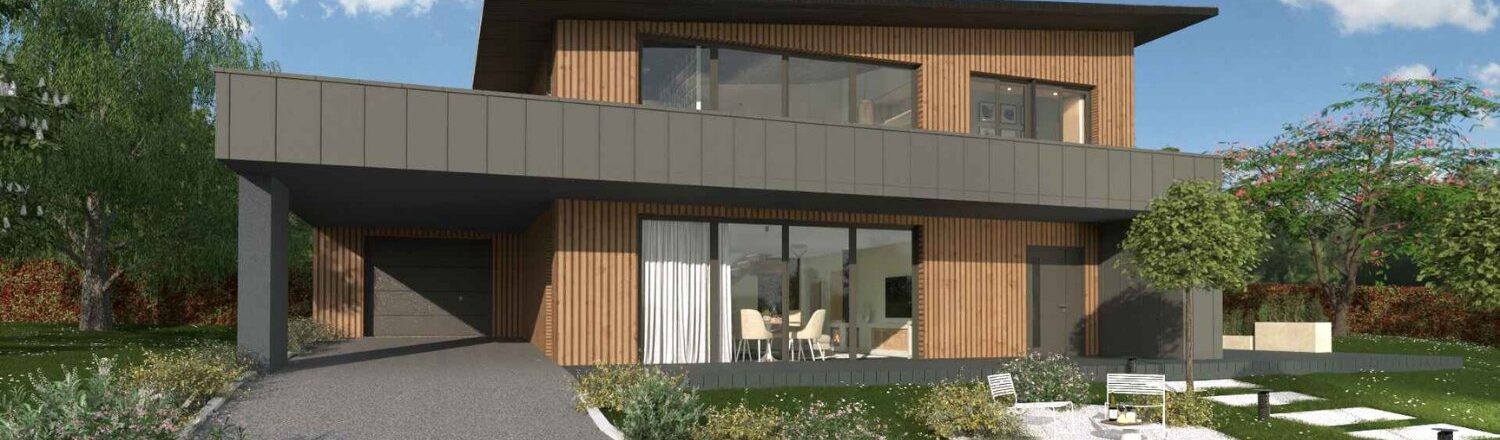
3D Visualizations – Use interior and exterior 3D renderings as well as 3D floor plans to help clients understand the finished project.
Documentation – Manage all your visual documents in one place, so it’s easier to present and sell your projects.
No credit card required, no commitment
Understanding Architecture Apps for Housing Professionals
Architecture apps are no longer “architect-only” tools, because builders, contractors, and remodelers now use them to sell the job, document the scope, and keep projects moving.
What is an “app”? In the world of modern software, an app can be a desktop program, a mobile application, or a browser-based platform, and this guide covers all three.
Home design, floor plans and visualization apps
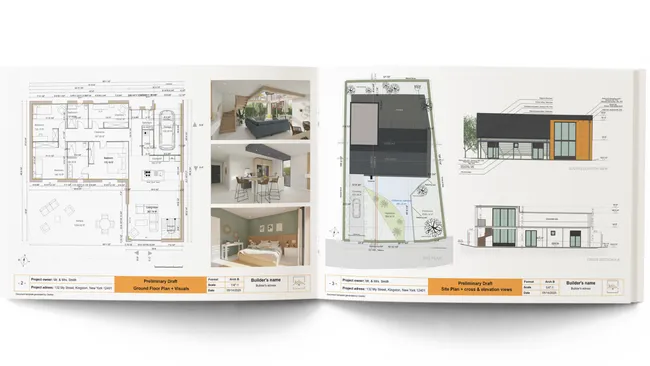
About these types of apps: These tools help you create designs from early concept sketches, to interior designs, all the way up to complete sets of floor plans, site plans, construction documents, and 3D visuals.
How they can help your business:
- Turn rough ideas into client-ready visuals.
- Reduce change orders by showing choices early.
- Support upsells with finishes and options.
- Speed up proposals with clearer direction.
- Communicate design intent to construction teams and subcontractors.
Project Management and Scheduling Apps
About these types of apps: These tools organize tasks, timelines, selections, and client communication so jobs stay on track and your team stays aligned.
How they can help your business:
- Track client communication in one place.
- Keep schedules realistic and visible.
- Track decisions, approvals, and change requests.
- Cut admin time with templates and automatic reminders.
Estimating and Takeoff Apps
About these types of apps: These apps help you measure, quantify, and price work from plans or site data.
How they can help your business:
- Build faster, more consistent estimates.
- Catch scope gaps before they hit the field.
- Standardize pricing across the team.
Field and Communication Apps
About these types of apps: These tools support jobsite capture and coordination with photos, plans, punch lists, and real-time updates.
How they can help your business:
- Document existing conditions and progress.
- Reduce rework with clearer notes and photos.
- Speed up RFIs and approvals.
- Keep everyone working from the same info.
What Makes the Best Architectural Design & Visualization App
Most of the apps we’re featuring in this article are home design & visualization apps since these are some of the most popular apps architects and builders use.
So what should you look for when choosing?
Here are some key things to look for.
Speed to Deliverable
Why important: Faster client-ready output means quicker decisions, fewer revisions, and more time selling the next job.
What to look for:
- Intuitive drawing process for fast floor plan creation.
- 2D to 3D updates that happen automatically.
- Fast rendering options for visuals you don’t have to wait on.
- Simple editing that doesn’t break the model.
Learning Curve and Training
Why important: If the tool takes weeks to learn, it won’t get used when you are busy.
What to look for:
- Intuitive tools with minimal setup.
- Training resources and in-app help.
- Easy shortcuts for common residential tasks.
- A workflow that fits how contractors estimate and build.
3D Visualization Quality
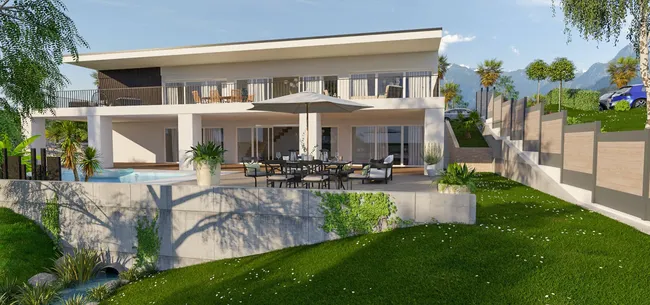
Why important: Clear 3D visuals help clients say “yes” faster because they can picture the finished space and they develop a stronger emotional connection to the proposal.
What to look for:
- Lighting and shadows that look believable.
- Adjustable sun orientation for realistic natural lighting.
- Materials that read well in screenshots and PDFs.
- Cloud rendering for fast and high quality images.
- Terrain modeling to create accurate 3D sites.
Plans, Elevations, Sections
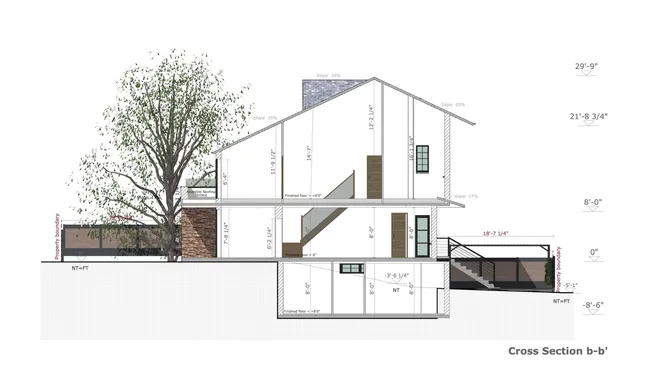
Why important: Strong drawings reduce jobsite guesswork and protect your margins.
What to look for:
- Accurate floor plan generation with dimensions.
- Elevation views you can share with trades.
- Section views for key assemblies and heights.
- Easy annotation for notes and callouts.
- The ability to create more than just flat floor plans: site plans, electrical plans, 3D floor plans, etc.
Cloud vs Desktop
Why important: Your choice affects speed, collaboration, and how easily you can work from the office or the field.
What to look for:
- Cloud access for easy sharing and quick client updates.
- Cloud access also gives you access to your designs anywhere you have internet
- Browser software that runs reliably on mac or PC.
Residential Material Libraries

Why important: A deep library saves hours and helps you adapt your designs to a wider variety of styles.
What to look for:
- A design library with at least 10,000 furnishing, fixture, and material options.
- Common residential finishes and fixtures.
- Easy swapping of colors, textures, and sizes.
- Options that look good in 3D renderings.
Client Presentation Tools
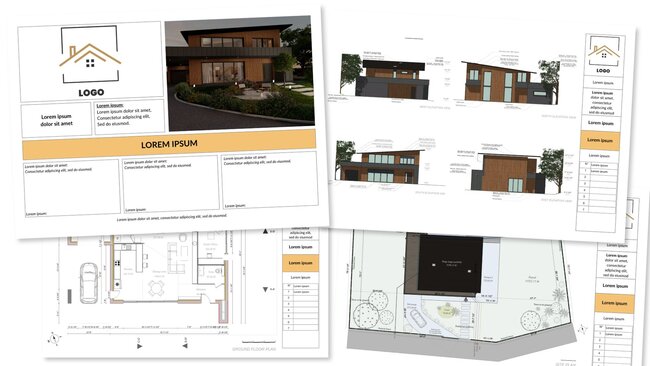
Why important: Better presentations reduce indecision and help you stand out from competitors.
What to look for:
- Before-and-after views for remodels.
- Simple ways to show options and upgrades.
- Shareable links or common file formats for easy sharing.
- The ability to combine blueprints, 3D visuals, notes, and company branding without needing additional software.
Export Formats
Why important: Clean exports prevent handoff headaches when you need to coordinate with architects, engineers, or subs.
What to look for:
- PDF output for proposals and to-scale plan sets.
- DWG or DXF support to hand off designs to CAD or BIM software.
- Image exports for emails and sales decks.
- Organized files that stay readable after export.
17 Best Apps for Architects & Builders
Before you compare tools, it helps to group architect apps by the part of the job they support, because no single app does everything equally well.
Home Design and Visualization Apps
- Cedreo
- SketchUp
- Chief Architect
- AutoCAD
- Archicad
- Morpholio Trace Pro
- ARki
- Homestyler
- Foyr
- RoomSketcher
- Planner5D
Project Management and Scheduling Apps
- Houzz Pro
- JobTread
Estimating and Takeoff Apps
- ArcSite
- MagicPlan
Field and Communication Apps
- RoomScan Pro
- Fieldwire
| Software | Platform type | Core features | Best for | Idea to presentation time | Terrain design | Plan drawing | 3D rendering quality & speed | Learning curve | Pricing |
| Cedreo | Web app | House plans, 3D renderings, site plans, electrical plans, presentation documents | Contractors needing fast sales-ready plans + visuals | Fast (hours) | Advanced | Advanced | ⭐⭐⭐⭐⭐ | Easy | $$ |
| SketchUp | Desktop + web/iPad (plan-dependent) | 3D modeling, 3D Warehouse, LayOut docs, DWG/DXF export | Flexible concept modeling + documentation via LayOut | Average (1–3 days) | Advanced | Advanced (with LayOut) | ⭐⭐⭐ (More with extensions) | Steep | $$ |
| Chief Architect | Desktop | House plans, 3D renderings, site plans, electrical plans, presentation documents, materials lists | Residential design-build needing structural plans + takeoffs | Average (4–5 days) | Advanced | Advanced | ⭐⭐⭐⭐ | Steep | $$$ |
| AutoCAD (Architecture toolset) | Desktop + web/mobile access | DWG-native drafting, architectural objects, CAD standards, interoperability | Teams that must live in DWG and exchange CAD files | Slow (several days+) | Advanced | Advanced | ⭐⭐ | Steep | $$$ |
| Archicad | Desktop | BIM authoring, model-based docs, DWG/DXF/PDF workflows, BIMx presentation | Architect-grade BIM coordination + document sets | Slow (several days+) | Advanced | Advanced | ⭐⭐⭐ | Steep | $$$ |
| Morpholio Trace Pro | Mobile (iPad/iPhone) | Sketch/markup layers, scale workflows, export to PDF/PSD/images, “export to CAD” tools | Fast concept sketching and markups on iPad | Fast (hours) | Advanced | Advanced | ⭐⭐ | Easy | $ |
| ARki | Mobile (iOS) | 2D draw/scan rooms, AR/3D presentation, FBX import/export, offline storage | Quick AR “walk-through” presentations | Fast (hours) | None | Basic | ⭐⭐⭐ | Easy | $ |
| Homestyler | Web app | 2D/3D floor planner, high-res renders, DWG/PDF/JPG exports (plan-dependent) | Fast visuals with light documentation | Fast (hours) | None | Basic | ⭐⭐⭐⭐⭐ | Easy | $ |
| Foyr Neo | Web app | 2D-to-3D interior workflow, cloud rendering, walkthrough links, large model library | Interior remodel visuals + walkthroughs | Fast (hours) | None | Basic | ⭐⭐⭐⭐⭐ | Easy | $$ |
| RoomSketcher | Desktop app + web portal | 2D/3D floor plans, 3D photos/360 views, site plans, branded presentations | Basic floor plans + client presentations | Fast (hours) | Basic | Basic | ⭐⭐⭐ | Easy | $ |
| Planner5D | Web + mobile | AI plan recognition, easy 2D/3D, 8K+ furniture (tier), DWG/DXF (2D) export | Simple home layouts and quick visuals | Fast (hours) | Basic | Basic | ⭐⭐⭐ | Easy | $ |
Comparison Table for All Other Apps
| Software | Platform type | Core features (3–4) | Best for | Learning curve | Pricing |
| Houzz Pro | Web + mobile | CRM, estimates/invoicing, schedules/tasks, client/sub dashboards | One platform for leads, estimates, schedules, payments | Moderate | $$$ |
| JobTread | Web app | Estimating + PM, schedules/tasks, client portal, support/training included | Contractors wanting simple “all-in-one” PM + estimating | Moderate | $$ |
| ArcSite | Mobile-first + cloud | On-site drawings, takeoffs, proposals, DWG/DXF/PDF/PNG exports | Fast in-home sales drawings + takeoffs + proposals | Moderate | $$–$$$ |
| magicplan | Mobile + cloud | As-built capture, photo/report packages, broad exports (incl. DXF/IFC), estimating exports | Field capture + documentation + estimator handoff | Easy–Moderate | $$ |
| RoomScan Pro | Mobile (iOS) | LiDAR/AR capture, laser meter support, export to CAD/design tools | Quick measured as-builts for remodels | Easy | $ |
| Fieldwire | Web + mobile (Windows app beta) | Plan viewing/markups, tasks/punch/checklists, photos/files, RFIs/submittals/change orders | Plan-centric field coordination + punch lists | Moderate | $$ |
1. Cedreo – Top Architectural Design & Visualization App
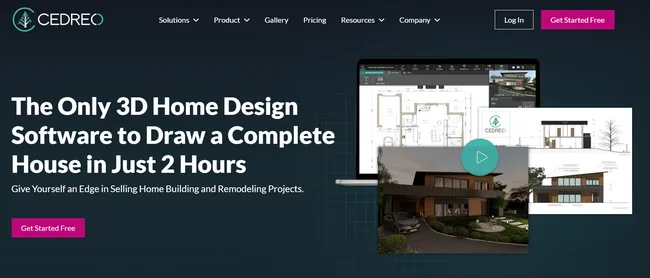
Best for: Fast, client-ready home designs that help contractors sell the job.
Cedreo is a cloud-based 3D home design software built for building and remodeling professionals who need results fast.
It lets you create professional floor plans, photorealistic visuals, and branded proposal documents without a steep CAD learning curve.
Why are more contractors choosing Cedreo for architecture designs?
Most design tools make you pick between speed and professional output, but Cedreo compresses the whole concept-to-presentation cycle.
You can move from quick design concepts to site plans, detailed floor plans, electrical plans, and client presentations in one workflow, so you stop waiting on outside drafting and you stop losing momentum in sales.
Real user reviews:
Juan B. – “So simple to use and great with renderings.”
Susan M. – “The customer service help is fast and the renderings look very realistic compared to some others.”
Design capabilities
Cedreo covers the most common residential and light commercial needs without forcing you into an architect-grade BIM workflow.
However Cedreo does go beyond basic geometry because your designs stay connected to smart building elements like walls, rooms, doors, windows, roofs, and finishes.
- Create single-family homes, renovations, additions, and some commercial layouts.
- Produce 2D and 3D floor plans that stay linked as you edit.
- Generate cross-sections and elevation drawings in one click.
- Build site plans with terrain modeling, boundaries, setbacks, and landscaping elements.
Ease of use (learning curve)
Cedreo is designed for non-designers, so even new team members can start producing usable work in minutes.
- Drag-and-drop tools replace complex CAD commands.
- Import existing plans (JPEG, PNG, PDF, DWG, or DXF) and trace to speed up remodel work.
- Resize the whole project with one click when the scope changes.
3D rendering quality
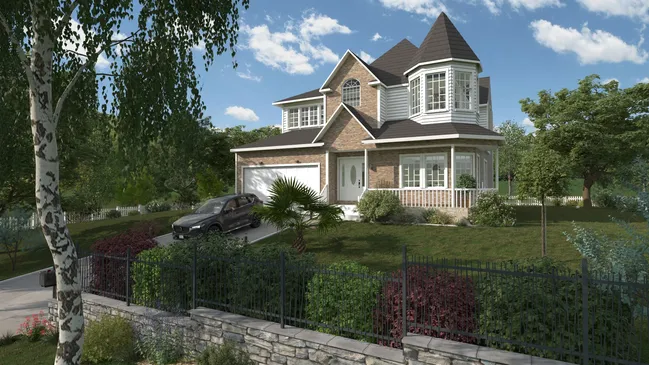
Cedreo creates photorealistic interior and exterior 3D renderings that are fast enough for sales meetings and high enough quality for demanding clients.
- Generate HD renders in less than 5 minutes.
- Set day or night scenes, sun orientation, and background images.
- Save viewpoints to compare options and support before-and-after remodeling visuals.
Furniture and material library
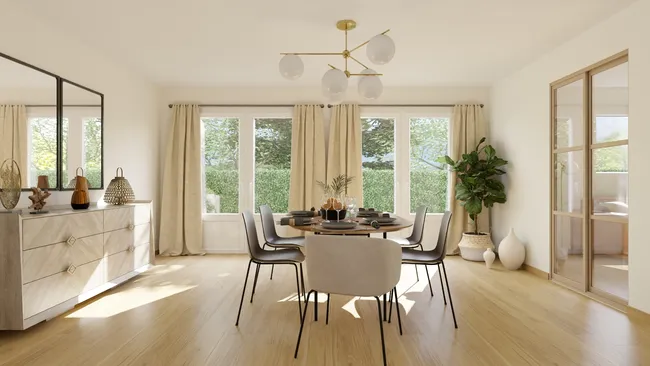
Stage designs quickly with an extensive design library, which helps clients decide faster.
- Choose from over 10,000+ furniture, fixtures, and decor items.
- Use product packs to furnish faster.
- Apply thousands of finishes, paint colors, and textures with realistic materials.
Client presentations
Cedreo helps you turn drawings and visuals into proposal-ready documents that look professional.
- Build branded presentation documents that combine plans, renderings, and tables.
- Update the design once and inserted plans update automatically in the document.
- Export client-ready files that support faster approvals and fewer scope misunderstandings.
Support
When you’re on a deadline, support matters as much as features.
- You don’t have to rely on user forums or chatbots as your main source of help.
- Get personalized guidance from a dedicated success team of real people.
- Get help through phone calls, chats, and email.
- You can also access video tutorials and knowledge base articles.
Pricing: $$
Cedreo has freemium access so you can test the workflow before committing.
2. SketchUp
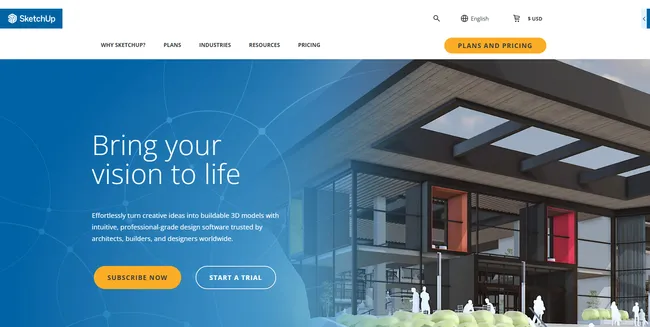
Best for: Flexible 3D modeling for early design concepts and custom details.
SketchUp is a 3D modeling tool many designers and builders use to shape ideas fast.
It works well for early massing, custom built-ins, and tricky rooflines.
Many teams pair it with LayOut or other tools when they need sheets and details.
If you already trade files with architects or designers in SketchUp, it keeps the handoff simple.
However, it’s got a steep learning curve.
You can master basic 3 modeling fast, but to draw full sets of 2D/3D home plans it takes meticulous organization and a lot more time to learn.
Key features:
- 3D modeling tools that feel close to “digital sketching.”
- 3D Warehouse for finding pre-built objects and components.
- LayOut for turning models into 2D pages (plans, elevations, callouts).
- DWG/DXF import and export.
- Large ecosystem of extensions and add-ons.
Pros:
- Strong for custom modeling.
- LayOut helps bridge 3D concepts to 2D documentation.
- Huge library and community support.
Cons:
- You need add-ons or extra workflow steps for high-end rendering and full documentation.
- Feels very slow if your team wants “ready-to-present” outputs fast.
- Steep learning curve for creating full sets of house plans.
Pricing: $$
3. Chief Architect
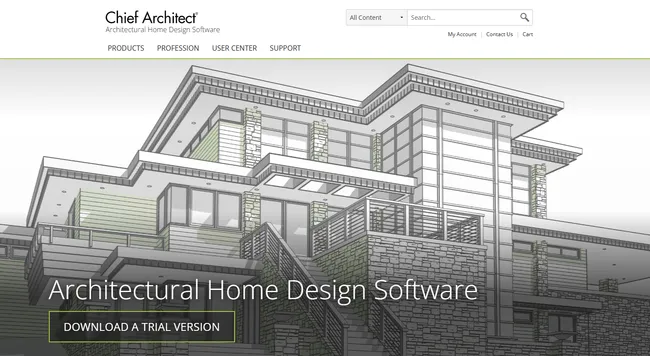
Best for: Design-build teams that need structural details and material takeoffs.
Chief Architect is a residential-focused design tool.
It is a good pick when you need highly detailed permit-ready construction documents.
The built-in tools help you move from layout to framing-ready drawings and material takeoffs without jumping between programs.
However that level of detail also comes with added levels of complexity.
Key features:
- Linked 2D and 3D views that update as you edit.
- Residential drawing set tools (plans, elevations, sections, and electrical plans).
- Terrain and site tools for grading.
- Materials lists that support planning and scope thinking.
- Built-in rendering options.
Pros:
- Strong plan-production tools for residential work.
- Good blend of design visuals.
- Site and terrain features are more robust than many “interior-only” apps.
Cons:
- Takes more time to learn compared to simpler sales-focused design tools.
- It takes even experienced users more time to go from idea to presentation.
- Expensive.
Pricing: $$$
4. AutoCAD (and AutoCAD LT)
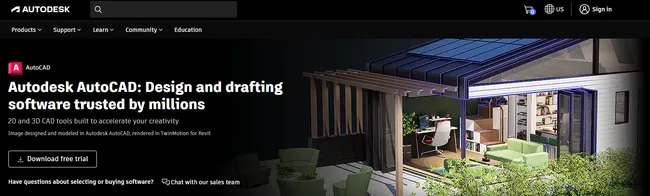
Best for: Teams that need DWG-first drafting and compatibility with architects, engineers, and permitting sets.
AutoCAD is the industry standard for 2D drafting, and many architecture and engineering partners still live in DWG.
For building pros, it is less about flashy renderings and more about clean drawings, reliable file exchange, and tight control over linework and details.
AutoCAD LT is the lighter, lower-cost option focused on 2D drafting and less on 3D work.
Full AutoCAD can include the Architecture toolset with architecture-specific objects and automation.
However it still takes more time to learn and use than streamlined tools like Cedreo.
Key features:
- DWG-native 2D drafting with precise dimensioning and annotation.
- The Architecture toolset adds architectural objects (like walls, doors, and windows) and productivity tools (plan-dependent).
- Standards, layers, and blocks for consistent drawing sets.
- Broad compatibility for sharing with architects, engineers, and subs.
Pros:
- DWG compatibility for professional handoffs.
- Great for detail-heavy plan edits and clean redlines.
- A safe choice when you must match an architect’s CAD standards.
Cons:
- Steep learning curve for most contractors and remodelers.
- Not built for fast client presentations or “same-day” visuals without extra tools.
- Often requires add-ons or separate software for strong 3D rendering and presentation sheets.
Pricing: $$$ (AutoCAD) / $$ (AutoCAD LT)
5. Archicad
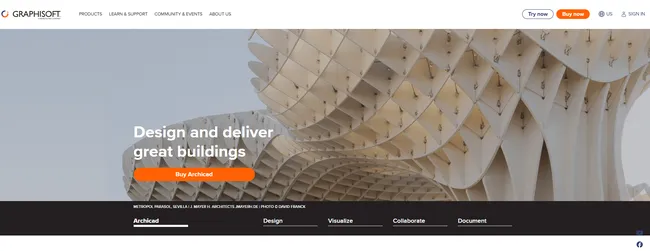
Best for: Architect-grade BIM workflows and full construction documentation on residential and light commercial projects.
Archicad is a BIM platform built around a coordinated model that drives drawings, schedules, and documentation.
If your role includes producing full plan sets and coordinating with consultants, Archicad can be a powerful home base.
Key features:
- BIM modeling that keeps plans, elevations, sections, and schedules coordinated.
- Documentation tools for drawing sets and publishing.
- Collaboration workflows for teams (plan-dependent).
- BIMx for interactive model viewing and client-friendly presentations.
Pros:
- Great for complete, coordinated documentation from one model.
- Scales well for teams and multi-phase projects.
- Good presentation support through BIMx when you need interactive model reviews.
Cons:
- Usually more tool than most contractors need for quick proposals and simple residential projects.
- Works best with strong BIM standards, otherwise models get messy fast.
- Heavier projects require powerful hardware and even more disciplined file management.
Pricing: $$$
6. Morpholio Trace Pro
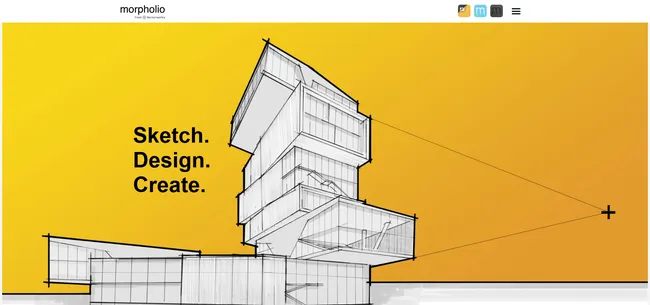
Best for: Fast concept sketching and markups on an iPad.
Morpholio Trace Pro is a sketching and markup app built for early design thinking.
You can draw over imported plans, PDFs, and images, which makes it useful for quick client meetings and jobsite notes.
It also supports scaled drawing workflows, so your sketches stay grounded in real dimensions.
Use it when you want to communicate ideas early on without building a full 3D model.
Key features:
- Sketch and markup layers over PDFs and images.
- Scale-aware drawing tools for measured concepts.
- Easy export to common formats for sharing.
- Presentation-friendly outputs for reviews and iterations.
Pros:
- Very fast for early ideation and redlines.
- Works well for client conversations and quick revisions.
- Great fit if your team already uses iPad on site.
Cons:
- iPad-first workflow can be limiting for mixed-device teams and office standardization.
- Sketch layers get harder to manage on complex jobs, and you still need a separate tool for final buildable drawings.
Pricing: $
4. ARki
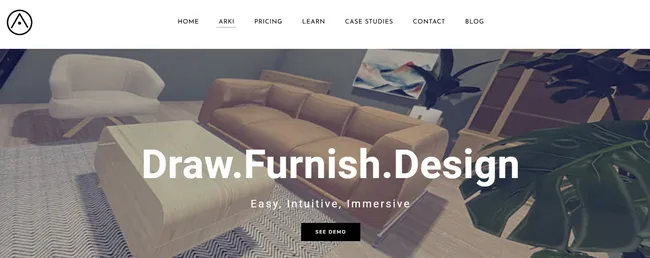
Best for: Augmented reality walk-throughs and interactive client presentations.
ARki is an iOS app that helps you present a 3D model at real scale through AR.
It works best when you already have a model from another tool and you want a more immersive way to review it.
And if your device has LIDAR, then you can use it to scan a room.
On site, AR can help clients understand massing and placement faster than a flat screen.
Use it as a presentation layer, not as your main design and documentation platform.
Key features:
- Full-scale AR visualization for client reviews.
- 3D model import and viewing (format support varies).
- Presentation modes for guided walk-throughs.
- Offline access for site visits (plan-dependent).
Pros:
- Strong “wow factor” for client approvals.
- Helps reduce confusion on scale and layout.
- Useful for in-person meetings and site reviews.
Cons:
- AR accuracy and smoothness depend on device, lighting, and site space, so results can vary.
- Not built for plan production, estimating, or project management.
Pricing: $
8. Homestyler
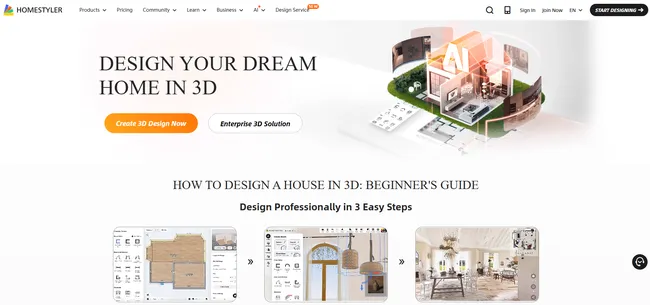
Best for: Quick interior option visuals and simple room layouts.
Homestyler is a browser-based tool geared toward fast interior layouts and staged visuals.
It’s handy when a client needs to see finish options, furniture arrangements, or a basic room concept.
Most teams use it for early visuals, not for detailed construction plan sets.
But if you want speed and simplicity for interior presentations, it can do the job.
Key features:
- Quick 2D-to-3D interior layouts.
- Large library of furniture and decor objects.
- Render options for client-friendly images.
- Sharing tools for review and feedback.
Pros:
- Very approachable for non-designers.
- Fast for interior options and early buy-in.
- Good for simple visuals when time is tight.
Cons:
- Key exports and “pro” controls are often tier-gated, so the lower levels can feel limiting.
- Library items don’t always match real-world products or exact sizes, so specs still need verification.
- Exterior, site, and terrain workflows are minimal.
Pricing: $
9. Foyr
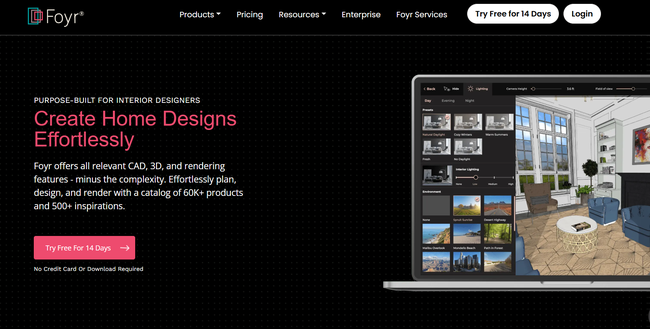
Best for: Interior designers who want 3D remodel concepts.
Foyr is a browser-based interior design tool built to provide fast room planning and presentation for interior designers.
It helps you move from a simple 2D layout to a furnished 3D space without heavy CAD steps.
Many housing pros use it to show finishes, furniture layouts, and option sets when the client needs visuals fast.
Like Cedreo, it’s great for interior visualization and early approvals, but unlike Cedreo, it doesn’t have a robust exterior toolset, so your ability to create site plans, terrain models, and exterior renderings is limited.
Key features:
- 2D-to-3D interior workflow with drag-and-drop editing.
- Cloud rendering for shareable visuals and walkthrough-style presentations.
- Large catalog of furniture, fixtures, and decor.
- Sharing tools for client review and feedback.
Pros:
- Good for quick interior presentations and option visuals.
- Cloud workflow makes sharing easy.
- Good fit when you need visuals without a long learning curve.
Cons:
- Not built for full plan sets, elevations, and sections.
- Less control over technical detailing and annotation, so trade coordination may require another step.
- Limited exterior, site, and terrain tools.
Pricing: $$
10. RoomSketcher
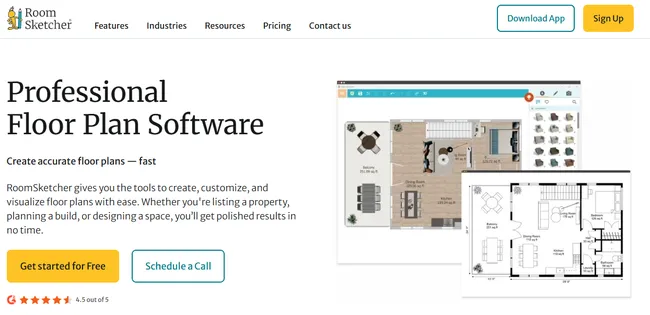
Best for: Real estate agents who need fast, clean floor plans and simple 3D visuals.
RoomSketcher is a floor plan tool that focuses on clear 2D drawings and easy 3D presentation outputs.
It works well when you need to communicate layout changes for a remodel without building a complex model.
Many real estate agents use it to create plans, add basic furnishing, and generate 3D images.
If you need advanced site work, detailed sections, or high-end renderings, you’ll need another tool.
Key features:
- 2D and 3D floor plans with straightforward editing.
- 3D photos and 360 views for client presentations (plan-dependent).
- Site plans for simple exterior context (not full topography modeling).
- Branded, shareable outputs for proposals and presentations.
Pros:
- Easy for non-designers to pick up.
- Produces decent plans.
- Good presentation outputs for selling layouts and options.
Cons:
- Limited symbol/detail customization, which can be frustrating on unusual remodels.
- Handoffs to CAD-heavy partners may require redrawing since there’s no DXG output.
- Less control for complex modeling and advanced rendering.
Pricing: $
11. Planner5D
Best for: Simple home layouts and quick 2D-to-3D visuals with a low learning curve.
Planner5D is an easy-to-use design app that helps you sketch basic layouts and generate 3D views fast.
It works well for early conversations when a client needs to see a rough plan and general style direction.
Many pros use it to explore options, then switch to a more construction-focused tool once the scope tightens.
Key features:
- Simple 2D floor planning with quick 3D visualization.
- Large object and furniture catalog (tier-dependent).
- AI plan recognition tools for faster layout starts.
- Export options that vary by tier (2D DWG/DXF on some plans).
Pros:
- Very approachable for non-designers.
- Fast for early concepts and layout options.
- Good for sharing basic visuals with clients.
Cons:
- Export formats and accuracy can vary by tier, which can surprise teams mid-project.
- AI assisted designs might save time up front, but still need double-checking to ensure accuracy.
Pricing: $
NOTE: The first 11 products that we featured were in the home design and visualization category.
Now we’re going to move on to some architecture apps from the other categories: project management, scheduling, estimating takeoffs, field, and communication.
12. Houzz Pro
Best for: Managing leads, estimates, schedules, and client communication in one place.
Houzz Pro is a business platform that connects marketing and lead management with project tools.
It helps contractors and remodelers track prospects, build estimates, and keep clients updated without living in spreadsheets.
The value shows up when your team needs a clear system for approvals, selections, and change requests.
If you already get leads from Houzz, it can also tighten the handoff from inquiry to signed contract.
Key features:
- CRM tools for leads, pipelines, and follow-up.
- Estimating, invoicing, and online payments.
- Scheduling, task management, and team coordination.
- Client portal tools for messaging, files, and approvals.
- Create simple designs for inspiration.
Pros:
- Strong fit for sales-to-project handoff.
- Helps keep communication and decisions organized.
- Useful dashboards for clients, subs, and internal teams.
Cons:
- Takes setup and consistent data entry to pay off, especially for pipelines and templates.
- If clients don’t use the portal, you can still end up chasing approvals through email and text.
Pricing: $$$
13. JobTread
Best for: Contractors who want estimating and project management that stays simple.
JobTread is a web-based platform built around the day-to-day needs of remodeling and construction companies.
It combines estimating, budgets, schedules, and client communication so the job stays organized from sale through closeout.
Many teams like it because it is structured enough to reduce mistakes but not so complex that no one uses it.
If you want a system that helps you standardize pricing and track job progress, it is a solid option.
Key features:
- Estimating and budgeting tools with templates.
- Scheduling, tasks, and job tracking.
- Client portal for approvals, files, and communication.
- Support and onboarding resources.
Pros:
- Built for contractors, not design firms.
- Helps tighten estimating consistency across the team.
- Keeps clients informed without endless texts.
Cons:
- You will get the most value only after you build templates and standardize cost categories.
- Advanced reporting and integrations can vary by plan, which matters as your team grows.
Pricing: $$
14. ArcSite

Best for: Fast in-home drawings, takeoffs, and proposals when you sell on site.
ArcSite is a mobile-first estimating and takeoff app built for contractors who need speed.
You sketch or import a plan, capture measurements, and turn the scope into a proposal without bouncing between tools.
It is a strong fit for remodelers who quote in the field using a tablet and want cleaner, more consistent estimate outputs.
Use it when your priority is closing simple jobs faster, not producing a full construction drawing set.
Key features:
- Mobile first workflow.
- On-site drawing tools for quick floor plans and sketches.
- Takeoffs and measurements tied to the drawing.
- Proposal and report outputs for clients.
- Common exports like PDF and image files, with CAD exports available on some plans.
Pros:
- Built for field workflow and fast turnaround with mobile devices..
- Helps standardize estimates across sales reps.
- Good for client-facing proposals right after the visit.
Cons:
- While it’s okay for quoting simple jobs in the field, for more complex projects you’re still going to need another home design and visualization platform.
- Proposal templates can feel rigid if you have complex assemblies, alternates, or custom pricing rules.
Pricing: $$–$$$
15. Magicplan
Best for: As-builts, field reports, and exporting measured plans for estimating.
aMagicplan is a mobile app focused on measurement, floor plan creation, and jobsite reporting.
It helps you capture existing conditions quickly, then generate 2D or simple 3D outputs that you can share with your team.
Many remodelers use it to speed up site documentation and reduce missed details before pricing.
Use it when you need fast field capture and clean exports, not high-end renderings.
Key features:
- Floor plan creation with measurements captured on site.
- Photo-based documentation and report packages.
- Export options that can include PDF and CAD-friendly formats.
- Estimate-friendly outputs for scope and quantity workflows.
Pros:
- Speeds up as-built capture for remodels.
- Helpful reporting to keep photos and notes organized.
- Works across iOS and Android.
Cons:
- Some exports and reporting workflows are plan-gated, which can be limiting for multi-user teams.
- Presentation visuals are limited compared to true rendering tools.
Pricing: $$
16. RoomScan Pro
Best for: Rapid measured floor plans and condition capture on iOS devices.
RoomScan Pro uses iPhone or iPad sensors (including LiDAR on supported devices) to capture room geometry.
It can be a practical tool for remodelers who want faster as-builts without hand-measuring every wall.
Teams often use it to document existing layouts, then export the plan into a design or estimating workflow.
Use it as a capture tool first, then move into your main design or proposal software.
Key features:
- LiDAR and sensor-based room scanning (you generally need an iphone or ipad pro or higher).
- Automatic floor plan creation from scans.
- Notes and documentation support for existing conditions.
- Export options for sharing or CAD handoff.
Pros:
- Very fast for early as-built layout capture.
- Useful for property documentation on site.
- Great fit for iPad-based field teams.
Cons:
- Best results require LiDAR-capable devices, and older iPhones/iPads might not have that tech.
- Cluttered rooms, curved walls, and tight spaces can reduce scan quality and require manual cleanup.
Pricing: $
17. Fieldwire
Best for: Plan-based field coordination, punch lists, and keeping the whole team aligned.
Fieldwire is a field management app that centers on plans, tasks, and communication.
You can keep drawings, photos, and checklists in one place so the crew always works from current information.
It is especially useful on busy remodels where small misses turn into expensive rework.
Use it to tighten site communication and track issues through closeout.
Key features:
- Plan viewing, markups, and version control.
- Tasks, punch lists, and checklists for field execution.
- Photos, files, and notes tied to locations.
- RFIs, submittals, and reporting tools on higher tiers.
Pros:
- Reduces confusion by keeping work tied to the plan.
- Improves accountability with task tracking.
- Helps close punch lists faster.
Cons:
- Requires admin discipline for permissions and plan versioning, otherwise workspaces get cluttered.
- Advanced reporting and RFI/submittal tools are tier-gated, and costs can rise as teams scale.
Pricing: $$
Choosing the Right Architecture Apps for Your Workflow
Most pros end up with a small “stack,” because one app rarely nails design, estimating, and field coordination at the same time.
Here are some popular stacks…notice how well Cedreo fits into these stacks.
For residential builders (sell fast, then build clean)
- Cedreo + Fieldwire: Build client-ready plans and visuals, then keep the crew aligned with markups, tasks, and punch lists.
- Cedreo + JobTread: Use Cedreo to lock scope and visuals early, then run budgets, schedules, and client approvals in one place.
For remodeling professionals (as-builts, options, tight scope)
- RoomScan Pro + Cedreo: Capture existing conditions fast, then turn them into a polished remodel concept and presentation.
- magicplan + Cedreo: Document rooms with photos and measurements, then use Cedreo to create clear plans, 3D visuals, and proposal-ready pages.
For professional architects and large design teams (complex docs and coordination)
- Cedreo + AutoCAD Architecture: Build early concepts in Cedreo, create a project presentation to sell the package, then export DWG/DXF so your CAD team can finish full construction documentation in AutoCAD (Architecture toolset).
- Cedreo + Chief Architect: Use Cedreo for fast layout options and client-ready visuals, then export the plans to complete the full drawing set in Chief Architect when you need structural detail and material takeoffs.
Future of Apps for Architects
The future of architectural design software is all about faster decisions, clearer visuals, and fewer handoff headaches.
- AI-assisted planning: More apps will help you generate early layouts from simple inputs, so the drawing process starts faster.
- Idea-to-model workflows: Expect digital tools that turn sketching, photos, and basic rules into editable 3D concepts.
- Faster rendering: 5 minute renderings and “Always-on” visuals will make perspective checks and material choices feel less time consuming.
- Cloud-first collaboration: Teams will share files, comments, and pdf drawing sets without version chaos.
- Connected job workflows: Takeoffs, pricing, and field updates will tie closer to the model, cutting rework on site.
Look for software like Cedreo that is already aligning with these trends through cloud-based workflows and fast, client-ready renderings that help housing pros move from concept to approval with less friction.
Take Your Architectural Drawing Process to the Next Level
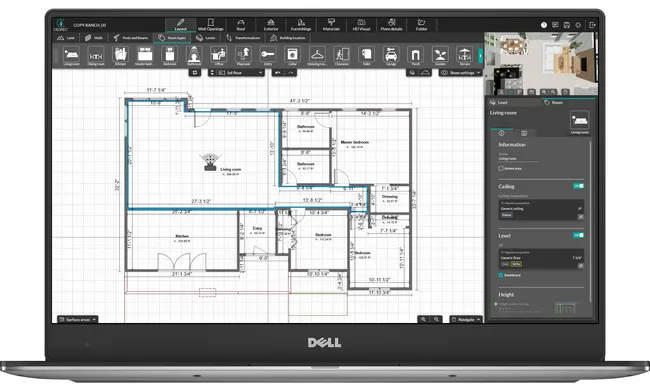
If you want faster approvals and fewer scope surprises, your architect apps need to help you sell clearly, not just draw.
Cedreo helps you turn ideas into client-ready plans and photorealistic 3D visuals quickly, so you can get to “yes” sooner.
- Create 2D floor plans and 3D renderings in one workflow.
- Present options with polished documents clients understand.
- Cut rework by aligning expectations before the job starts.
Ready to streamline your next project?
Architecture Software FAQs
What is the best app for architecture?
The best app depends on your design process: architects producing full architectural drawings and coordination often use Archicad or AutoCAD, while residential teams may want an intuitive app that helps them draw and present ideas faster. For many builders and interior designers, Cedreo fits that “speed plus clarity” lane when the goal is client-ready plans and visuals.
What are the best architecture apps for contractors?
Contractors usually do best with a digital tool that saves time from first sketching to proposal, then keeps the job moving in the field.
A common combo is Cedreo for plans and 3D, plus the JobTread app for jobsite communication and markups.
Which architect apps work best for remodeling projects?
Remodeling starts with the existing space, so apps like RoomScan Pro or magicplan (think tape measure tool plus iPhone or iPad capture) help you document reality fast.
Then Cedreo can turn those measurements into clear 3D design options clients can approve before the demo starts.
Which architecture apps have the fastest rendering times?
Cloud apps built for 3D visualization are the fastest because they skip time consuming and complicated modeling workflows and don’t depend on your computer hardware for renderings.
Cedreo has some of the fastest modeling times since it used cloud based rendering to get high quality renderings in 5 minutes or less.
How long does it take to learn architecture apps as a contractor?
Easy, intuitive interface tools like Cedreo can take a few hours for beginners to become productive, while DWG and BIM platforms can take weeks of training.
Many teams start with Cedreo for a faster presentations to sell projects, then add advanced software only if their particular project requires structural documentation or automated material takeoffs.
What architecture apps work best for client presentations and sales?
Look for apps like Cedreo that turn a concept into a clean story: floor plans, visuals, and exportable PDFs that read like a mini studio presentation.
Cedreo works well here because it packages plans, renderings, and presentation pages in one place, so client decisions happen faster.