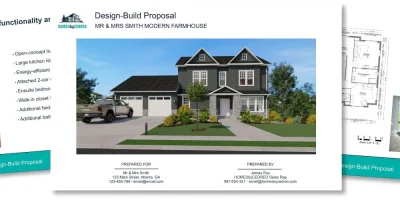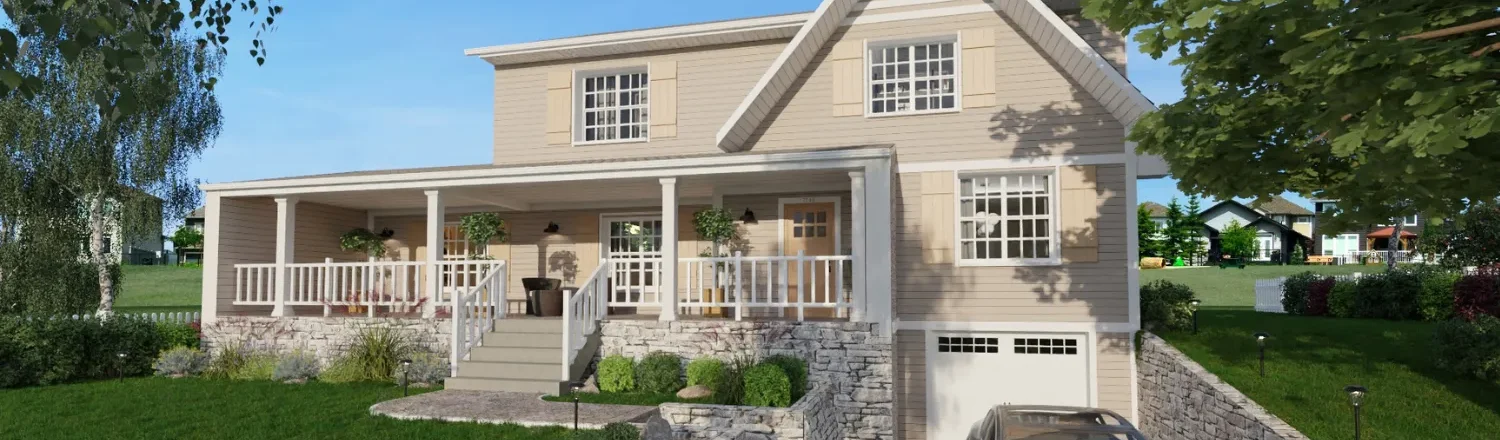
Here’s how to stand out in a space where all your competitors already have a Google profile and a Facebook page.
Every residential builder knows the feeling.
The phone goes quiet, the pipeline thins out, and suddenly you’re bidding against three cheaper competitors for the same job.
Marketing for construction companies is supposed to fix that, but most advice just hands you a pile of disconnected tactics: post on social, run some ads, claim your Google listing.
None of it tells you what to do first, or how to stand out when every competitor in your service area already does the same things.
This guide is different.
We’ll show you how to build an online foundation, rank in local search, attract qualified leads before they ever call, and turn every finished project into a marketing asset that keeps working for years.
This is the strategy that helps you grow your construction business in 2026 and beyond.
In a hurry?
Skip to the action plan near the end for a step-by-step checklist, then come back to the sections that explain how to do each step.
Key Takeaways
- A construction company’s marketing strategy works best as one connected system, not a list of random tactics.
- Local SEO is the highest-leverage channel for most residential builders, because that’s where clients start their search.
- Content marketing and project case studies attract qualified leads during the research phase, before prospects even know who to call.
- 3D renderings and floor plans from Cedreo give construction companies a reusable visual asset that makes every marketing channel more effective.
Why trust us? Here at Cedreo, we’ve got 20+ years of experience working with housing pros in the home design space. So we know what it takes for contractors and builders to land more clients and grow their businesses!
See How You Can Create Complete Projects with Cedreo
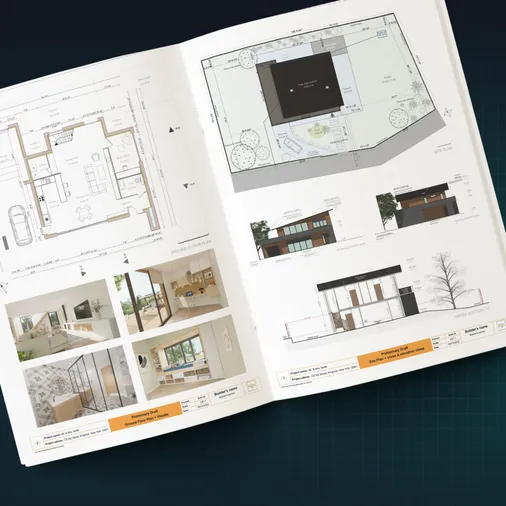
Plans – Get site plans, 2D floor plans, electrical plans, cross sections and elevation views — with all the technical details you need for a comprehensive project overview.
3D Visualizations – Use interior and exterior 3D renderings as well as 3D floor plans to help clients understand the finished project.
Documentation – Manage all your visual documents in one place, so it’s easier to present and sell your projects.
No credit card required, no commitment
Why Marketing for Construction Companies Is Different
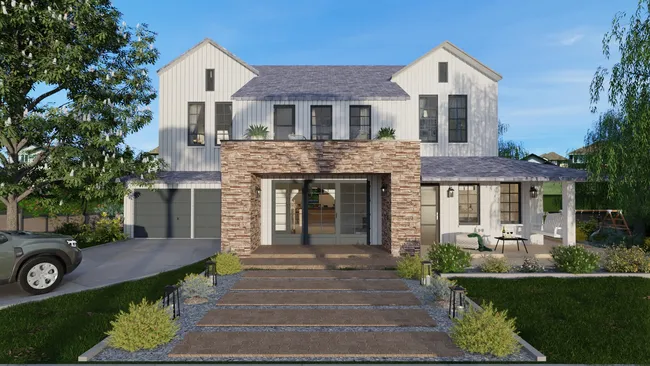
Construction marketing has constraints no generic marketing guide accounts for.
You’re not selling sneakers or software subscriptions, and the playbooks built for e-commerce or quick service businesses fall apart when the average sale is a six-figure home that takes months to close.
Here are the realities your construction marketing strategy has to work around:
- Long sales cycles: A residential client may research for weeks or months before they ever fill out your contact page.
- High-ticket, high-risk decisions: Buyers move slowly because the cost of choosing the wrong builder is huge.
- Co-decision makers: You’re often selling to a couple, sometimes a couple plus their parents, and every one of them needs to feel confident.
- Geographic service areas: A national audience is useless if you only build within 40 miles, so your marketing has to be local by design.
- Trust and proof over hype: These clients buy based on evidence of quality, not clever slogans.
These realities shape your whole sales process, from the first ad a potential client sees to the day your company signs the contract.
In our experience working with housing pros, the construction companies that win consistently aren’t the loudest advertisers.
They’re the ones who show proof of quality early and stay easy to find when a potential client is finally ready to act.
That construction marketing strategy is the lens for everything that follows in this guide.
Your Marketing Foundation: Website, Google Business Profile, and Visual Assets
Before any clever marketing campaigns, you need a foundation that makes you look credible the moment someone checks you out.
Three pieces carry most of the weight: a professional website, a fully optimized Google Business Profile, and a library of project visuals that feeds every other channel.
Together they build the strong online presence that every other tactic depends on, and they’re what give a small construction company the same polish as a national brand.
Your Website: The Asset Everything Else Points To
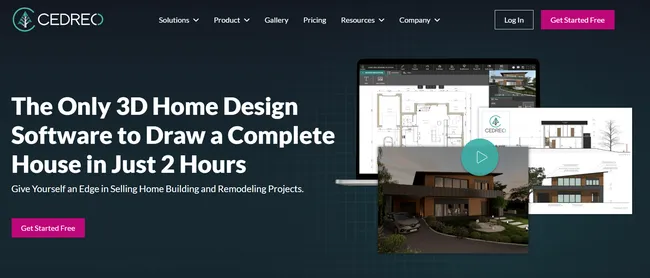
Your website is the one marketing channel you fully own, and its job is simple: establish credibility, show proof of work, and capture leads.
Every ad, post, and referral eventually sends people here, so if the site looks like every other contractor template, you’ve lost the advantage before the visitor even reads a word.
You don’t need to be a web developer to get this right.
Focus on a few visually appealing pages that do the heavy lifting, each one carrying your company brand, your company logo, and engaging content that makes visitors trust you.
A clean, professional website is the foundation of a strong brand, and it’s what turns curious clicks into real inquiries.
| What to include | Why it matters | How to do it |
| A visual portfolio of past projects | Clients are buying a result they can’t see yet, so proof of work is your strongest selling point. | Lead with high-quality project photos and 3D renderings, grouped by project type (custom homes, additions, remodels). |
| Clear service pages | Visitors and search engines both need to know exactly what you build and where. | Create one page per core service, each naming the work and your service area in plain language. |
| Real reviews and testimonials | Social proof lowers the perceived risk of a high-ticket decision. | Pull quotes from happy clients and link out to your Google and Houzz profiles. |
| An easy-to-find contact page | A confused visitor never becomes a lead. | Put a phone number and short form on every page, and keep the contact page one click away. |
| A simple, fast, mobile layout | Most prospective customers will judge you on a phone in a few seconds. | Skip the clutter, compress images, and make sure pages load quickly on mobile. |
The real differentiator isn’t fancy web design.
It’s a portfolio of professional project visuals instead of a handful of muddy job site photos.
High-quality 2D floor plans, 3D renderings, and site plans are some of the highest-converting visuals a construction company can put on its website.
They show clients the project before it’s built, which is exactly what those clients are paying you for.
PRO TIP! Build one flagship project page for your best-known build and treat it like a mini case study. It will outconvert a generic gallery every time because it tells a complete story.
Your Google Business Profile: The Most Underused Free Tool
Most builders claim a Google Business Profile, slap on a logo, and never touch it again.
That’s a mistake, because for local search this free listing often outperforms the website itself.
A fully optimized profile is what gets your business visible in the Google map pack when nearby clients search, and Google’s own tools make it free to set up.
Here’s what an optimized profile actually looks like in practice:
| What to do | Why it matters | How to do it |
| Choose the right categories | Categories tell Google which searches you should appear in. | Set a primary category (e.g. “Home builder”) plus secondary ones like “General contractor” or “Remodeler.” |
| Define your service areas | Local listings rank on proximity, so accurate areas matter. | List every city and county you actually build in, not just your home base. |
| Add the right photo types | Visual proof builds trust and keeps the profile active. | Post exterior shots, interiors, and renderings of upcoming projects, refreshed monthly. |
| Respond to every review | Review activity is a strong prominence signal. | Reply to positive reviews within a few days and address negative ones calmly and publicly. |
| Post regularly | Fresh posts signal an active, real business. | Share completed projects, offers, or quick tips a couple of times a month. |
Done right, your profile becomes a 24/7 ad that costs nothing and feeds directly into the local SEO work covered below.
Your Visual Asset Library: The Material That Feeds Every Channel
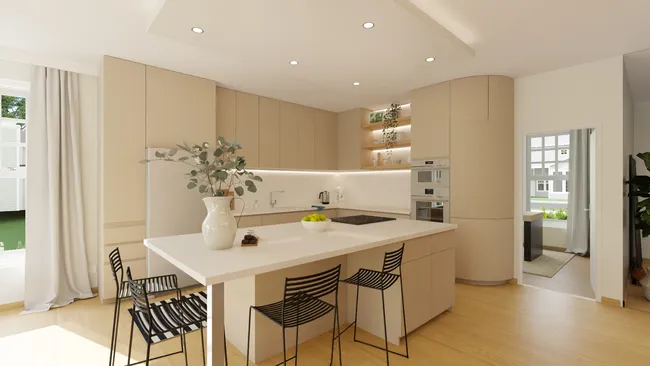
Your project visuals aren’t just for the website.
They’re the raw material for social media, paid ads, content marketing, email, and project proposals.
A construction company that builds this library on purpose gets a compounding advantage, because one strong rendering can be reused a dozen ways without creating anything new.
Think of every exterior rendering, interior rendering, floor plan, and site plan as a marketing asset you’ll spend the next year deploying across channels.
When you use Cedreo, every project design produces those reusable visible assets at the same moment you’re doing the design work.
That means the marketing cost of your 3D rendering library is essentially zero because it is a by-product of the design process.
When the visuals are a by-product of the design process, you’re not paying a photographer or a 3D artist, and the same 3D renderings you used to win the client become the content you post for months afterward.
That’s also why those visuals strengthen your project proposals, since the same images that sell on your website help justify your price in a bid.
SEO for Construction Companies: How to Rank When Clients Are Searching
Search engine optimization is how you get found at the exact moment a client is looking to build.
When someone types “home builder near me” or “custom home contractor” plus your city, you want to be the result they find and click, and SEO for construction companies is mostly about earning that spot in local search results.
It breaks into three layers: local SEO, on-page SEO, and content SEO.
Local SEO for Construction Companies: How to Dominate Your Service Area
Local SEO is the core of search for any residential construction company.
Google ranks local results on three factors, and once you understand them, the to-do list gets obvious:
- Proximity: How close your business is to the searcher. You can’t move, but accurate service areas and location pages help Google connect you to the right towns.
- Relevance: How well your business matches the search. Service pages with specific keywords (“kitchen remodel,” “garage addition”) and clear location signals tell Google what you do and where.
- Prominence: How well known and trusted you are. This comes from positive reviews, consistent listings in local directories, and links from local sources like your HBA, suppliers, and press.
Practically, that means three habits:
- Collect reviews steadily
- Keep your name, address, and phone identical across every directory
- And earn a few local backlinks each quarter (when local businesses link to your site)
PRO TIP! Audit your business name, address, and phone across Google, Yelp, Houzz, and your HBA listing in one sitting. A single mismatched address can quietly hold your ranking back.
On-Page SEO: How to Structure Your Construction Website for Search
On-page SEO is about giving each page one clear job so search engines know when to show it.
The big distinction is between service pages and blog content.
Service pages target buyers ready to hire, while blog content catches people earlier, when they’re still researching.
- Give each page one keyword: Build every page around a single phrase a buyer would type, like “home builder [city]” or “custom home contractor [state],” then use it in the title, the main heading, and the page text. Don’t target the same keyword on two pages, or they compete with each other.
- Write clear title tags and meta descriptions: The title tag is the clickable headline in Google results (and the name on your browser tab); the meta description is the short summary beneath it. Write a unique, keyword-rich pair for every page in your site builder’s “SEO” box (Yoast or Rank Math in WordPress, the SEO panel in Wix or Squarespace), since they’re what convince someone to click.
- Link your pages together: When you publish a service page, link to it from a related blog post using descriptive anchor text (the words you turn into the link), then link that post back from the service page. A few of these connections help visitors and Google move through your site.
- Keep headings and URLs clean: Use descriptive headings and simple URLs like /custom-homes instead of a string of numbers.
None of this is technical wizardry, and you don’t need to hire a construction marketing agency to handle the basics.
Most of it is just being clear and consistent about what each page is for.
Content SEO: How Blog Content Compounds Over Time
Every blog article that ranks adds a new front door to your website without ongoing ad spend.
Paid ads stop the moment your budget runs out, but a helpful article keeps pulling in website traffic month after month.
Over a year, a consistent content strategy tends to produce more organic traffic than a single paid campaign at the same budget, and the gap only widens as your library grows.
This is the long game of inbound marketing: instead of chasing prospects, you publish the answers they’re already searching for and let them find you.
A few habits make blog content actually pay off:
- Stay consistent: Pick a cadence you can hold, like two posts a month. Two a month beats ten posts then six months of silence, so write a few at once and schedule them out.
- Choose the right keywords: Target specific, low-competition phrases with buying intent. Google’s autocomplete, the “People Also Ask” box, and the free Search Console all show what locals are really typing.
- Write for local searchers: Local topics rank fastest. Think “cost to build a [home type] in [your city],” neighborhood build guides, or the permit and process questions specific to your area.
- Decide what to write: Answer the questions clients ask on every sales call. If three prospects asked it, it’s an article.
A note on AI tools: AI can speed up outlines, first drafts, and topic ideas, and there’s no shame in using it that way.
But never publish raw AI text.
A human who knows the trade has to fact-check it, add real project detail, and rewrite it in your voice, because generic AI content ranks poorly and quietly erodes the trust you’re working to build.
We’ll get into exactly what to write in the content marketing section below.
Digital Marketing for Construction Companies: Channel by Channel
Not every channel deserves equal effort, so here they are in rough priority order by return for a residential construction company.
Think of this as a multichannel marketing plan where each channel reinforces the others, instead of a pile of one-off marketing campaigns that never connect.
You can go deeper on each channel in our guide to digital marketing for contractors.
Google Business Profile and Local Search: Highest ROI
For most contractors, local search is the single highest-ROI channel, full stop.
We covered the setup in the foundation section above, so the point here is simply one of priority: optimize this before you spend on anything else.
A complete profile plus a steady stream of reviews will out-earn a paid campaign for most builders, and it keeps working long after you’ve stopped touching it.
Paid Search Advertising: Google Search Ads & Google Local Service Ads
Paid search makes sense once you’re established and have budget to test, especially for specific high-intent construction services.
There are two main flavors, and they work very differently:
| Local Service Ads | Google Search Ads | |
| You pay for | Each qualified lead (a call or message) | Each click, whether or not it converts |
| Shows | A Google Guaranteed trust badge at the very top | A standard text ad above organic results |
| Best for | Builders who want leads with built-in trust | Builders who want control over targeting and copy |
| Main risk | Lead quality varies; screen them | Paying for low-intent clicks that never call |
To avoid wasting budget, target high-intent searches (“home addition contractor [city]”) and skip broad, curiosity-driven terms that rarely turn into qualified leads.
Curiosity terms are the broad searches people type while daydreaming, not while hiring.
Think “how much does it cost to build a house,” “home addition ideas,” or “what does a general contractor do,” all clicks from people who are months or years from breaking ground.
Start small, track cost per lead by campaign, and pour money only into what proves itself.
Count the leads each method brings in each month, and divide your ad spend by that number.
Then compare that cost to the profit on an average job to see your real return on investment.
Google Ads has built-in conversion tracking, but a simple spreadsheet works fine when you’re starting out.
Social Media Marketing for Construction Companies
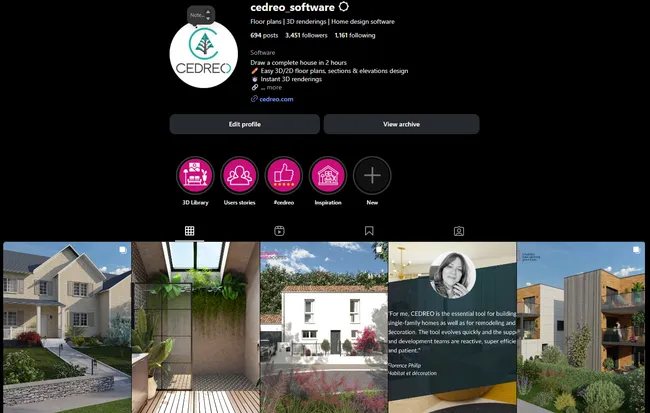
Social media marketing works for construction companies when the content is visual and project-centric.
You’re not trying to go viral, you’re trying to stay top of mind with a local target audience until they’re ready to build.
Done consistently, social media marketing keeps your company in front of potential customers who aren’t searching yet but will be soon.
Pick platforms based on where your clients actually are:
| Platform | Best for | What to post |
| Residential, visual-first audiences | Project photos, before/after reels, renderings of upcoming builds | |
| Houzz | Homeowners actively planning projects | Full project galleries and a complete, reviewed profile |
| Local community and homeowner reach | Completed projects, local involvement, simple updates | |
| Commercial or B2B relationships | Partnerships, milestones, and industry insight |
The hardest part of social for builders is the gap between project completions, when you simply don’t have new finished photos to share.
3D modeling for construction can close that gap, because you can post compelling visuals of an in-progress or upcoming project long before it’s done.
Email Marketing for Construction Companies
For builders, an email list is a referral and repeat-business tool, not a mass marketing channel.
You’re not blasting thousands of strangers, you’re using steady customer communication to build relationships with existing customers who already know your work.
Pair the list with simple referral programs, and your happiest existing customers turn into repeat customers and a quiet source of new business for your company.
Build the list from sources that are already warm:
- Past clients, who may build again or refer a neighbor.
- Inquiry follow-ups from prospects who weren’t quite ready.
- A simple newsletter signup on your website.
Keep the volume low and the quality high, sending things people actually want to open:
- Project updates and new build announcements.
- Design inspiration and finish ideas.
- Seasonal maintenance and planning tips.
A handful of well-timed emails a year does more for repeat business than a weekly newsletter nobody reads.
Content Marketing for Construction Companies That Generates Quality Leads
Content marketing is how you build authority that attracts quality construction leads while you sleep.
The idea is simple: publish genuinely useful content, get found during the research phase, and earn trust before a competitor even enters the conversation.
Why Content Marketing Works So Well for Construction
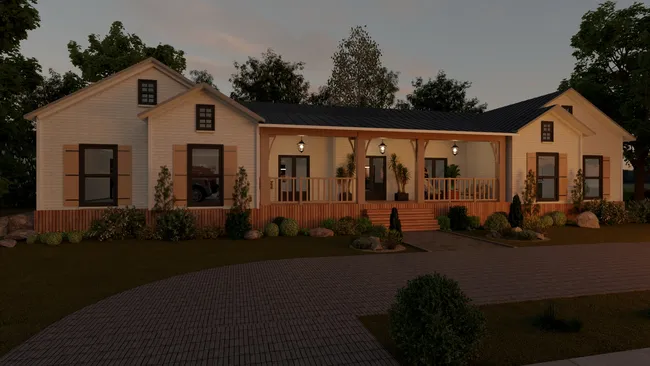
Residential construction is a high-ticket, high-risk purchase, which means clients research heavily before contacting anyone.
They often read, compare, and second-guess for weeks before a single phone call.
A construction company that publishes specific, helpful content gets found during that research, often before the prospect even knows which companies to compare.
From what we’ve seen work for contractors, that early visibility and brand recognition is what turns a cold search into a warm, half-sold lead.
Few corners of the construction industry use engaging content well, so a builder who does instantly looks more credible than competitors who only run ads.
Project Case Studies: The Most Underused Format in Construction
Most construction companies have a portfolio page with photos and project names, and stop there.
A real case study goes further, and that depth is exactly what sets you apart.
Walk the reader through the full story of a build:
- The brief: What the client wanted and why they came to you.
- The constraints: The budget, lot, or timeline challenges you had to solve.
- The decisions: What you chose and the reasoning behind it.
- The experience: What it was actually like to work with you.
- The result: The finished home and how the client felt about it.
This format ranks for long-tail searches, builds credibility with new prospects, and separates you from competitors who only post finished photos.
A case study built around a Cedreo-designed project can carry the whole visual narrative in one page: before/after renderings, the floor plan that won the client over, and the finished project photos side by side.
Educational Blog Content: Attract Clients Already in Research Mode
The lowest-cost way to generate construction leads at scale is to answer the questions clients ask before they hire.
Think about what runs through a homeowner’s head early on: How much does a custom home cost? How long does a build take? What’s the difference between a remodel and an addition?
Write clear articles that answer those exact questions, and you’ll rank for the searches they generate.
Better yet, localize them.
An article titled “How much does a custom home cost in [your city]?” pulls in nearby searchers the big national sites never bother to target.
Each piece becomes another entry point that brings prospective clients to your site already trusting your expertise.
Over time, that growing library does the early selling for you, no ad budget required.
Construction Marketing Ideas for Companies Short on Time
You don’t need a marketing team to keep content flowing, you need a batching system.
The trick is to produce in bulk and repurpose relentlessly, so one effort fuels months of marketing materials.
The simplest version is the waterfall method: create one big piece of content first, like a detailed project case study or a single video walkthrough of a finished home.
Then pour it downhill into small pieces: five photos become five posts, the long video becomes 10 short reels, each design decision becomes a quick tip, and the whole thing becomes an email to your list.
One afternoon of real work turns into weeks of content, and nothing has to be invented twice.
In practice, that looks like this:
- While working on a project, compile designs, project photos, notes, etc. all in one place.
- Once the project is done, block off an afternoon to create one large case study based on the project. Include Cedreo design renderings, project progress photos & videos, a detailed written case study (as described above), final project photos & videos, as well as personal notes on lessons learned during the project.
- Use elements of that large case study to create shorter form content: turn progress videos into reels, turn lessons learned into blog articles, use before renderings & after photos to create static image posts, etc.
- Or pass the large case study content off to a content-creation assistant who can easily repurpose it and post it on your channels.
Repurposing content you already have is the closest thing to free, effective marketing there is, because the hard work is already done the moment the project wraps.
PRO TIP! Take advantage of slow days or weeks to create batches of content that you’ll have to post for months to come.
How to Advertise a Construction Business: Offline Still Works
Digital gets most of the attention, but traditional marketing still pulls its weight in the construction industry, where so much business is local and relationship-driven.
Sponsoring community events and local events, sharing project news through press releases, and handing out print materials all help you build relationships that referrals grow from.
Keep this side lean and focus on the few offline plays with the best return:
- Yard signs and hoarding signage: Still the highest-visibility local channel for active projects, since every passerby sees your company name on real work in their own neighborhood.
- Trade association membership: Groups like the NAHB and your local HBA are worth it for the referral network, not just the credibility badge.
- Networking with realtors, architects, and designers: Real estate agents and design pros send a steady stream of referrals, and it’s the channel most residential contractors underinvest in.
- Participation in Parade of Homes or other builder shows: Few events put you in front of residential buyers who are actively shopping for a builder.
Pair that with referral programs that reward partners and past clients, and your offline marketing efforts start feeding the same pipeline as your digital ones.
How to Measure Whether Your Construction Marketing Strategy Is Working
Without measurement, your marketing spend is just guesswork.
You don’t need a complex dashboard, just four numbers that tell you what’s actually driving business:
| Metric | What it tells you |
| Qualified inquiries per month | Whether your marketing is generating real demand, not just clicks. |
| Close rate on proposals | How well your visuals and proposals convert interest into signed contracts. |
| Cost per lead by channel | Which channels earn their budget and which to cut. |
| Referral vs. outbound lead ratio | How much of your pipeline comes from reputation versus paid effort. |
Why volume can fool you: More inquiries isn’t the same as more jobs, and chasing the channel with the biggest numbers is the most common mistake we see.
Picture two channels running side by side for one month:
| Channel | Inquiries (spend) | Close rate | Cost per closed job |
| Channel 1 | 20 / mo ($1,000) | 5% | $1,000 (1 job won) |
| Channel 2 | 5 / mo ($400) | 40% | $200 (2 jobs won) |
Channel 1 looks busy, but those 20 inquiries hide a 5% close rate, so it costs a full $1,000 to win one job.
Channel 2 looks quiet, yet its better-qualified leads close at 40%, landing two jobs at $200 each.
The takeaway: Judge every channel by cost per closed job, not by clicks or raw inquiry count, and you’ll stop feeding the busiest-looking source.
To find cost per lead, divide a channel’s monthly spend by its leads.
For cost per job, divide that spend by the deals that actually closed.
How do your numbers stack up? A few rough industry benchmarks give you something to measure against:
- Close rate: Residential builders typically win 25% to 35% of the bids they send, and anything under 15% usually means you’re chasing the wrong jobs.
- Cost per lead: Across home services, a paid lead for construction and contractors averages around $165, so a channel that beats that is earning its keep.
- Marketing budget: Established builders spend roughly 3% of revenue on marketing, while newer companies often need 10% or more to gain traction.
Treat these as guideposts, not gospel, because your market, niche, and average job size all move the numbers.
Measure honestly, double down on what proves out, and you’ll stay ahead of competitors who never look at their numbers at all.
Your Construction Marketing Action Plan: Where to Start First
Feeling overwhelmed?
Here’s where to start.
Just Getting Started? 5-Step Marketing Plan
This one’s for the builder who’s just getting started, has a handful of jobs and no reviews yet.
Here are the first five moves, in order:
- Ask for a review after every job: Even three honest reviews put you ahead of the local competitors who have none.
- Photograph everything you build: Take clean before, during, and after shots on your phone at every site, and back them up.
- Fill the gaps with renderings: When you don’t have photos yet (you’re new, or can’t get back to finished projects), design the project in software like Cedreo and export a professional rendering that shows what you can build.
- Make those visuals look pro: Cedreo turns a simple floor plan into high-quality, photorealistic images that read like finished work, so your marketing never looks empty while you stack up real jobs.
- Build out your Google Business Profile: Claim it, add every detail, upload your photos and renderings, and funnel those first reviews into it, since it’s the fastest way to start showing up locally.
Do these five for a few months and you’ll have the reviews, photos, and visuals that serve as the basis for the next phase of your marketing strategy.
Once you’ve done those five steps, move on to phase two.
What’s Next to Upgrade Your Residential Construction Marketing?
Here are the next steps that will take your marketing efforts to the next level.
- Optimize your Google Business Profile: Claim it, fill it out completely, and start asking every happy client for a review. (See “Your Google Business Profile.”)
- Fix your website: Make sure it shows proof of work, has clear service pages, and makes contacting you easy. (See “Your Website.”)
- Build a visual library: Save a rendering, floor plan, and photo from every project into one place. (See “Your Visual Asset Library.”)
- Win local SEO: Keep your listings identical everywhere, add location-specific pages, and collect reviews steadily. (See “Local SEO for Construction Companies.”)
- Tidy up on-page SEO: Give each service page one keyword, a clear title tag, and links to your related pages. (See “On-Page SEO.”)
- Publish content consistently: Aim for one helpful local article or project case study a month. (See “Content Marketing” and “Content SEO.”)
- Get social with your visuals: Post on the one or two platforms your clients actually use. (See “Social Media Marketing.”)
- Layer in email and offline: Add a simple email list and your best offline plays once the basics are running. (See “Email Marketing” and “Offline Still Works.”)
- Test paid ads last: Only reach for them once the free channels work and you have budget to spare. (See “Paid Search Advertising.”)
- Track and double down: Each month, measure cost per closed job by channel and reinvest in the winners. (See “How to Measure Whether Your Construction Marketing Is Working.”)
Tackle this over a few months, not a single weekend, and your marketing compounds instead of burning you out.
Turn Every Project Into Your Best Marketing Asset
A thriving business in construction isn’t built by doing every tactic at once.
The companies that stay busy build a foundation, win local search, publish helpful content, and turn real projects into proof that keeps selling, all anchored by strong project visuals.
That’s where Cedreo gives your construction company an edge:
- Create floor plans, site plans, and photorealistic 3D renderings in hours, not days.
- Reuse every design across your website, social, ads, proposals, and email.
- Show clients the finished project before you break ground, so you close more deals.
Sign up for a free Cedreo account today!
Construction Marketing FAQs
What is the best marketing strategy for a construction company?
The best strategy is a connected system: a credible website, an optimized Google Business Profile, strong local SEO, and content marketing that attracts leads during research.
Tools like Cedreo strengthen your company’s whole system by giving you reusable 3D visuals for every channel.
How do I market a construction business with no budget?
Start with the free, high-impact basics: optimize your Google Business Profile, collect reviews, and post project visuals on social media.
Reusing renderings and photos you already created in software like Cedreo keeps your content flowing without new spend.
What is the most effective digital marketing for construction companies?
Local search is usually the most effective channel, since clients begin with searches tied to their service area.
Pairing an optimized profile with project visuals from Cedreo helps you stand out in those local results.
How does SEO for construction companies work?
It works mostly through local SEO, where Google ranks you on proximity, relevance, and prominence, supported by service pages and blog content.
Adding clear visuals, like Cedreo renderings, helps those pages convert the traffic they earn.
What is content marketing for construction companies?
It’s publishing useful content (case studies, cost guides, and how-tos) that gets you found while clients research.
A Cedreo-designed project makes a ready-made case study with before/after renderings and floor plans.
How do I advertise my construction business locally?
Combine local SEO and a strong Google Business Profile with offline plays like yard signs, your local HBA, and realtor referrals.
Branded project visuals from Cedreo make both your digital and print materials look more professional.
How long does it take for construction company marketing to generate leads?
Local SEO and ads can produce inquiries within weeks, while content marketing usually takes a few months to compound.
Either way, polished visuals from Cedreo help convert that interest into signed work faster.
What social media platform works best for construction companies?
Instagram and Houzz tend to work best for residential builders because they reward visual, project-centric content.
Posting Cedreo renderings of upcoming projects keeps your feed active between completions.
How do 3D renderings help market a construction company?
3D renderings let you show clients a finished project before it’s built, which builds trust and speeds up decisions.
Because Cedreo renderings are a by-product of the design work, they double as marketing content across every channel.