Blueprint software that turns floor plans into client-ready 3D presentations fast helps you win more residential projects in 2026.
The best blueprint software doesn’t just help you draw floor plans.
It helps you land more contracts.
In 2026, the contractors who can produce professional blueprints with photorealistic 3D renderings in under 2 hours are closing deals while others are still stuck in old CAD.
- When your proposal takes days, your bid goes cold.
- When clients can’t picture the real-life results of a 2D plan, they stall, change their mind, and you pay for the rework.
- When every revision means another architect bill, your profit shrinks.
- When you bounce between one app for floor plans, another for renderings, and another for presentations, you lose hours on every project.
- And when your blueprint tool can’t handle simple terrain modeling or electrical plans, your documentation feels incomplete.
With options ranging from DIY tools that are simple but lack pro features to $4,000+ programs that feel overwhelming, choosing the right fit is the real challenge.
In this we’ll cover the top 11 options and a clear way to choose, so you can create accurate plans, strong 3D visuals, and client-ready presentations that help you land more residential work.
Key Takeaways
- The best home blueprint software helps you create accurate 2D floor plans and clear 3D visuals without a steep CAD learning curve.
- Faster, more visual presentations can reduce revisions and help you win bids before a competitor shows up with better renderings.
- Pick a tool that handles site plans and terrain modeling if you build on real lots, not just flat interior layouts.
- Cedreo helps housing pros move from floor plan to client-ready 3D presentation fast, so you can sell the job with less back-and-forth.
Why trust us? Our company has 20+ years of working with housing professionals and home design software. So we know what contractors, remodelers, and designers like you need from blueprint design software.
See How You Can Create Complete Projects with Cedreo
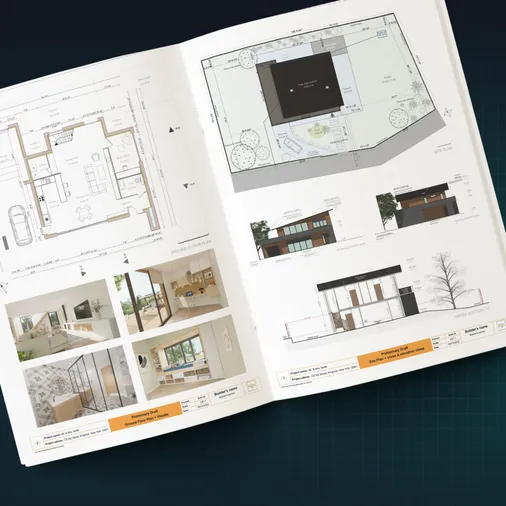
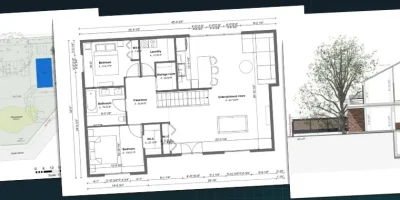
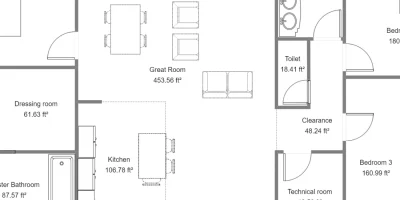
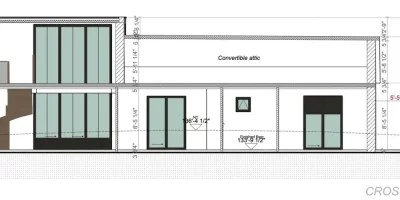
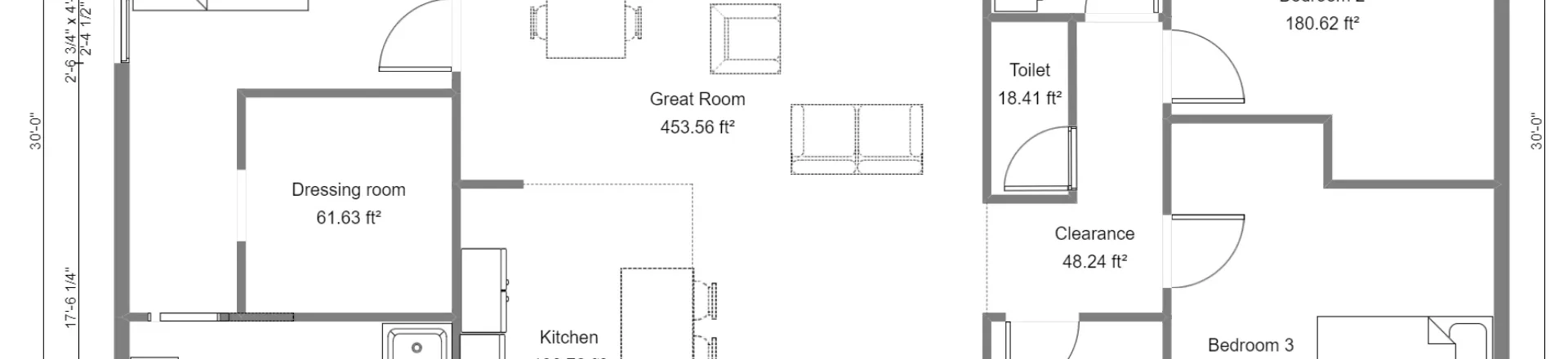
Plans – Get site plans, 2D floor plans, electrical plans, cross sections and elevation views — with all the technical details you need for a comprehensive project overview.
3D Visualizations – Use interior and exterior 3D renderings as well as 3D floor plans to help clients understand the finished project.
Documentation – Manage all your visual documents in one place, so it’s easier to present and sell your projects.
No credit card required, no commitment
How to Choose the Best Residential Blueprint Software
Choosing the right software is crucial for creating professional home blueprints and delivering high-quality designs that land you more clients.
In this section, we’ll break down the essential features you should look for in blueprint design tools.
Drawing Tools for Detailed Floor Plans
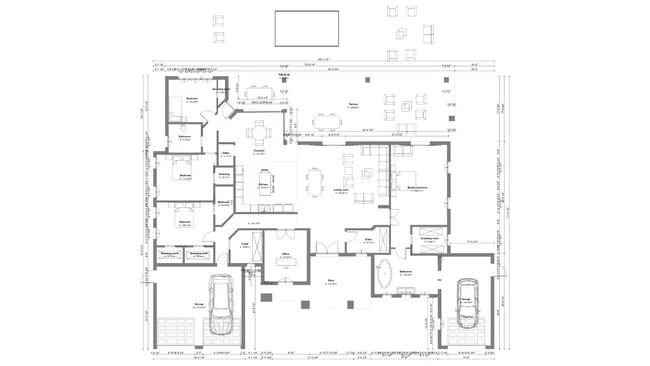
Accuracy is the foundation of any good blueprint.
So the blueprint design software you choose should offer precise drawing tools that make it easy to draw and adjust walls, doors, windows, and other architectural elements.
Look for features like snapping and alignment to help you quickly create precise designs.
Layering and labeling tools also help keep your drawings organized and professional.
Easy-to-Use Interface
CAD software and BIM (Building Information Modeling) programs are notoriously complex.
In today’s fast-paced world, having a user-friendly interface is more important than ever, especially for professional designers and contractors who need to produce results quickly.
The best blueprint design software minimizes the learning curve with intuitive navigation and straightforward design tools.
This lets you quickly create floor plans and iterate on designs without getting bogged down by overly complex menus or workflows.
Mobile Accessibility & Cloud Collaboration
If you build in the real world, you need your blueprints on a phone or tablet at the job site.
So look for export options that are easy to share to mobile devices.
Cloud-based software is a top choice for modern professionals.
Edit designs from any laptop with an internet connection and view designs from a mobile browser or app.
Cloud software also makes team collaboration easy since everyone can work off a shared set of plans.
Customizable Components
Customization is critical for tailoring designs to meet your clients’ needs.
Choose software that includes customizable features such as editable templates, components, furniture, and other design elements.
Measurement and Annotation Tools
Blueprint design software should also include tools for precise measurement and detailed annotations.
This lets you mark up your plans with notes, dimensions, and other details that contractors and clients need in order to understand the design.
Annotations ensure every aspect of the plan is clear so there are fewer miscommunications during the construction phase.
Ability to Draw and Print to Scale
Creating blueprints to scale is important for accuracy in the construction phase.
So you need home design software that supports drawing lines and layouts to scale.
Look for options that allow you to print scaled drawings directly or export them in professional formats for sharing with your clients and crew.
Import/Export Flexibility
The best blueprint tools let you start from what you already have, like pictures of old blueprints, PDFs and DWG files, or even a quick sketch.
You also need clean exports in contractor-friendly formats like PDF and CAD formats.
You might not always need the complexity of CAD software, but being able to export a DWG file gives you the power to use more advanced software when needed for large projects.
Scalability to Do More than Just Interior Design
Some tools just focus on interior design and simple layouts.
But the best home design software gives you the flexibility to handle construction projects of all sizes.
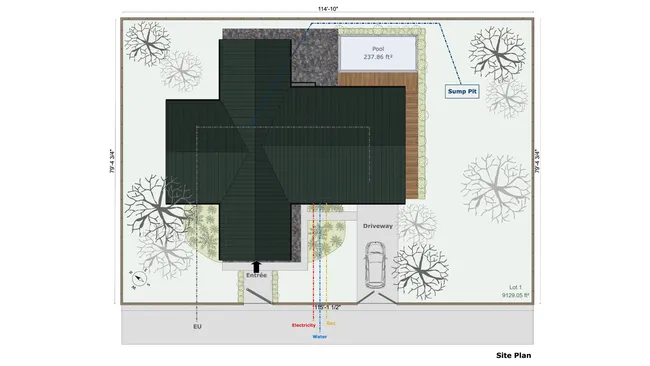
This includes the ability to incorporate landscaping, terrain modeling, cross-sections & elevations, and multi-story layouts into your designs.
High-Quality Presentation Documents
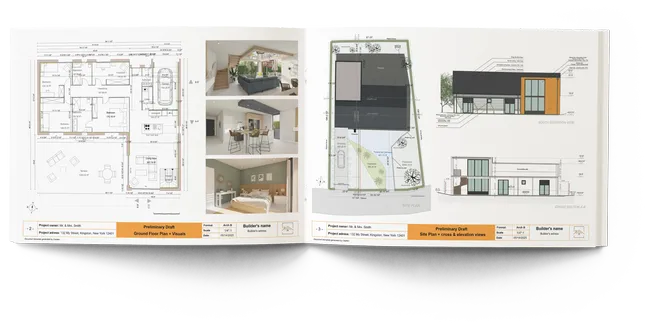
Client presentations are often the deciding factor in winning projects.
The best software should make it easy to produce high-quality presentation documents that include floor plans, 3D renderings, and detailed annotations.
These documents should be exportable in formats that are easy to share via email, Google Drive, or cloud platforms.
3D Visualization and Renderings
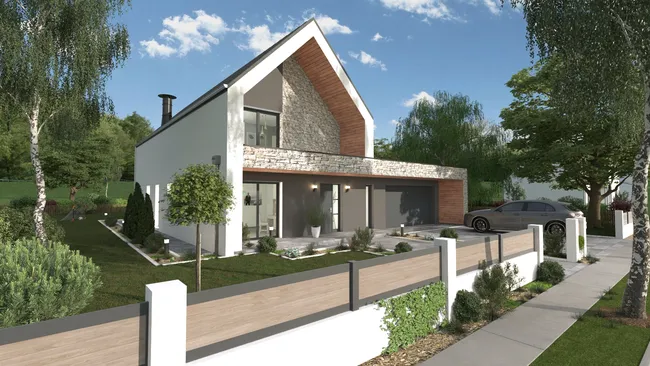
Modern clients expect to see more than just 2D floor plans…they want to visualize their spaces in 3D.
That’s why 2D blueprints aren’t enough in 2026 and beyond.
So look for blueprint design software that includes 3D visualization and rendering capabilities to help you bring your designs to life.
This feature is particularly useful for showcasing how a design will look and feel while helping clients make faster and better design decisions.
Customer Support and Learning Resources
RRobust customer support and learning resources ensure you can resolve issues quickly so your business stays on track.
So look for programs that provide video tutorials, webinars, forums, and a comprehensive knowledge base.
And most of all, investigate how easy it is to talk to a real person from the support team.
On-demand access to experts prevents your projects from getting held up while you’re waiting for an answer to your question.
Those are the main blueprint design software features to look for.
What are your top options?
Check out the next section.
11 Best Blueprint Software Solutions (Including Key Features)
1. TOP PICK for Residential Contractors: Cedreo
- Cedreo is built for speed, clarity, and clean presentations that help you sell the job.
- Go from idea to 2D floor plans, 3D views, and presentation documents in one simple workflow, so you stop drowning in complex CAD and multiple tools.
Check out the comparison chart to see how Cedreo compares to other top options and then see the full reviews below.
NOTE: With some tools like SketchUp, AutoCAD, and Revit, you can improve the quality of renderings and presentations by purchasing add-ons and extensions to use with the software. In this table, we are rating the software based on using it without add-ons and extensions.
| Software Name | Best For | Detailed 2D Floor Plans | Floor Plan Drawing Speed | Site Planning (Including Terrain Modeling) | Design Library (Symbols & 3D Objects) | 3D Rendering Quality | Client Presentation Building | Time to Learn | Support Quality | Pricing |
| Cedreo | All house plans, client-ready visuals and concept design presentations | Excellent | Fast | Excellent | Large | Excellent | Excellent | Hours | Excellent | $$ |
| Chief Architect | Detailed construction documentation and takeoffs | Excellent | Moderate | Good | Large | Good | Good | Weeks+ | Average | $$$ |
| AutoCAD | Large firms that need precise CAD drafting for commercial work | Excellent | Slow | Excellent | Moderate | Good | Good | Weeks+ | Excellent | $$$ |
| SketchUp Pro | 3D modeling | Good | Slow | Good | Moderate | Basic | Basic | Weeks+ | Average | $$ |
| SoftPlan | Residential designers who want BIM-style plans and takeoffs | Excellent | Moderate | Excellent | Moderate | Basic | Good | Weeks+ | Average | $$$ |
| ArchiCAD | BIM-based architectural design and documentation | Excellent | Slow | Excellent | Moderate | Excellent | Excellent | Weeks+ | Excellent | $$$ |
| Revit | BIM-heavy teams doing complex commercial projects | Excellent | Slow | Excellent | Moderate | Good | Excellent | Weeks+ | Excellent | $$$ |
| FloorPlanner | Quick interior floor plans for simple projects | Basic | Fast | Basic | Large | Good | Good | Hours | Average | $ |
| Planner 5D | Quick interior floor plans for simple projects | Basic | Fast | Basic | Large | Good | Good | Hours | Average | $ |
| Sweet Home 3D | Free starter tool for simple house designs | Basic | Moderate | Basic | Small | Basic | Basic | Days | Limited | Free |
| RoomSketcher | Real-estate friendly interior layouts | Basic | Fast | Basic | Moderate | Basic | Good | Hours | Average | $ |
So let’s look at 11 of the best blueprint design software solutions to find the one that’ll work best for your business. Let’s start with the blueprint design software that more and more housing professionals are switching to.
1. Cedreo
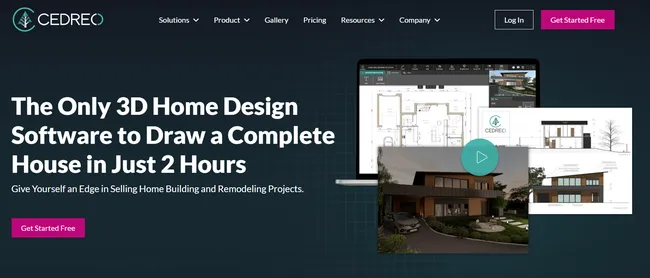
Best for: Residential contractors who need fast, client-ready blueprints and photorealistic 3D renderings.
Cedreo is a cloud-based 3D home design and blueprint software built for builders, remodelers, and residential designers.
It’s hard to find another program with such a great combination of 2D & 3D home design tools that are easy to use!
In fact, with Cedreo you can design an entire home from start to finish, complete with 2D blueprints and 3D renderings in just two hours!
And because the heavy processing runs in the cloud, you can work from the office or the field without your computer bogging down.
Key features:
- Import existing plans (JPEG, PNG, PDF, DWG, or DXF) and draw over them.
- Copy and reuse plans to move faster on similar projects.
- View 2D and 3D at the same time.
- Build electrical plans by placing outlets, switches, and lighting layouts, then customize colors and line styles.
- Create accurate site plans with terrain modeling for flat or sloped lots.
- Simple sun orientation controls for accurate natural lighting effects.
- Built-in 10,000+ object and materials library.
- Create cross sections and elevations in a click.
- Print plans to scale and export files for clients and crews.
Check out what Cedreo users say…
“The ease of drawing the 2D layout plan was the main draw to this program. It was very intuitive compared to some other programs that were trialed. “ – Steve
“I have used a lot of drawing programs and the ease of use of this one has been great. The customer service help is fast and the renderings look very realistic compared to some others.” – Susan
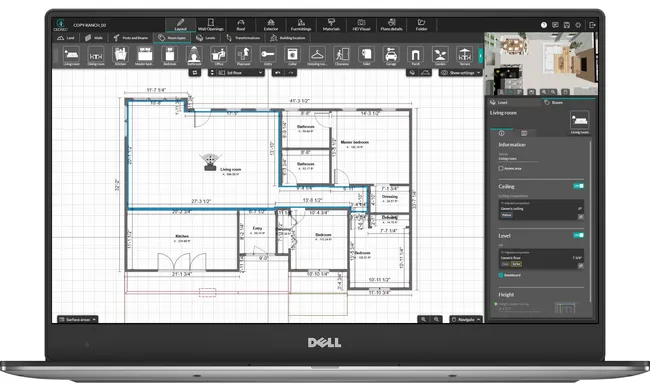
Here’s why Cedreo is a top pick
- All blueprint types in one place: Create simple 2D plans for clients, detailed 2D plans with symbols, custom annotations and measurements, plus site plans, cross sections, elevations, and electrical plans.
- Edits stay coordinated: When you change the design, Cedreo updates your 2D plans, 3D model, and presentation pages, so you don’t have to redo drawings by hand.
- Speed to results: Create a fully furnished home plan with professional renderings in under 2 hours, even with limited design experience.
- Before/after views: Save viewpoints and show the space before and after your new layout option.
- All-in-one solution: Cedreo includes site planning with terrain modeling, floor plan creation, electrical plans, roof plans, 3D modeling, rendering, and presentation documents in one platform.
- 5-minute rendering: Generate photorealistic images in 5 minutes or less, not hours.
- Extensive built-in library: Get the full library of 10,000+ furniture pieces, materials, and textures…no need to purchase add-ons or extra product packs.
- Presentation-ready outputs: Create professional documents that combine 2D plans, 3D views, annotations, measurements, renderings, and company branding for client meetings.
- World-class customer support: Get help from real experts (real people, not bots) by phone, email, or chat.
Pricing: $$
Cedreo offers a free plan so you can test the workflow on a real project.Try Cedreo for FREE and build your next client-ready blueprint package today.
2. Chief Architect
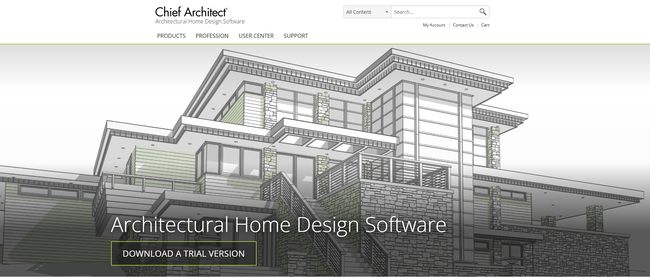
Best for: Large design-build firms that need highly detailed construction documentation, schedules, and material takeoffs.
Chief Architect is residential design BIM software built for producing detailed construction plan sets.
It shines when you need deep control over residential details, schedules, and takeoffs.
If your main goal is to move from a floor plan to a client-ready presentation fast, a tool like Cedreo is often the better fit.
But when you need highly detailed documentation for permitting and crews on complex projects, Chief Architect earns its place.
The trade-off is time, since most teams need weeks to learn it well.
Plus, it usually takes longer to go from design to a polished client presentation than faster contractor-focused tools.
Key features:
- Construction drawings with dimensions, callouts, and layout pages.
- Material lists and schedules for estimating.
- 3D modeling to review design intent before you build.
- Built in rendering with ray tracing.
- Terrain and grading tools.
- A 3D viewer option for sharing the model on mobile devices.
Pros:
- Produce detailed residential construction documentation.
- Takeoff and scheduling tools for design-build work.
- Handles complex roofs and residential details well.
- Good site planning options compared to interior-only tools.
Cons:
- Steep learning curve.
- High cost
- Slow turnaround from design to presentation.
Pricing: $$$
3. AutoCAD
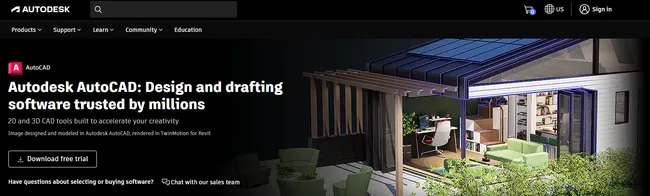
Best for: Large firms and commercial teams that need precise CAD drafting across many trades.
For a long time, AutoCAD has been the gold standard for professional CAD programs.
Architects, engineers, and other professionals use it to create detailed 2D and 3D designs for just about anything.
Although it’s not a purpose-made blueprint software, it does come with a variety of toolsets for creating technical drawings for various disciplines.
If you’re working with a large construction firm doing complicated commercial jobs and need to create detailed plumbing, mechanical, or structural blueprints, AutoCAD is going to be one of your top choices.
However, for most residential contractors, it is overkill because it takes longer to learn and longer to produce client-ready presentations.
Key features:
- Precise 2D drafting tools for detailed construction documents and detailing structural elements.
- Industry toolsets that support architectural workflows and specialized drawings.
- Automation options for repetitive drafting tasks.
- DWG-based collaboration and file compatibility across many teams.
- AutoCAD Mobile for viewing, markup, and light edits in the field.
Pros:
- Excellent when you need strict drafting control for complex commercial projects.
- Works well for multi-discipline documentation on bigger jobs.
- Strong ecosystem of training resources and support.
Cons:
- Steep learning curve, so productivity ramps slowly for most crews.
- High cost and limited presentation outputs compared to contractor-focused blueprint tools.
Pricing: $$$
4. SketchUp Pro
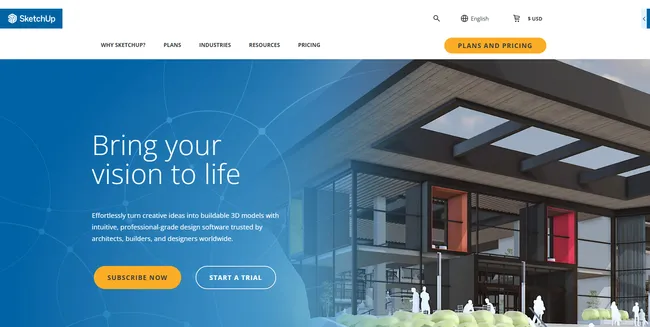
Best for: Experienced designers who want flexible 3D modeling and solid client walk-throughs, especially for concept design.
SketchUp Pro is a popular 3D modeling platform with a wide variety of uses. Although it’s not designed specifically as blueprint design software, it does allow you to create both 2D and 3D plans.
SketchUp Pro works well for presenting your project with interactive 3D walkthroughs. Plus, with some additional extensions, you can even create impressive 3D renderings for your projects.
So yes, you can produce quality home designs and blueprints with SketchUp Pro, but it does have asteep learning curve. This is especially true if you don’t have a lot of previous 3D software experience.
And you’ll quickly see that to create things like 3D renderings, you’ll need to purchase additional add-ons (which can sometimes be as expensive as SketchUp Pro itself!).
Key features:
- Advanced 3D modeling tools for design development.
- LayOut for creating 2D, scaled sheets from your 3D model.
- 3D Warehouse and a large ecosystem of extensions for objects and workflows.
- SketchUp for iPad for on-site review and simple edits on a tablet.
- Import/export support for common formats, with DWG export on Pro plans.
Pros:
- Decent for concept modeling and client-friendly 3D walkthroughs.
- Huge extension ecosystem that lets you customize how you work.
- Good compatibility with common file formats when you need to share models and drawings.
Cons:
- Steep learning curve if you are new to 3D modeling.
- High-quality rendering often requires paid add-ons, which can raise your total cost.
- Since it’s not a native home design program it takes a lot of manual work and organization to create usable designs.
Pricing: $$
5. SoftPlan
Best for: Residential designers and builders who want BIM-style modeling, detailed construction documents, and takeoffs.
SoftPlan is residential-first software that combines 2D drafting with a coordinated 3D building model.
Its differentiator is the estimating angle, since it supports detailed material takeoffs (including lumber takeoffs) that help you price larger, more complex custom work.
It fits large design-build teams that want detailed plan sets and takeoffs in one workflow.
Just keep in mind that those advanced features come with an extra level of complexity and hassle that a lot of smaller teams and solo contractors aren’t ready to handle.
Key features:
- Detailed 2D drafting and plan production for residential work.
- 3D building model workflow to keep plans and views coordinated.
- Material takeoffs and reporting to support estimating.
- Site planning tools that can use Google Earth data, plus cut and fill options for grading.
- Export options that support common documentation and sharing needs.
Pros:
- Strong for residential construction documentation and permit-style plan sets.
- Helpful takeoff and reporting tools for design-build workflows.
- Better site and terrain support than interior-only blueprint tools.
Cons:
- Takes time to learn well, especially if your team is new to BIM-style software.
- Not as fast for client presentations as contractor-first tools.
Pricing: $$$
6. ArchiCAD
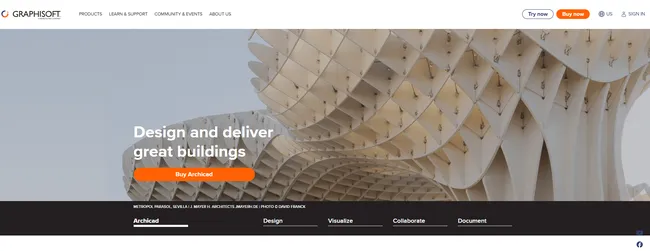
Best for: BIM-based architectural design teams that need strong documentation and coordinated building models.
ArchiCAD is a design-led BIM platform built for complex projects where the building model drives the entire blueprint set.
It is most common in architecture workflows that need deep documentation and team collaboration on complex multi-story buildings.
For many residential contractors, ArchiCAD is overkill because it takes longer to learn and longer to produce a fast client presentation.
Key features:
- BIM modeling tools that keep plans, sections, and elevations connected.
- Strong construction documentation workflows for detailed drawing sets.
- Collaboration tools designed for multi-user teams.
- Site planning support with terrain modeling through mesh-based tools.
- Import and export options to work with other consultants and file types.
Pros:
- Excellent BIM documentation for complex residential and multi-story work.
- Coordinated model-based workflow reduces drawing conflicts.
- Strong support ecosystem for professional users.
Cons:
- Steeper learning curve than lightweight blueprint design software.
- Higher cost than many contractor-focused tools.
- While it has advanced features, it’s overkill for most residential contractors and remodelors.
Pricing: $$$
7. Revit
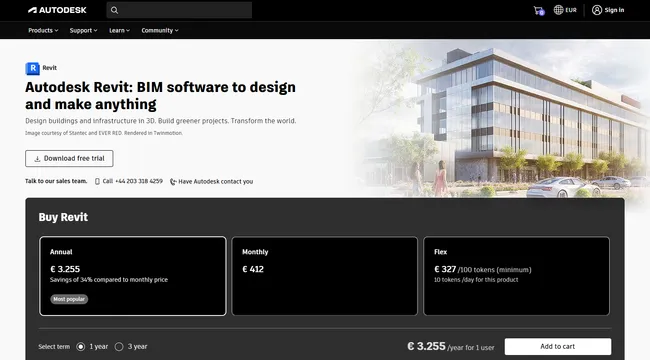
Best for: BIM-heavy teams that need full-building modeling, coordinated documentation, and strong site tools for complex commercial projects.
Autodesk Revit is an enterprise BIM platform built for data-rich models that drive drawings, schedules, and coordination.
It fits large teams and complex projects where multiple disciplines need one shared source of truth.
For most residential contractors, it is overkill because the learning curve is steep and presentation speed is not the main focus.
Key features:
- Full BIM modeling that keeps plans, sections, elevations, and schedules coordinated.
- Strong documentation tools for detailed construction drawing sets.
- Topography and site modeling tools (including TopoSolid workflows) for terrain-based projects.
- Parametric components that support consistent detailing across a model.
- Viewer options that support sharing and review when you are not editing.
Pros:
- Excellent for model-driven coordination and detailed documentation.
- Strong fit for complex, multi-story work with many moving parts.
- Site and terrain capabilities are strong.
- Deep ecosystem for training and support.
Cons:
- Very steep learning curve…don’t expect to become proficient in a week or two.
- Slower path to client presentations than contractor-first blueprint software.
- Overkill for home addition and remodeling blue prints.
Pricing: $$$
8. Floorplanner
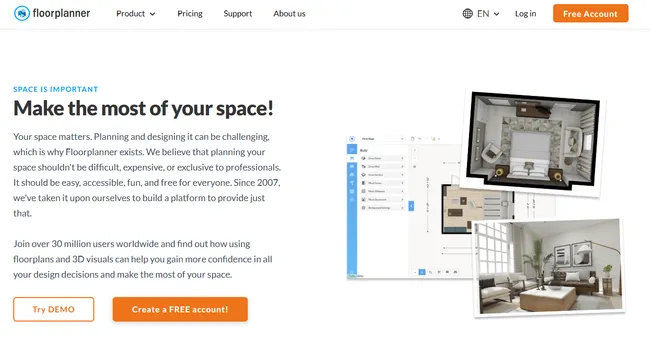
Best for: Fast interior floor plans and simple layouts.
If you’re not a CAD expert and want blueprint software that’s easy to use, Floorplanner might also be a good choice.
In just a few clicks, you can sketch a new room, draw walls, place doors and windows, and add furniture for a simple realistic preview.
Floorplanner also has a large design library with tons of different furniture and decoration options to satisfy your creative side.
However, its features may be too limiting for home builders and remodelers.
Since it’s focused on interior layouts, there are limited tools for creating roofs and landscape designs, so it may not be suitable for a full new build or an entire home plan set.
Key features:
- Simple drag-and-drop floor plan drawing tools.
- Large library of furniture and décor objects.
- 2D and 3D viewing for quick visual checks.
- Cloud-based access for sharing and collaboration.
- Mobile access for viewing on the go.
Pros:
- Very fast to learn for non-CAD users.
- Great for quick interior layouts and space planning.
- Strong furnishing library for concept work.
Cons:
- Limited tools for roofs, exterior design, and site plans.
Pricing: $
9. Planner 5D
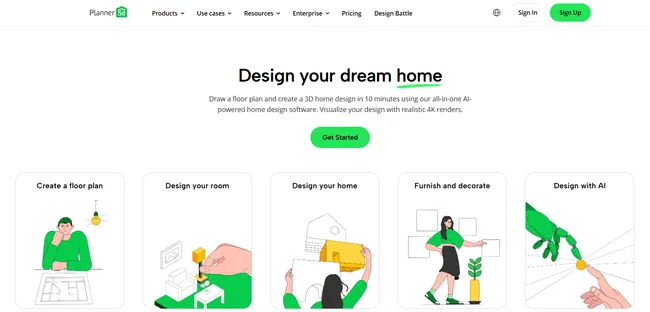
Best for: Budget-friendly concept layouts and quick 3D visuals for early design ideas.
Planner 5D is a budget-friendly blueprint software option for casual and amateur designers.
For the price, Planner 5D offers a surprising amount of features.
Its user interface is easy to navigate and the program allows you to generate both 2D plans and 3D visualizations, including a realistic preview on multiple devices.
It even has options for augmented and virtual reality viewing.
However, while it could be a nice option for DIYers, it will likely lack some features that professional builders need, like easily exporting and printing blueprints to scale or more advanced customization tools.
Key features:
- 2D and 3D design modes for quick switching.
- Large catalog (5,000+) of items for furnishing and finishes.
- Automated layout and furnishing helpers for speed.
- Works across devices for flexible concept work.
Pros:
- Very fast to learn and easy to navigate.
- Good visuals for the price at the concept stage.
- AR/VR options help clients understand a layout.
Cons:
- Not designed for permit-style plan sets or detailed construction drawings.
- Limited pro export and scale workflows compared to contractor-first tools.
Pricing: $
10. Sweet Home 3D
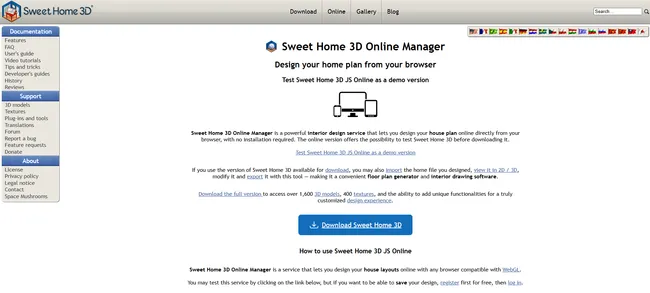
Best for: DIY-level room layouts when you need a free, basic tool.
If you’re on a super-tight budget and just need to test a simple space layout, Sweet Home 3D could work for you as blueprint design software.
It’s free open-source software that comes with a small library of pre-made design features for basic furniture placement.
Pay to access extra design elements and you’ll have some added functionality.
However, the 3D images and the entire platform itself are somewhat dated, so most interior designers and builders will look elsewhere.
It works best for quick, low-stakes layouts, not client-ready presentations or permit-style plan sets.
Key features:
- Basic 2D floor plan drawing tools.
- Switch between 2D and 3D views.
- Import a background image or plan to trace.
- Add simple annotations and dimensions.
- Small object library, with optional add-on libraries.
Pros:
- Free option for simple space planning.
- Quick way to check a layout in 3D without learning CAD.
- Useful for early concept tests on small projects.
Cons:
- Limited professional documentation outputs.
- Basic rendering quality and a dated interface.
Pricing: Free to use. You can purchase product expansion packs.
11. RoomSketcher
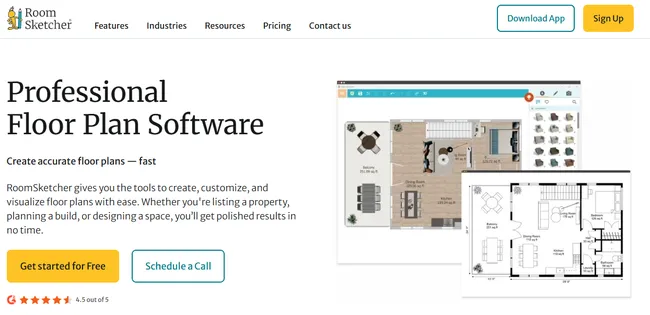
Best for: Real estate friendly interior layouts.
With an easy-to-use interface and a combination of 2D and 3D blueprint tools, RoomSketcher is a popular blueprint program for quick space layout work.
Create everything from 2D plans with measurement markups to 3D photos in one program, which helps with furniture placement and early client reviews.
However, some builders and interior designers would prefer higher image quality with more realistic textures and lighting.
Others get frustrated that even with paid plans, advanced features can require additional upgrades.
Key features:
- Create 2D floor plans with measurements and labels.
- Generate 3D photos and basic walkthrough-style views.
- Works across PC, Mac, and mobile devices.
- Export and print plans to scale.
- Cloud sharing for quick client collaboration.
Pros:
- Fast learning curve for teams without CAD experience.
- Great for interior-focused planning and layout options.
- Helpful 3D visuals that reduce client confusion.
Cons:
- Rendering realism can be limited for premium presentations.
- More advanced capabilities require higher-tier access.
Pricing: $
The Best Blueprint Design Software for You Is…
The Best Blueprint Design Software for You Is…
Whether you’re a builder, remodeler, or designer, the best 3D blueprint software should save you time, money, and hassle.
That’s why more and more housing professionals are making the switch to Cedreo when they need speed to a client-ready presentation.
Here’s what that can look like on a real project:
- Create a complete blueprint package with photorealistic 3D renderings and electrical plans in about 2 hours.
- Open plans in the cloud on-site to review changes and keep everyone working from the latest version.
- Include site plans with terrain modeling, so your documentation feels complete on real lots.
So why wait?
Try Cedreo for FREE and streamline your next residential project with faster plans and presentations.
Best Software for Blueprints FAQs
What is the best blueprint software for home builders?
For many home builders (and interior designers), the best blueprint program is the one that creates accurate 2D plans and clear 3D visuals fast, which is why more teams are choosing Cedreo.
If you sell residential work, Cedreo helps clients visualize sooner and can cut down revision back-and-forth.
What’s the best home blueprint software for small contracting businesses?
Small contracting businesses usually need something quick to learn and fast to present ideas, and Cedreo is a common fit because it speeds up the path to a client-ready package.
Go from idea to client ready presentation complete with 2D blueprints, 3D renderings, site plans and more in only about 2 hours.
Can I create 3D blueprints with blueprint design software?
Yes, blueprint design software like Cedreo automatically builds a 3D model from a 2D floor plan so you can instantly review it from multiple angles.
And in 5 minutes or less you can generate photorealistic 3D renderings in Cedreo so clients understand materials and finishes.
Do I need expensive CAD software to create professional blueprints?
No, and Cedreo is one example of a pro blueprint tool that avoids the cost and complexity of full CAD or BIM platforms for typical residential work.
Cedreo lets you create a full set of home designs in about 2 hours, plus it also includes support and learning resources, so your team ramps up faster.
How long does it take to create a complete set of home design blueprints with Cedreo?
Many users can create a complete blueprint package with 2D and 3D visuals in about 2 hours in Cedreo, depending on project size and detail.
Bigger custom homes and lots with more site work can take longer, while simple remodels and additions can take less.
Can house blueprint software help me win more contracts?
Yes, blueprint software like Cedreo helps by turning plans into clear 3D visuals and photorealistic renderings, so clients understand the scope faster and ask for fewer revisions.
Cedreo lets you create presentations with polished floor plans, 3D views, and site context so your bid feels more complete and easier to say “yes” to.
Can I print blueprints to scale from blueprint software like Cedreo?
Yes, Cedreo supports print-to-scale outputs.
Just select the right layout, export, and scale settings and your crews will have drawings they can use on-site.